


CCM® OCT Filters Reduce Downtime and Increase Production
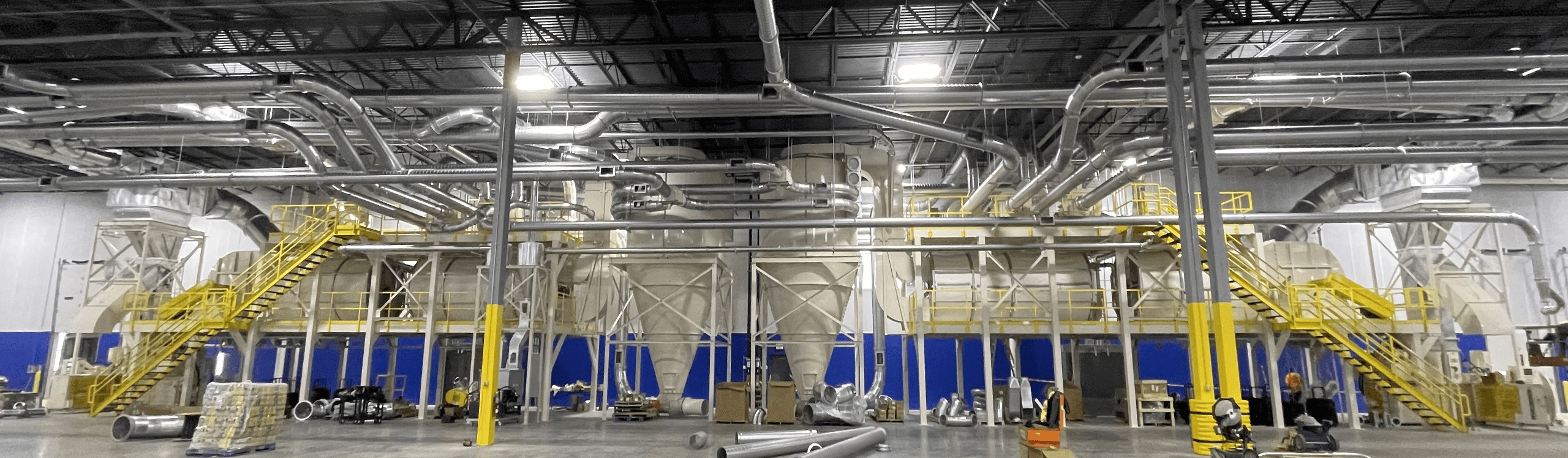
Baghouse and cartridge-style filters have long been the go-to solution for removing dust from manufacturing operations, but there are some significant downsides to this type of dust collector. They require explosion venting, abort gates, sometimes building make-up air, and additional fire protection, in addition to the long and costly downtimes to maintain and unplug them.
Servicing them can take an entire weekend, but many companies in the paper industry are oversold with orders. They cannot afford to stop production for two or three days and lose hundreds of thousands of dollars while the filter is being properly maintained or unplugged.
"I've had a lot of problems in the past where they plug up and you can't get in to see what's going on," said one ERS customer.
Some companies have policies that do not allow employees to enter confined spaces. They must hire outside crews when their baghouses are up for inspection or maintenance. Even when they can perform this function in-house, baghouses create liabilities that include the use of ladders and cranes.
After a spot fire burned down the baghouse at the customer's facility, the customer decided to try a different kind of baghouse, but maintenance costs were still cost-prohibitive, with new filter bags costing $25,000 a set plus another $10,000 for labor. These costs were incurred quarterly to properly maintain the unit and keep it running correctly.
In search of a solution, the customer presented this problem to Engineered Recycling Systems (ERS). They wanted something that would be easier to service, less expensive, and not as dangerous. Mike Carver, a Mechanical Engineer by degree and Managing Partner at ERS, recommended the Continuous Cleaning Modular Filter (CCM® OCT). After seeing the drawings and proposal, the customer decided to try it out.
"We set it all up in a weekend and started it up on Monday morning," the customer said.
Safety Is Paramount
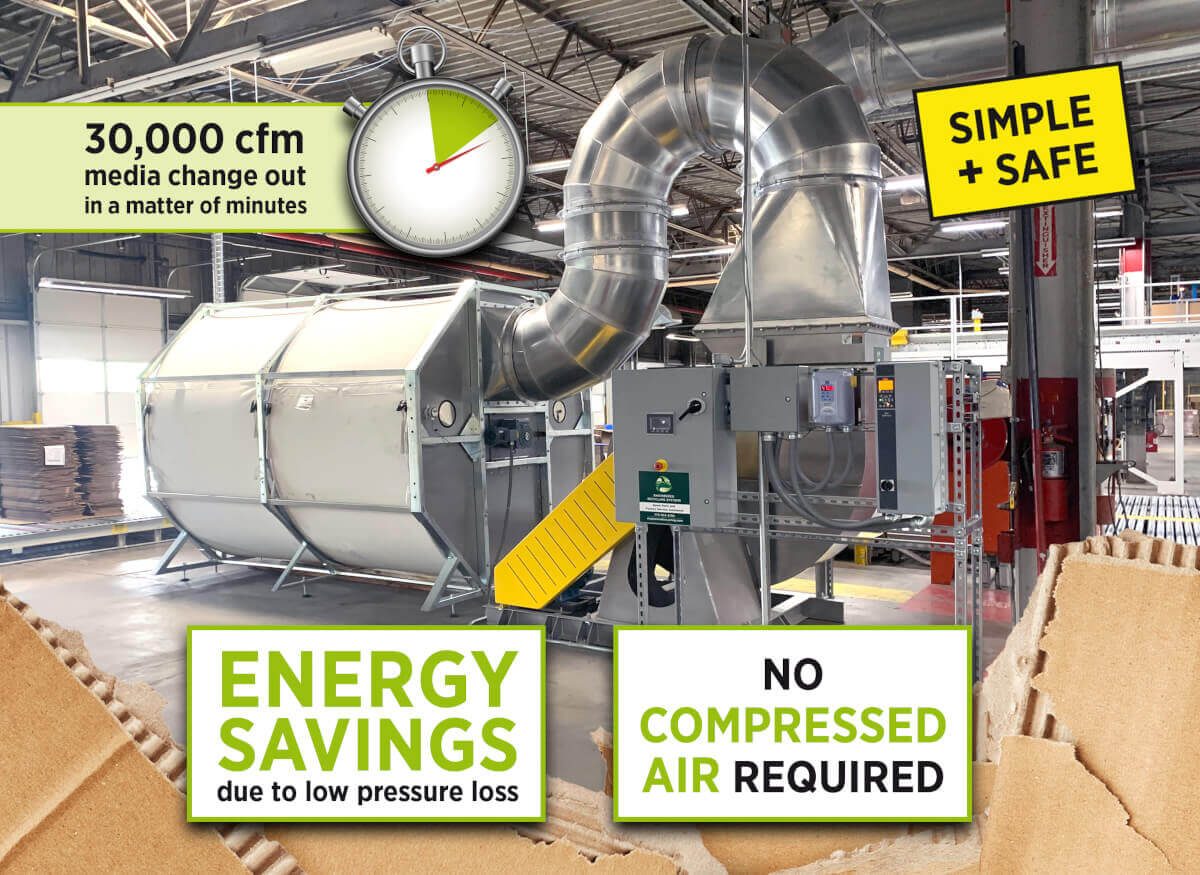
ERS designed the CCM® OCT filter so that it can be kept indoors in a dry environment anywhere in the plant. Because it is not boxed in, the design removes the enclosed conditions a dust explosion needs. If the filter were to catch fire, a sprinkler system can reach it directly, and because of its wide-open design the filter media itself is what burns. The media is replaced and production continues.
The CCM® OCT filter can also be inspected from the ground without ladders or cranes. Unlike traditional filters, you can see inside the unit and monitor it while it is running, much like a see-through filter on a vacuum cleaner.
"All you have to do is walk by and you can tell if it's working," the customer said. "If there is a problem, you can see it right away. Whereas with a baghouse you have got no idea what is going on inside of it."
Listening to customer feedback played a significant role in improvements that were made to the filter as it was being developed.
"ERS will come right in and take care of it. It is not like they are asking for a P.O. number," the customer said. "If there is a problem, they want to rectify it and move forward. You do not have to wait weeks for somebody to come in. ERS becomes your partner."
ERS worked with a major integrated producer and its fire protection engineering consultants to review the filter against the OSHA and NFPA requirements that applied to that installation. Several standard designs resulted from this, and the filter was refined so that each installation can be engineered to the standards that apply to that plant and reviewed on site.
ERS further refined the system so that companies can change out the filter media in-house and have it back in service within minutes, with minimal disruption. No special tools are required, and employees do not have to go outside and fight the elements.
"We don't have to pay to bring somebody else in anymore," the customer said.
Once sales for the CCM® OCT filter took off, there were no problems getting them insured. Insurance companies came to the facilities to inspect them and approved them. In the beginning some insurers were not willing to pre-approve the filters prior to installation, basing that on pre-approval requirements written for filters with older technologies that do not apply to the CCM®'s construction and operation. Users are now urging insurers to update their policies to reflect it.
"I will argue with any insurance company and win that argument," the customer said. "They cannot give us an engineering reason why they would not insure it."
Downtime Cut By 80 Percent
Downtime Cut By 80 Percent
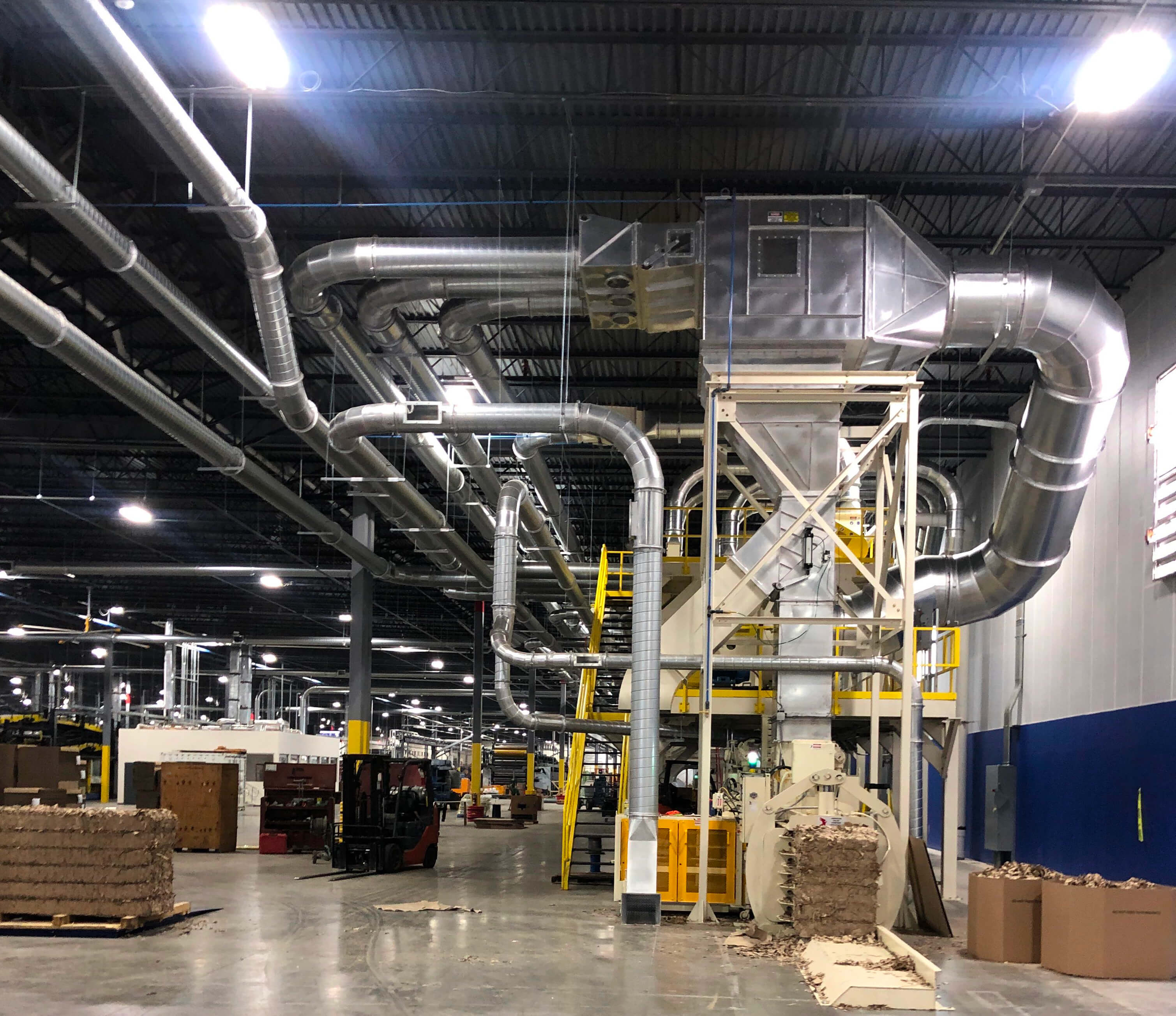
The cost of owning a CCM® OCT filter is less than half the cost of owning a baghouse or cartridge-style filter. Customers save money and, more importantly, gain valuable time annually on every unit. Servicing the filter is quick enough that downtime has been cut by 80 percent. Instead of hiring an outside crew for an entire weekend, two people can perform complete preventive maintenance and a filter media change in two to six hours depending on the size of the unit — all done indoors, without a ladder or special tools. The best dust collector is the one you do not have to think about. Simple maintenance and a window to monitor the internal operation are what make the CCM® OCT filter easy to live with.
ERS's customer went on to install five more units across the Midwest, with a few more in the works. There are currently more than sixty-five fully operating, insured CCM® OCT filters in service throughout the United States, with many more on order.