


Scrap, Dust and Air Engineered as One System
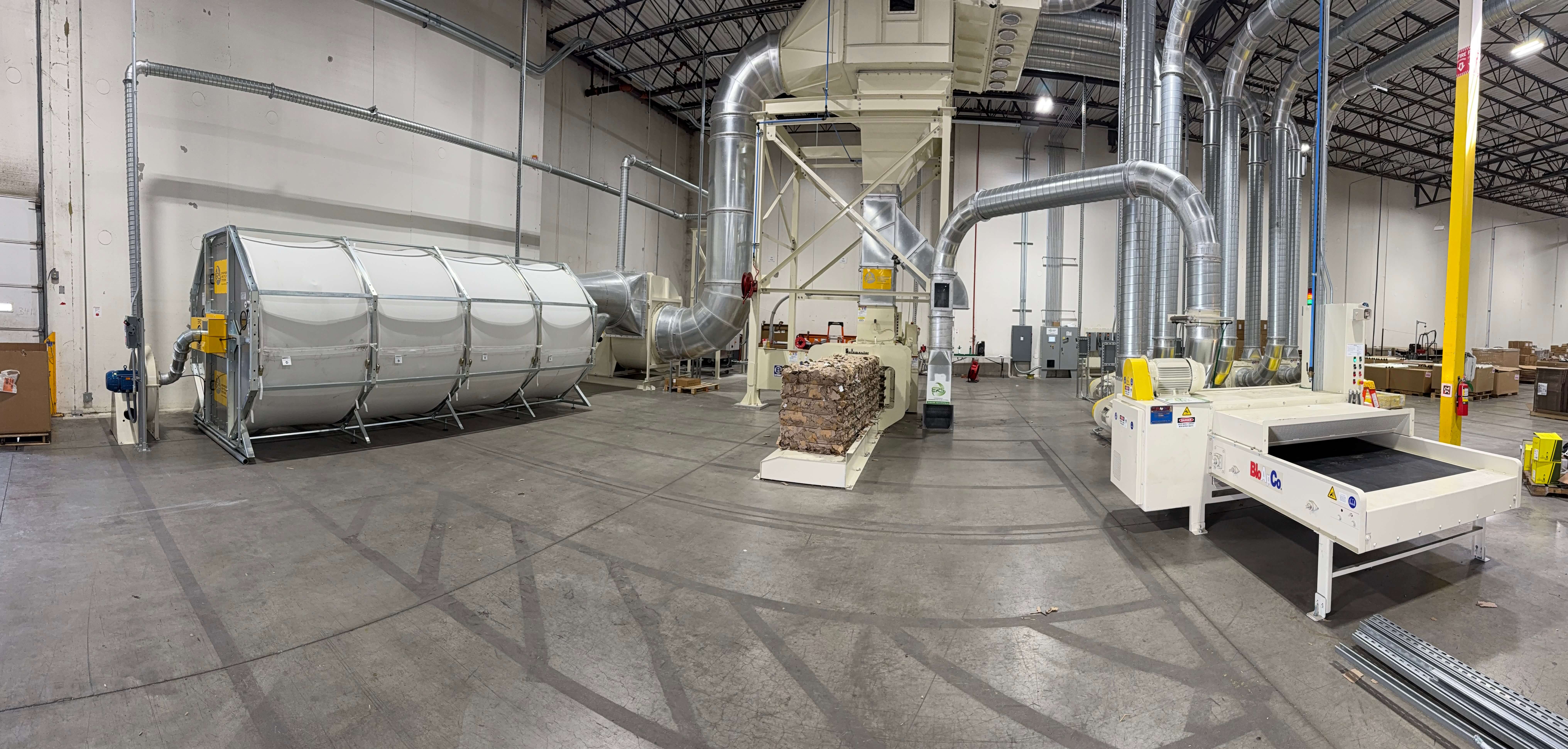
Corrugated industry trim removal systems have to keep up with a plant that never slows down. ERS engineers the whole chain for box plants: pick-up at the converting line, conveying across the building, separation above the baler, and filtration on the air that carries it. One supplier, one engineered system, one point of responsibility.
What a Box Plant Actually Produces
A corrugated plant makes waste in three different forms and they do not behave the same way. Die-cut waste from rotary die cutters is light, fast and awkward to catch. Edge trim from the slitter-scorer is continuous and heavy. Paper dust is everywhere, and it is the part that settles on beams, drives and electrics long after the shift ends. A system sized for only one of the three will struggle with the other two.
ERS sizes hoods, ducting and pick-up velocity around the machines actually on the floor — flexo folder gluers, rotary die cutters, slitters, sheeters and the corrugator itself — not around a catalogue average.
The Balancing Fan
A defining feature of the ERS corrugated scrap system is the Balancing Fan, which automatically holds neutral pressure in the baler chute. As air volume changes through the shift, the Balancing Fan adapts, which keeps conveying stable during trim extraction instead of letting the system drift between starved and flooded. That stability is what stops a chute plugging at the worst moment.
The Low Profile Separator
The Low Profile Separator takes trim scrap out of the airstream and feeds it cleanly to the baling line while using a fraction of the height a conventional cyclone needs. In a box plant where the mezzanine is already full and the roof is not moving, that difference decides whether a retrofit is possible at all. Where headroom allows it, ERS also builds conventional cyclone separators into the same role.
The CCM® OCT Filter
The CCM® OCT filter cleans itself while the plant keeps running. One gear motor sits outside the filter, out of the dust, and turns the central shaft and the boom. The nozzle traverse takes its motion from that rotation mechanically, so nothing electrical moves inside the drum and no compressed air or water is needed for cleaning. Scrapers turn with the shaft and wipe dust off the rings back onto the media. Pressure drop stays low and airflow stays stable, and a filter media change is tool-free at roughly four to six minutes per panel.
Air, Baling and the Rest of the Chain
Material is only half the job. The air moving it has to be cleaned, which is where ERS builds vacuum transfer air dust collection — the dust collection on the air coming off the transfer system. Downstream, ERS supplies and integrates the industrial balers as part of the same installation, so the plant ends with a finished bale rather than a pile of loose trim and a second contractor to call.
For plants running several converting lines at once, ERS designs turnkey waste conveyance and dust collection systems that bring every station into one engineered waste stream, with outside-building collection where the site allows it.
Energy and Maintenance
ERS systems use the horsepower needed to hold stable conveying and filtration, and no more. Oversized fans are the most common way a box plant quietly pays for waste handling twice: once in the capital cost and again every month on the meter. Tool-free filter access and straightforward inspection keep the maintenance routine short, which matters in a plant where the only real downtime window is a shift change.
Systems are engineered to support compliance with OSHA and NFPA requirements, and ERS works through those requirements with the plant and its insurer on a site-by-site basis.
Built Around the Plant in Front of Us
Every corrugated facility runs differently. Line speeds, scrap volume, board grades, building shape and the position of the baler all change the answer. ERS engineers to those conditions, whether the job is a single converting line or a multi-line operation. The wider equipment range sits on the paper converting systems page, and the complete waste chain is described under trim removal and vacuum transfer air dust collection.
The same engineering serves the neighbouring paper industries: folding carton converting, paperboard production, paper converting, commercial printing, flexible packaging, tissue converting and paper mills.
Service and Spare Parts
A scrap system is worth what it does in year five. ERS keeps a stocked warehouse and supports every installation it builds, from commissioning through to spare parts and service. Filter media, wear parts and fan components are available without a lead time measured in months.
Next Steps for Your Corrugated Trim Removal Project
If you are evaluating corrugated industry trim removal systems or planning an upgrade to an existing scrap and dust setup, send the details through the contact form. ERS will review the equipment layout, the line speeds and the waste characteristics and come back with a system configuration that fits the plant.