


Paper Converting Light, Narrow, Fast-Moving Trim
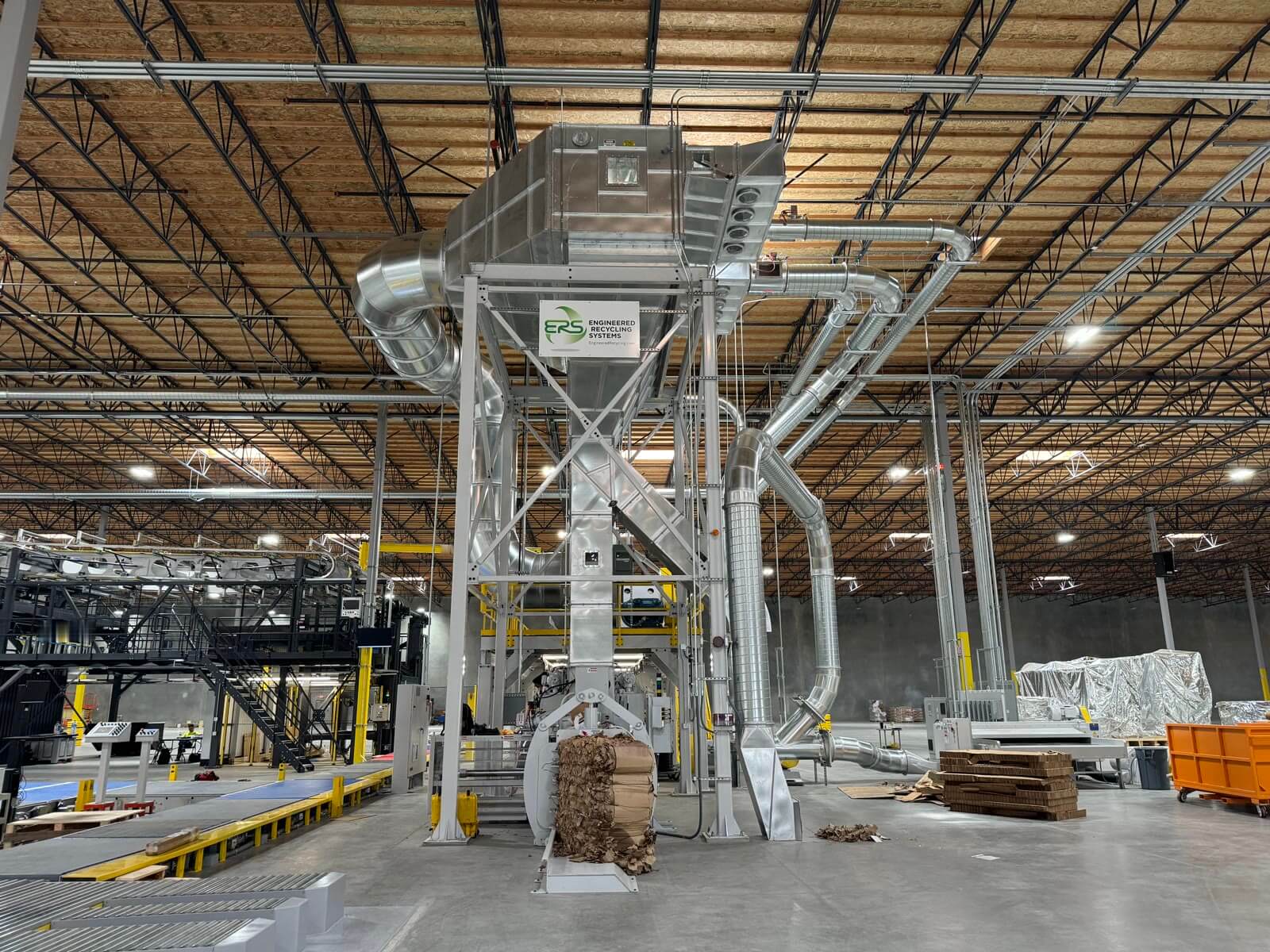
Paper converting industry trim removal systems from Engineered Recycling Systems are built for light, narrow, fast-moving trim, the kind that tails, clogs and stalls in a system designed for heavier stock. High-velocity conveyance, compact separators and CCM® filtration, engineered as one system from Atlanta.
Why light trim is harder than heavy trim
Thin, narrow trim traveling at converting speeds is sensitive to every airflow fluctuation in the duct. Too little velocity and it drops and packs; too much turbulence and it tails and wraps.
That is the opposite problem to a paper mill, where the trim is thick and the challenge is moving mass. A system that handles mill trim well will not necessarily handle label stock at all.
The substrates
Tissue, coated papers, release liners, label stock and specialty papers. Each behaves differently in air, and release liner in particular carries silicone that changes how it slides and how dust behaves downstream.
ERS specifies around the substrate rather than around the machine, because the material is what decides whether a duct stays clear.
Which machines it serves
Slitters, rewinders, sheeters and label presses. High-velocity trim conveyance keeps airflow smooth and uninterrupted for light, narrow trims at high speed, which is what prevents clogging, tailing and unstable conveying.
On slitting and rewinding in particular, trim leaves the knives as a continuous ribbon rather than in discrete pieces, so the take-off point and the first few feet of duct decide whether that ribbon stays straight or folds on itself. ERS sets that geometry around the knife positions and the web width rather than to a standard dimension.
Narrow-web lines are the hardest case in the whole paper side. The trim is thin, fast and light enough that it responds to pressure changes a heavier stock would ignore.
Line speed is the part most often underestimated. A system specified for the line as commissioned will be running well outside its design point once the plant has spent two years finding speed in the process.
Low Profile Separators
The ERS LPS separates trim from the airstream and directs it into collection bins or balers in a minimal footprint. That matters in converting plants, where floor space between lines is usually already committed.
It integrates into an existing line without rerouting the production equipment around it, which is often the difference between a project that happens and one that stays on paper.
Discharge matters as much as separation. A separator feeding a bin nobody can reach with a forklift creates a handling problem in place of the one it solved.
CCM® OCT filtration
ERS dust collection for converting uses CCM® OCT Filter Technology, which cleans the filter media continuously without compressed air and without frequent manual maintenance.
Low pressure loss, stable airflow and long media life are what make it suitable for the fine paper dust generated during slitting, sheeting and rewinding. Collected dust discharges through a cyclone separator.
Taking that dust out improves workplace safety and cuts the housekeeping burden, which on a high-speed line is time operators were spending on cleanup rather than production.
Fan control and energy
Variable fan speeds and pressure-balancing controls match the system to actual demand rather than running flat out. Energy consumption falls, and performance stays consistent across several converting lines drawing on one system.
On a plant running multiple lines at different times, a system that cannot rebalance is a system permanently sized for all of them running at once.
Whole-system scope
Trim removal, vacuum transfer air dust collection and scrap system dust collection, specified together as one engineered design rather than three purchases.
Where cores have to be handled too, a paper core shredder goes in alongside rather than leaving a manual job at the end of the shift.
The rest of the converting side
ERS covers corrugated, paperboard and folding carton, plus tissue converting with its own tissue and hygiene dust collection.
On the narrow-web side there is commercial printing, direct mail, flexible packaging and matrix and trim extraction for labels, which is its own job because matrix is sticky.
What converters get out of it
More uptime, because trim is not stopping the line. Less waste, because material reaches the baler instead of the floor. And a cleaner, compliant production environment, which matters in plants running food-contact or hygiene grades.
Decades of web converting experience is the part that does not appear on a specification sheet. Knowing how a particular substrate behaves in a duct is learned on installations, not calculated.
How a project starts
With your substrates, your web widths and your line speeds. ERS surveys the plant before quoting rather than after, because the layout and the existing ducting determine as much as the equipment does.
Material can be run at the ERS test facility in Atlanta where a question needs settling. Every system ERS supplies is installed, commissioned and supported by ERS, with spare parts and service from Atlanta.
Talk to ERS about your substrates, your speeds and where trim is currently costing you production.