


Thin, Static-Prone Trim Conveyed Without Disturbing the Web
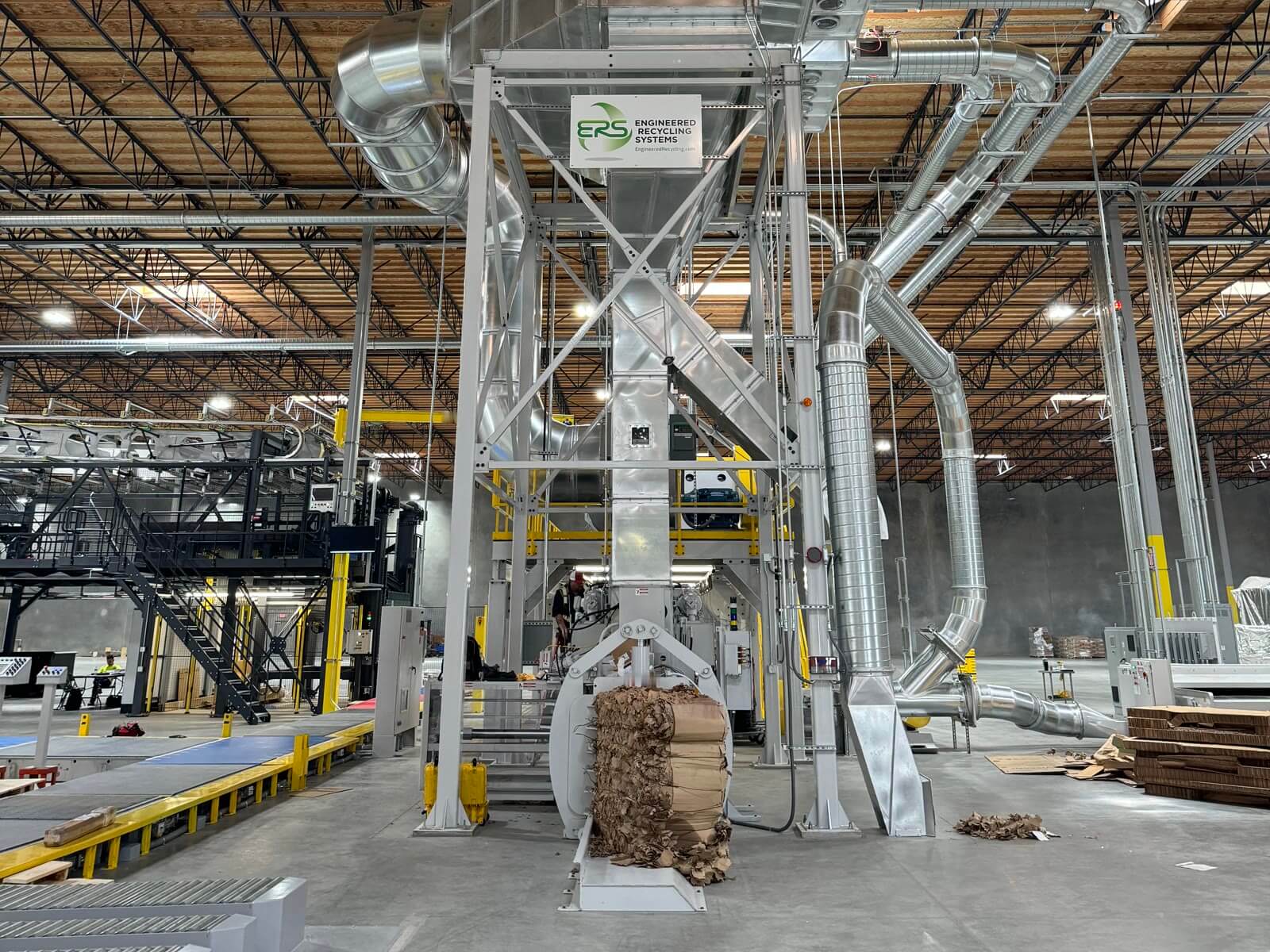
Flexible packaging trim removal systems from Engineered Recycling Systems handle plastic films, foils, laminates and multi-layer barrier materials: high-velocity trim conveyance, advanced separators and CCM® dust filtration in one system. Designed, installed and supported from Atlanta.
Why film is not paper
Razor-thin trim that flutters, wraps and carries a static charge. Paper trim is forgiving by comparison — it has enough weight to follow an airstream and it does not cling to the inside of a duct.
Film does both. Static makes it stick where it should keep moving, and thinness makes it respond to every pressure change in the line.
The materials
Plastic films, foils, laminates and multi-layer barrier structures. Each behaves differently in air, and laminates behave differently again because the layers have different weights and the trim curls.
Coating residue adds to the dust load and changes what the filter sees. A system specified for clean film dust will load faster on coated work.
Gauge range is the other variable. A plant running thin film one week and a heavy laminate the next is asking one duct to handle both, and the velocity that clears the laminate may disturb the film.
Which machines it serves
Slitters, rewinders, pouch formers and laminators. High-velocity narrow trim conveyance takes the trim away without web wraps, fluttering or back-pressure.
Back-pressure is the one that causes damage. It pushes against the web at the point of cut, and on a thin substrate that means distortion or a tear rather than just a slow line.
Controlled suction
Smooth, controlled suction keeps airflow stable and protects the substrate. That is a narrower target than on paper work: too little and the trim does not clear, too much and the web itself is disturbed.
Getting that window right is the whole job on a flexible packaging line, and it is why the system is designed around the material rather than the machine.
Separation
Separator units capture the trim and divert it to collection bins or balers while protecting the production equipment from backflow and trim jams.
They are compact, because floor space on a converting line is committed. A separator that integrates where the line already runs is worth more than a larger one that needs the layout changed.
CCM® filtration
ERS dust collection uses CCM® Continuous Cleaning Filter Technology, which removes fine plastic dust, static-laden particles and coating residue without compressed air and without manual filter changes.
Low pressure loss, stable airflow and long media life, with collected dust discharging through a cyclone separator. Performance is specified against OSHA, NFPA and indoor air quality standards.
Static-laden plastic dust is the awkward case for any filter, because it clings rather than releasing. Continuous cleaning is what keeps the media working instead of progressively blinding.
Static and spark control
Antistatic and spark control options are available where the material and the process justify them. On film work that is not a refinement — static is the mechanism behind both the conveying problems and the ignition risk.
Which options a plant needs follows from the substrate and the line speed. ERS specifies them against the actual material rather than fitting them as standard and charging for them.
Whole-system scope
Trim removal, vacuum transfer air dust collection and scrap system dust collection, designed together as one engineered system rather than three separate purchases.
Where cores have to be handled, a core shredder goes in alongside instead of leaving a manual job at the end of the shift.
The rest of the converting side
ERS covers matrix and trim extraction for label work, which shares the static and adhesive problems, plus paper converting and commercial printing.
On the heavier side there is paperboard, corrugated and folding carton, with paper mills upstream, direct mail downstream and converting dust collection alongside.
What converters get out of it
No web wraps, which on a thin substrate is the difference between a run and a reel of scrap. Stable conveying, so the line holds its speed. And clean air in a plant where the dust is plastic rather than paper.
Material recovery matters here too. Clean, separated film trim has a buyer; film mixed with paper and dust does not, and keeping the streams apart is a design decision rather than a sorting job.
How a project starts
With your substrates, your web widths and your line speeds. ERS surveys the plant before quoting, because on film the material properties decide the design and those are not on a specification sheet.
Material can be run at the ERS test facility in Atlanta, which on static-sensitive film is worth doing before anything is specified. Every system ERS supplies is installed, commissioned and supported by ERS, with spare parts and service from Atlanta.
Talk to ERS about your films, your speeds and where trim is costing you web.