Low Profile Separator When Headroom Is the Constraint

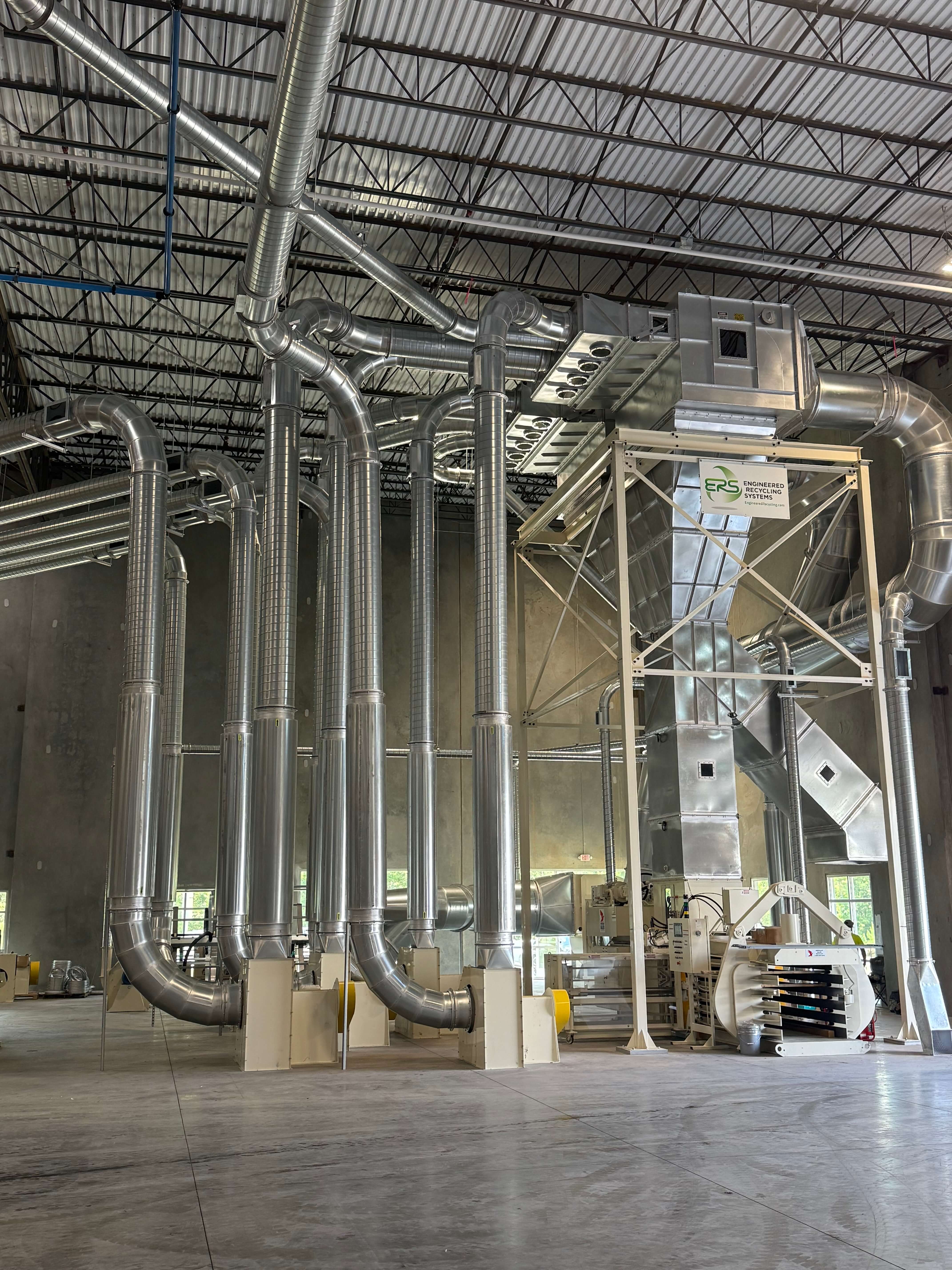
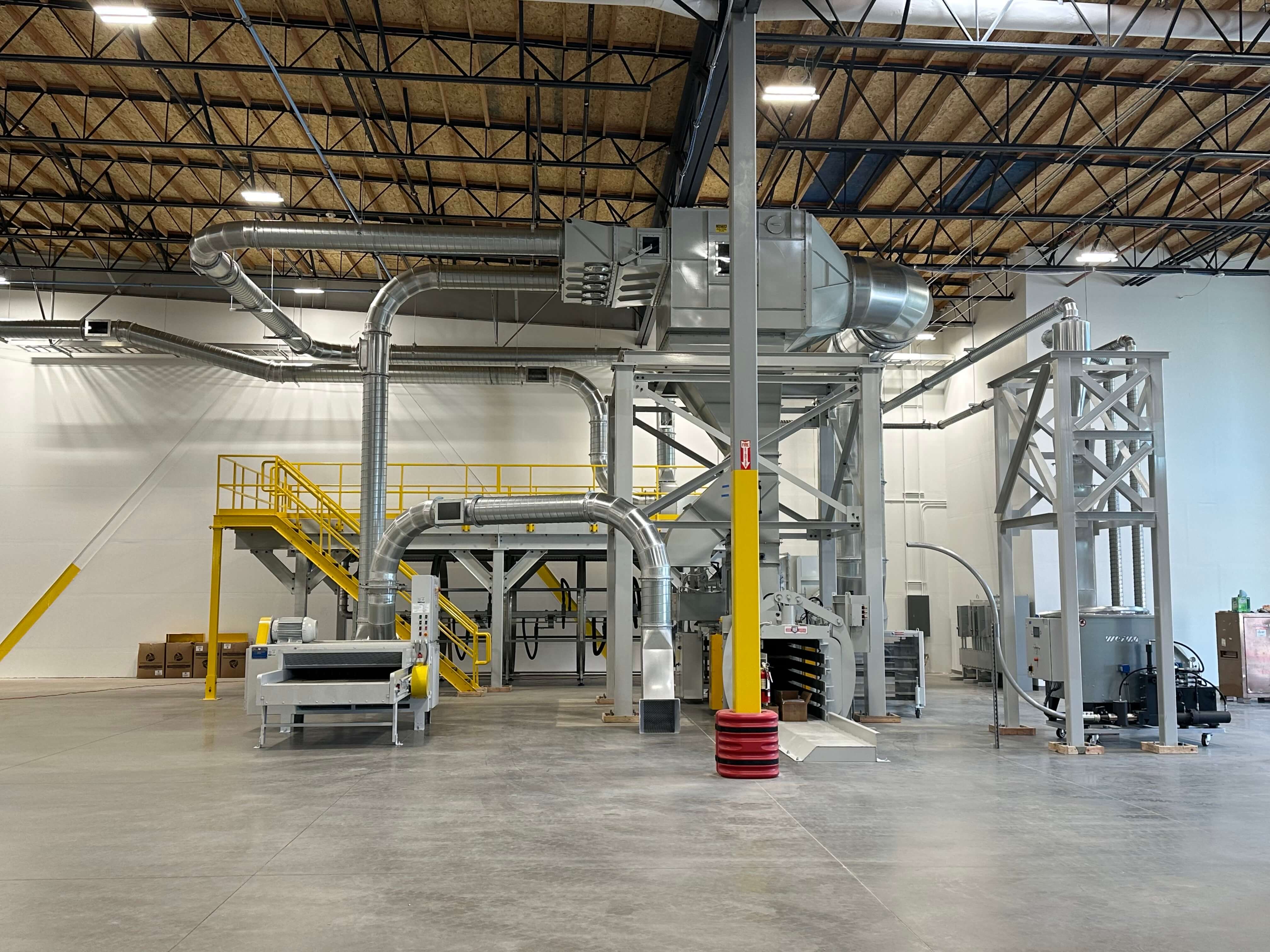
The Low Profile Separator separates trim and scrap from conveying airflow in a fraction of the height of a conventional cyclone. ERS built it for plants where headroom, not performance, is the limiting factor. Sized, built, installed and serviced from Atlanta.
The problem it solves
A cyclone separator works by spinning the airstream in a tall body, and that height is not always available. Building restrictions, permitting limits, an existing roof or a mezzanine already carrying equipment all rule it out.
In Guidetti's own words from the ERS brochure, the LPS is "designed for operations where space constraints dictate the type of air separation system." It is the same decision a plant faces whenever a good solution does not fit the building it has.
Where it goes
Indoors, on mezzanines, in tight pressroom layouts, anywhere overhead clearance is minimal. Its low height and compact footprint are the whole point: reliable separation in a space that cannot take conventional equipment.
That makes it the usual choice on a retrofit. New buildings get designed around the system; existing ones need a system designed around them.
Permitting is the other driver. A separator that stays inside the existing building envelope avoids a planning conversation that a tall external cyclone would start, and on some sites that is the difference between a project going ahead this year or not at all.
What it separates
Trim, matrix and lightweight scrap, taken out of the conveying air without clogging or loss of suction. Stable airflow and consistent suction are what keep the line in front of it running.
On matrix work that is a harder job than it sounds. Self-adhesive matrix sticks to anything it settles on, so a separator has to take it out of the air and keep it moving downward in one motion.
No air lock required
The LPS does away with the air lock a conventional separator needs. That removes a rotary valve, its drive, its wear parts and its maintenance from the installation, lower installed cost and one less mechanical thing to go wrong.
It also simplifies the discharge. Without an air lock there is no timing to get right between the separator and whatever is underneath it.
Tool-free access and maintenance
Inspection and cleanout points are easy to reach, so routine maintenance is done quickly and without tools. On a separator that is more significant than it sounds, because the jobs are frequent and short.
Access designed in rather than worked around is what decides whether those checks actually happen on a busy plant.
From press to baler
The LPS delivers material straight into a baler, compactor, briquetting press or collection bin, keeping the flow uninterrupted from the machine to the back end.
Most installations discharge into a baler chute, which is where it sits in an ERS trim removal system: the LPS takes the trim out, the Balancing Fan keeps the chute pressure neutral, and the air carries on to the filter.
Which industries use it
Corrugated and folding carton plants, commercial printing, paper converting, cellulose, tissue and general converting.
It also suits paperboard and direct mail operations, and flexible packaging lines where the trim is light and the floor space is committed.
What sits behind it
The LPS is a separation stage, not a filter. Behind it, continuous operations get the CCM® OCT filter, with the rest of the dust collection range covering the fine fraction the separator is not meant to catch.
In combustible dust applications ERS builds the filtration to match the hazard. That is a decision taken against the dust and the standards, not against the budget.
What decides the specification
Air volume, the material, the available height and where the discharge has to land. Those four, in that order, and the last one is the one most often left until too late.
A separator that performs perfectly and discharges somewhere a forklift cannot reach has created a handling problem in place of the one it solved.
Height is also worth measuring at the worst point of the run rather than the best. The lowest obstruction on the route is the one that sets the design, not the average clearance across the bay.
Specified as part of a system
ERS designs the LPS into the whole installation, hoods at the machine, conveying, separation, filtration and fans, rather than selling it as a component to be fitted into someone else's design.
That is the difference that shows up in performance. A separator is only as good as the airflow reaching it, and the airflow is set by everything upstream.
How a project starts
With the height you actually have, measured rather than estimated, plus your air volume and your material. ERS surveys the plant before quoting, because on a low-headroom job the building decides the design.
Material can be run at the ERS test facility in Atlanta where the separation is in question. Every system ERS supplies is installed, commissioned and supported by ERS, with spare parts and service from Atlanta.
Talk to ERS about your clearance and what the trim has to reach.