


Pressroom Trim and Dust Offset, Digital and Hybrid
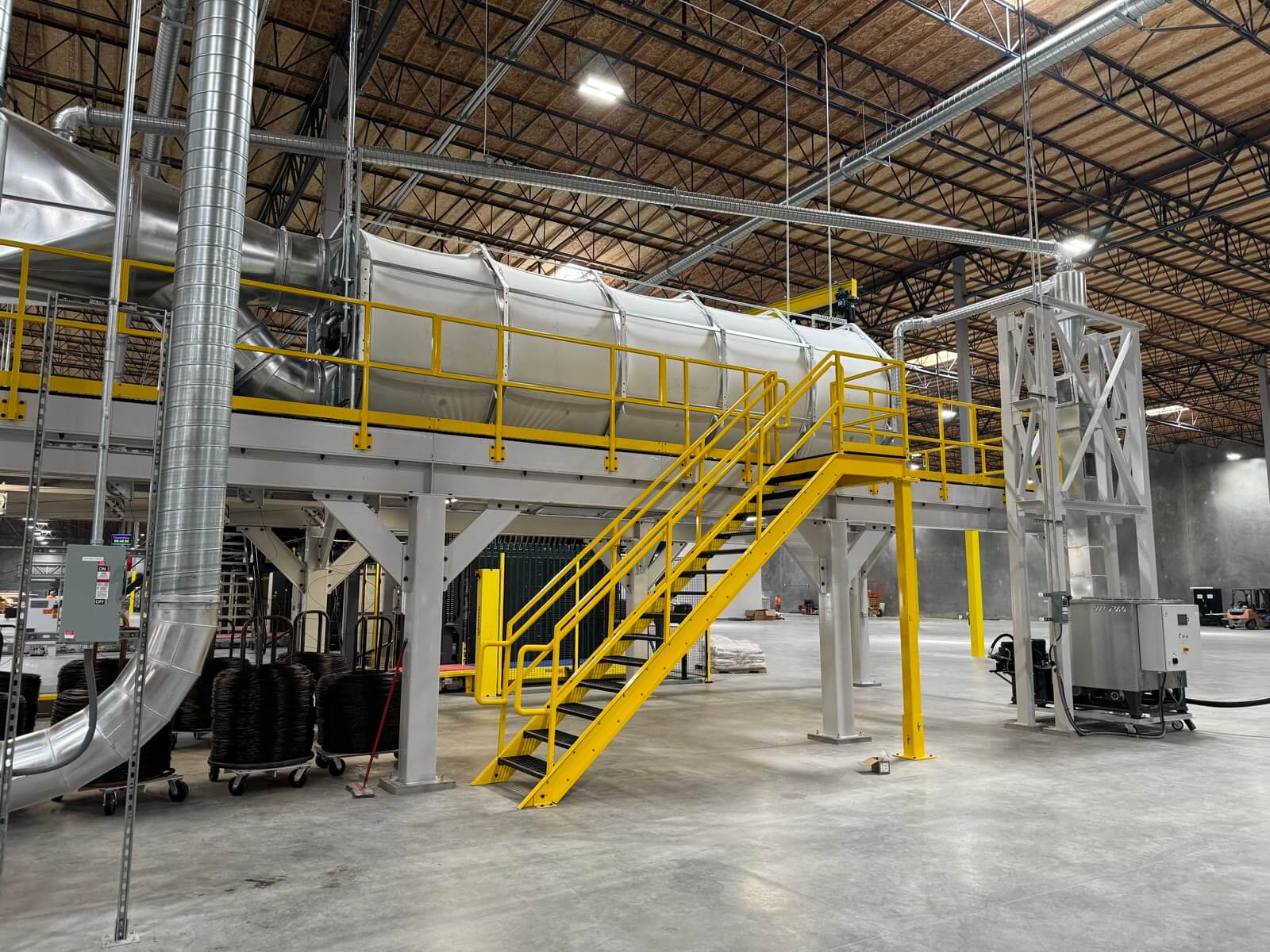
Commercial printing industry trim removal systems from Engineered Recycling Systems are built for high-speed, high-volume pressrooms: trim conveyance, inline separation and CCM® dust filtration, specified as one system. Designed, installed and supported from Atlanta.
What a pressroom actually produces
Edge trims and punch-outs, which have to be moved. Fine paper dust, which has to be captured. And on digital work, toner particulate, which behaves differently from paper dust and is easy to overlook when a system is specified.
All three come off the same lines at the same time, which is why they are one system rather than three. A plant that solves the trim and ignores the dust has solved half the problem.
Offset, digital and hybrid
ERS systems go into sheetfed and web-fed pressrooms running offset, digital or hybrid work. The mix matters: a plant that has added digital alongside offset has changed what its extraction system is being asked to capture, usually without changing the system.
Hybrid operations are the common case now, and they are the ones most likely to be running equipment specified for a different production mix.
Stock range matters as well. A plant that runs everything from lightweight text to heavy cover is asking one duct to move two quite different materials, and the system has to be designed for the heavier one.
Which machines it serves
Cutters, folders, trimmers and press delivery systems. High-speed trim conveyance keeps the paths clear and prevents the backups that slow or stop a run.
Protecting the finishing equipment is a large part of the case. Bindery and finishing machines are precise and intolerant of debris, and a trim backup upstream reaches them before anyone notices.
Inline separation
Separators take the trim out of the airstream and route it to balers or waste containers, which removes the manual handling and keeps airflow consistent.
Consistency is the point. A pressroom running several lines at different speeds puts a varying load on one extraction system, and a system that cannot hold its airflow across that variation will underperform on all of them.
CCM® filtration
ERS dust collection uses CCM® Filter Technology, which captures airborne paper dust, ink particles and toner without compressed air and without frequent filter changes.
Continuous cleaning holds low pressure loss, stable airflow and long media life. Collected dust discharges through a cyclone separator for consolidated handling rather than bag changes.
That matters more in printing than in most paper work, because ink and toner load a filter differently from clean paper fines. A filter that is cleaned continuously does not care; one cleaned on a schedule does.
Compliance and air quality
Performance is specified against OSHA, NFPA and indoor air quality standards. Pressrooms are occupied spaces with people working close to the equipment all shift, which makes indoor air quality a staffing issue as much as a regulatory one.
Paper dust is also combustible, so the fire case applies here as it does in a mill. Keeping particulate out of the building and out of the ducting is the mechanism.
Variable-speed fans
Fan systems adjust airflow to production demand rather than running flat out. Energy consumption falls, wear falls with it, and performance stays stable when only part of the plant is running.
On a pressroom with work arriving in batches, that is most of the week. A system permanently sized for every line at once is paying for a condition that rarely exists.
Whole-system scope
Trim removal, vacuum transfer air dust collection and scrap system dust collection, designed together as one engineered system rather than three purchases.
Where cores have to be handled, a paper core shredder goes in alongside instead of leaving a manual job at the end of each shift.
The rest of the paper side
ERS covers direct mail manufacturing, which shares the pressroom problem at higher volumes, plus matrix and trim extraction for label work and flexible packaging.
Upstream there are paper mills, and across the converting side paper converting, paperboard, corrugated and folding carton, with converting dust collection alongside.
What printers get out of it
Uptime, because trim is not backing up into a run. Cleaner air, which the people in the room notice first. And less housekeeping, which is time going back into production rather than into sweeping.
On short-run, high-changeover work the gain is in the changeovers. A clean, clear line restarts faster than one that needs clearing first.
How a project starts
With your presses, your finishing lines and your production mix. ERS surveys the plant before quoting, because in a pressroom the routing and the available space decide as much as the equipment does.
Material can be run at the ERS test facility in Atlanta where a question needs settling. Every system ERS supplies is installed, commissioned and supported by ERS, with spare parts and service from Atlanta.
Talk to ERS about your presses, your mix and where trim or dust is costing you a run.