


Paperboard Thick, Stiff, Multilayered Stock
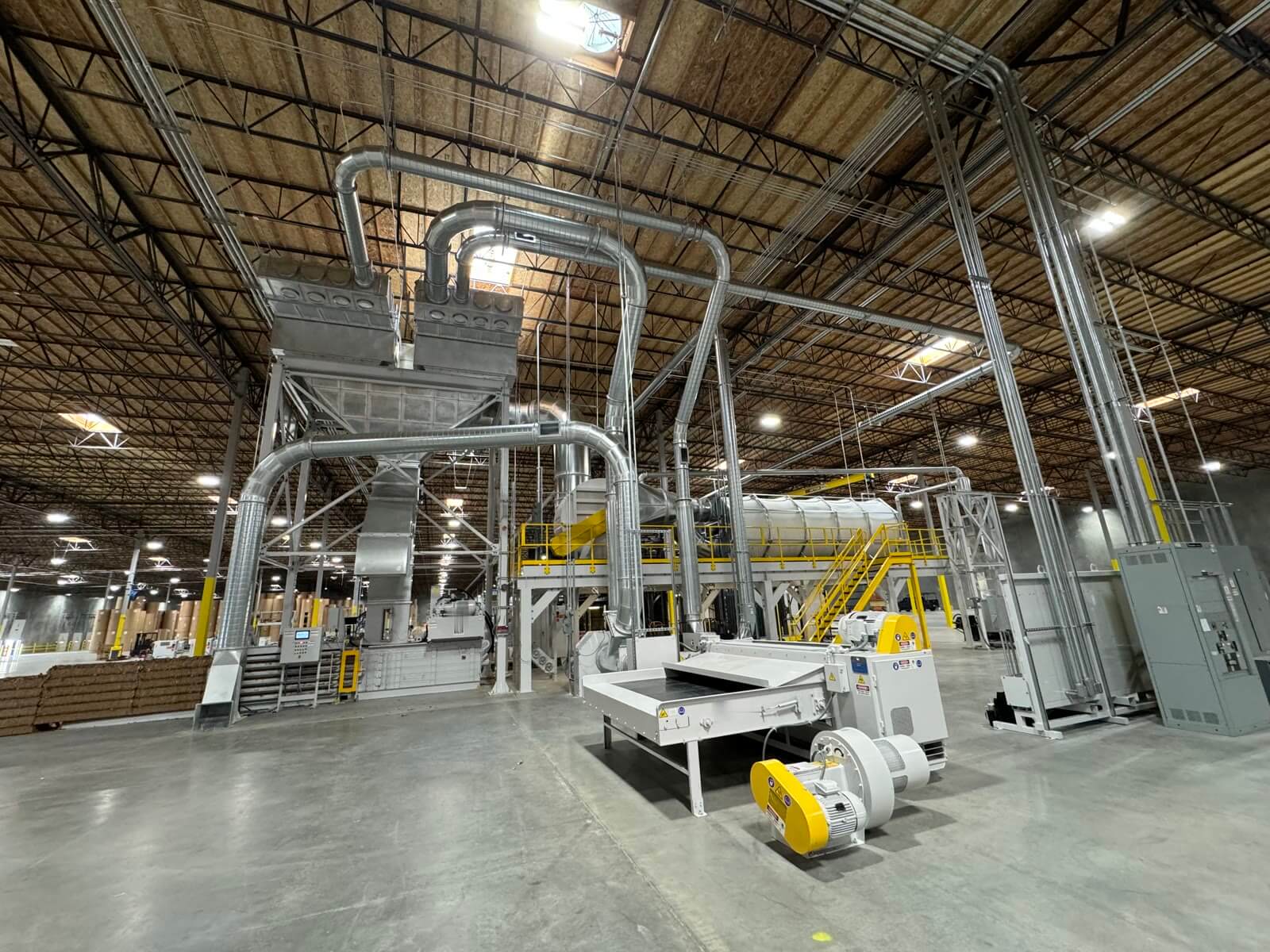
Paperboard industry trim removal systems from Engineered Recycling Systems are engineered for thick, multilayered stock: heavy-gauge trim conveyance, high-capacity separators and CCM® dust filtration, specified as one system. Designed, installed and supported from Atlanta.
What makes board different
Board trim is thick and stiff. It does not fold, bend or follow a duct the way paper trim does, and it arrives with far more mass per piece than a converting line produces.
That is the opposite of the paper converting problem, where the trim is light and the risk is tailing. On board the risk is a blockage, and a blockage in stiff stock does not clear itself.
The substrates
Solid bleached sulfate, coated recycled board, chipboard and other high-strength paperboard grades. Multilayered stock behaves differently again, because the layers delaminate at the cut edge and shed more dust than the sheet suggests.
Coated grades add mineral content, which is abrasive. Ducting that lasts on uncoated board wears faster on coated, and the bends go first.
Caliper is the number that drives the design. A plant running a wide caliper range needs a system that copes with the heaviest board it handles, not the one it runs most of the time, because the heavy grade is what blocks a duct.
Heavy-gauge conveyance
Thick, stiff trim moves through reinforced ducting and robust conveying components, with airflow designed around the actual mass rather than the volume. That is what prevents blockages and keeps wear within reason.
Bend radius does most of the work here. A tight bend that passes light trim all day will catch a stiff board offcut, and the first blockage usually arrives within a shift of commissioning.
High-capacity separators and chutes
Separators take the trim out of the airstream and chutes deliver it to balers, compactors or shredders. Airflow stays stable and scrap keeps moving under continuous, high-output conditions.
On board the chute geometry matters as much as the separator. Stiff material bridges in a chute that a lighter stock would flow through, and a bridged chute backs the whole line up.
CCM® filtration
ERS dust collection uses CCM® Filter Technology for continuous particulate removal without compressed air and without frequent manual cleaning. One less utility, one less failure mode.
It suits the fine dust generated during sheeting, cutting and finishing, holding low pressure loss, stable airflow and long media life. Collected dust discharges through a cyclone separator for consolidated handling.
Board dust is combustible, so the clean air case is a fire case as well. Keeping particulate out of the building and out of the ducting is the point.
Accumulated dust inside a duct run is the part nobody sees until an inspection finds it. A filtration stage that holds its airflow keeps the ducting self-scouring, which is cheaper than cleaning it out on a shutdown.
Fan arrangements
Fans are sized to deliver the suction heavy trim needs while keeping airflow balanced across several production lines. Power and efficiency are not opposed here — the balancing is what stops the system drawing peak load continuously.
That matters on a plant running lines at different times. A system that cannot rebalance is permanently sized for every line running at once, which is rarely what happens.
Whole-system scope
Trim removal, vacuum transfer air dust collection and scrap system dust collection, designed together as one engineered system rather than three separate purchases from three suppliers.
Where cores have to be handled, a paper core shredder goes in alongside instead of leaving a manual job at the end of every shift.
The rest of the paper side
ERS covers corrugated and folding carton, which share board's stiffness, plus paper mills upstream.
On the lighter side there is commercial printing, direct mail, flexible packaging, matrix extraction for labels, and tissue converting with its own tissue and hygiene dust collection.
What board plants get out of it
Fewer blockages, which on stiff stock is the single largest source of unplanned downtime. Less wear, because the system is specified for abrasive coated grades rather than adapted to them.
And a cleaner plant, with the housekeeping burden off operators and the fire risk reduced rather than managed.
How a project starts
With your grades, your calipers, your web widths and your existing ducting. ERS surveys the plant before quoting, because on board the route the trim has to take decides more than the equipment does.
Material can be run at the ERS test facility in Atlanta where a question needs settling. Every system ERS supplies is installed, commissioned and supported by ERS, with spare parts and service from Atlanta.
Talk to ERS about your grades, your calipers and where trim is currently stopping your lines.