


Scrap & Trim Collection Dust Control System
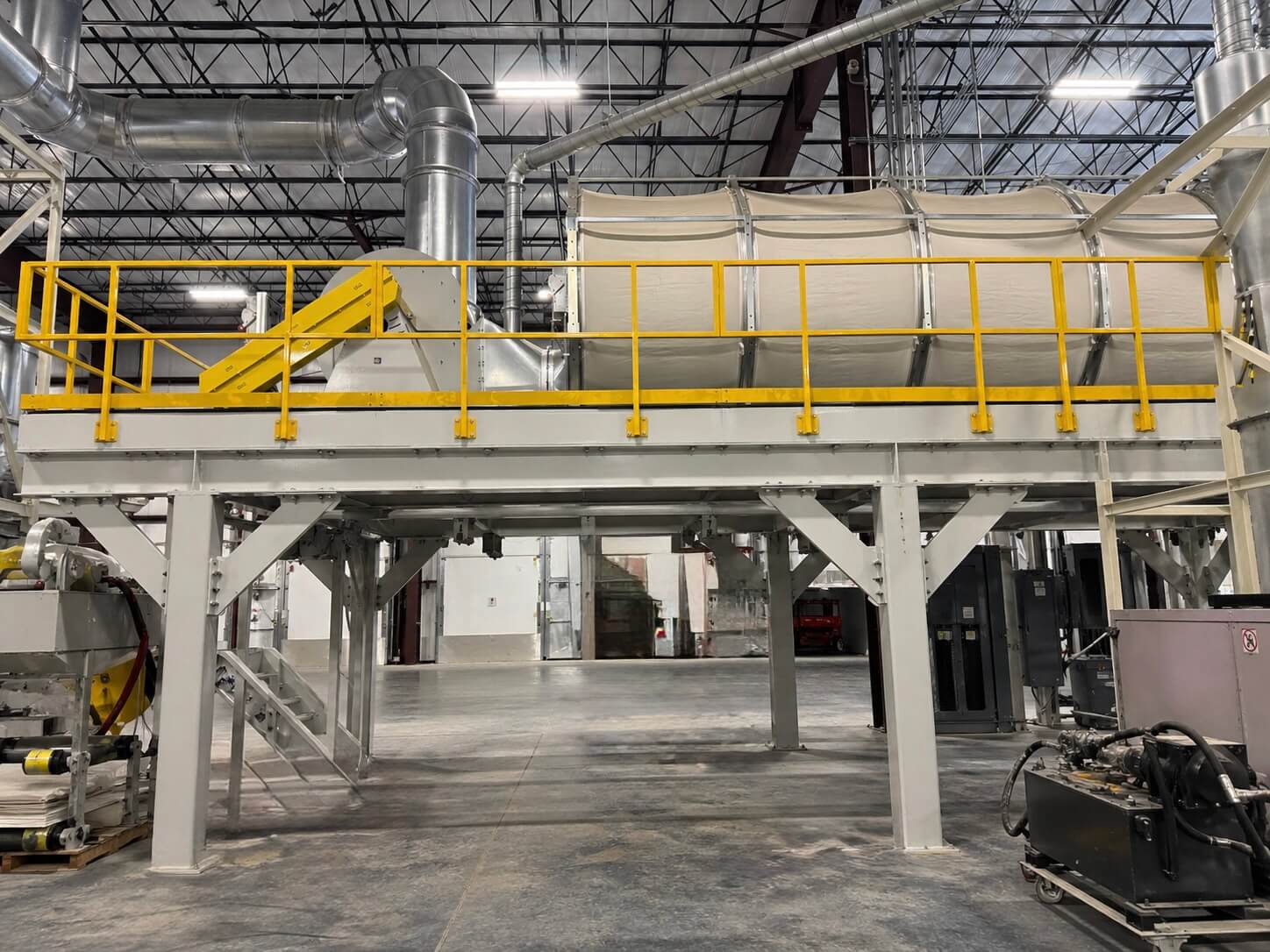
Trim removal and dust collection systems from Engineered Recycling Systems handle the scrap and the air together: trim and offcut off the line, dust out of the air, both engineered as one system rather than two. Built for paper converting and corrugated manufacturing, and supported from Atlanta.
Two innovations that changed the system
ERS modernised scrap and dust technology around two components: the Balancing Fan and the CCM® Filter. Together they make the extraction process self-adjusting rather than fixed, which is where both the reliability and the energy saving come from.
A conventional system runs at one setting and copes with everything else by being oversized. A self-adjusting one uses the horsepower the moment actually needs.
How the system works, stage by stage
Air, dust and scrap enter through the ERS LPS (Low Profile Separator). Trim and scrap drop out into the baler chute; the air carries on.
The Balancing Fan neutralises down-pressure inside the chute. That keeps airflow balanced and stops the surges that disrupt conveying, and it adjusts automatically as conditions change through the shift. The result is consistent conveying, lower energy use and a baler that is fed steadily instead of in bursts.
The remaining air and dust are conveyed to the CCM® Filter, where rotating and oscillating suction nozzles vacuum dust off the filter media continuously, running a deep clean every two to three minutes. Pressure loss stays low, airflow stays stable, and the media lasts.
Collected dust discharges into a high-efficiency cyclone separator and is formed into compact dust pucks, which go to a dumpster or back into the baler chute so there is one waste stream to handle instead of two.
What ERS actually supplies
Trim removal, vacuum transfer air dust collection and scrap system dust collection. Hoods, conveying, separators, filters and fans, specified as one system so the stages balance.
That matters because a filter chosen without reference to the fan, or ducting sized without reference to either, is where most underperforming systems come from. The components are rarely the problem; the match between them usually is.
Where it goes in
ERS systems integrate with presses, slitters, die cutters, sheeters and finishing equipment, on a single line or across a multi-line plant. Centralised systems combine trim, dust and scrap into one engineered waste stream, which clears floor space, simplifies maintenance and allows outside-building collection.
Higher line speeds, lighter substrates and tighter tolerances have all raised what the extraction system has to do. A system specified for the line as it ran five years ago is usually the constraint on the line as it runs now.
By industry
Corrugated plants are the largest part of this work, with dust and scrap recovery designed around the converting lines. Folding carton and paperboard plants bring heavier board and different dust.
Paper mills and paper converting operations run at volumes where a stoppage is expensive. Tissue converting has its own dust problem, covered by tissue and hygiene dust collection.
Commercial printing, direct mail manufacturing and flexible packaging each produce trim that behaves differently in a duct. Matrix and trim extraction for label converting is a job of its own, because matrix is sticky and will not behave like paper trim.
Safety, fire and housekeeping
ERS systems are built to workplace safety, health and fire protection guidelines. Controlling airborne particulate and keeping conveying paths clean reduces fire risk, which on a plant handling paper dust is the argument that matters most.
It also removes the manual cleanup that otherwise falls to operators. A plant that is not sweeping up trim is a plant running, and the time saved is real production time rather than a line on a brochure.
What it does for the plant
Less downtime, because waste does not accumulate and airflow stays stable. More consistent product, because the line is not being interrupted. And lower energy use, because the system draws what it needs rather than what it was sized for on the worst day.
Consolidating waste streams also cuts material loss and supports recycling where the fractions are clean enough to be worth separating. Those are the practical sustainability gains, as opposed to the stated ones.
Core and offcut handling
Where cores have to be dealt with as well, a paper core shredder handles them alongside the trim system rather than as a separate manual job at the end of the shift.
The wider dust collection range and converting-specific dust collection cover the parts of a plant the trim system does not reach.
How a project starts
With your equipment layout, your material types and your production speeds. ERS reviews all three before proposing a configuration, because those are what determine whether a system performs — not the size of the fan.
Material can be run at the ERS test facility in Atlanta where that helps. Every system ERS supplies is installed, commissioned and supported by ERS, with spare parts and service from Atlanta.
Talk to ERS about your lines, your speeds and what your current system is costing you in downtime.
Paper Scrap & Paper Trim Collection Dust Control System
