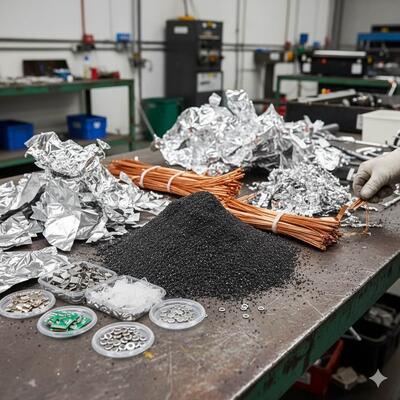
EV Battery Recycling Solutions separate copper and aluminum from the black mass
Black mass recovery systems from Engineered Recycling Systems (ERS) deliver precision‑engineered solutions for extracting valuable metals from electric vehicle (EV) battery waste. These systems are designed to separate copper and aluminum from the black mass—a dense, complex mixture of shredded battery components—without recycling the entire battery. ERS focuses on building custom machinery that enables recyclers to recover high‑purity metals while maintaining confidentiality, operational control, and long‑term reliability.
Black mass is the residual material generated during the dismantling and shredding of lithium‑ion batteries. It typically contains a mix of copper, aluminum, graphite, lithium compounds, and other residuals. While ERS does not perform the recycling itself, it designs and builds the specialized equipment that allows processors to handle black mass efficiently, safely, and sustainably. This approach gives recyclers full control over their process while protecting proprietary chemistries and sensitive operational data.
The recovery process begins with a secure feed system that introduces black mass into the separation line. ERS systems are engineered to handle variable input compositions, ensuring consistent performance across different battery chemistries and formats. Material is conveyed into a proprietary separation chamber where copper and aluminum are isolated using calibrated airflow, density profiling, and mechanical agitation. This controlled environment ensures stable throughput, predictable purity, and minimal material loss.
ERS black mass recovery systems may incorporate a range of specialized components, including air‑based separation units, magnetic separators, sensor‑based sorters, and dust filtration modules. These technologies work together to deliver clean metal fractions suitable for resale or refining. The systems are modular and scalable, allowing facilities to configure layouts based on available space, throughput goals, and material types. This flexibility ensures that each installation is optimized for performance and long‑term operational success.
Confidentiality is a core feature of ERS’s approach. Many EV battery recycling operations involve proprietary chemistries, strategic partnerships, or sensitive intellectual property. ERS designs its black mass recovery systems with discreet architecture and secure integration protocols, ensuring that customer information and process details remain protected. This commitment to confidentiality allows processors to operate with confidence in competitive and rapidly evolving markets.
Dust control is critical in black mass processing, and ERS integrates high‑efficiency filtration systems to capture airborne particles and recover trace metal fines. These features support regulatory compliance, improve workplace safety, and contribute to higher total recovery rates. Optional CCM® OCT filtration modules can be incorporated for enhanced performance in demanding environments.
ERS black mass recovery systems support a wide range of input materials, including shredded lithium‑ion battery components, EV battery black mass from dismantling lines, residuals from cathode and anode separation, mixed metal fines from battery recycling streams, and copper and aluminum fragments from battery terminals and foils. This versatility ensures that processors can adapt to changing feedstock as battery technologies evolve.
Each system includes intuitive control panels, maintenance access points, and wear‑resistant components designed for long‑term reliability. Safety features such as interlocked panels, emergency stops, dust containment, and acoustic dampening are engineered to meet industrial compliance standards while protecting personnel. Process intelligence is built into every ERS system, with programmable logic controllers and real‑time monitoring tools that allow operators to adjust separation parameters, track throughput, and optimize performance. Remote diagnostics and cloud‑based analytics support uptime and help facilities adapt to changing material streams.
ERS supports customers with full lifecycle services, from system design and layout planning to installation, training, and optimization. The engineering team works directly with processors to define recovery goals, configure equipment, and ensure consistent performance. As battery technologies evolve or throughput increases, ERS provides upgrade paths and technical support to maintain long‑term system value.
The economic impact of black mass recovery is significant. With demand for copper and aluminum rising in the EV and renewable energy sectors, processors equipped with high‑efficiency systems can capture more value from battery waste while reducing disposal costs. ERS systems help facilities meet environmental benchmarks, improve ROI, and strengthen their competitive position in the metals recycling market. In addition to metals recovery, these systems contribute to broader operational efficiency by reducing landfill volume, lowering tipping fees, minimizing regulatory exposure, and improving downstream material quality.
ERS black mass recovery systems are trusted by recyclers, battery manufacturers, and energy storage companies across North America and Europe. With proven results in demanding applications—from EV battery dismantling to cathode‑anode separation—ERS equipment delivers long‑term value, reliability, and support. These systems are engineered to help processors recover more metal, reduce waste, and stay competitive in a resource‑conscious industry. With modular design, advanced separation technology, and full lifecycle support, ERS black mass recovery systems turn complex battery scrap into clean profit.
Next Steps for Your Black Mass Recovery Project
If you’re evaluating black mass recovery systems or planning a new installation for EV battery material processing, our engineering team is ready to support you. You can reach out through our contact form to request a quote or schedule a consultation with an ERS engineer. If you want to see how your black mass performs in a real system before making a final decision, you can also send material for testing to our facility, where our team will process it through an ERS‑engineered line and provide documented recovery results to support your planning.