


Trim and Dust in Print Finishing Where a Jam Costs a Mail Date
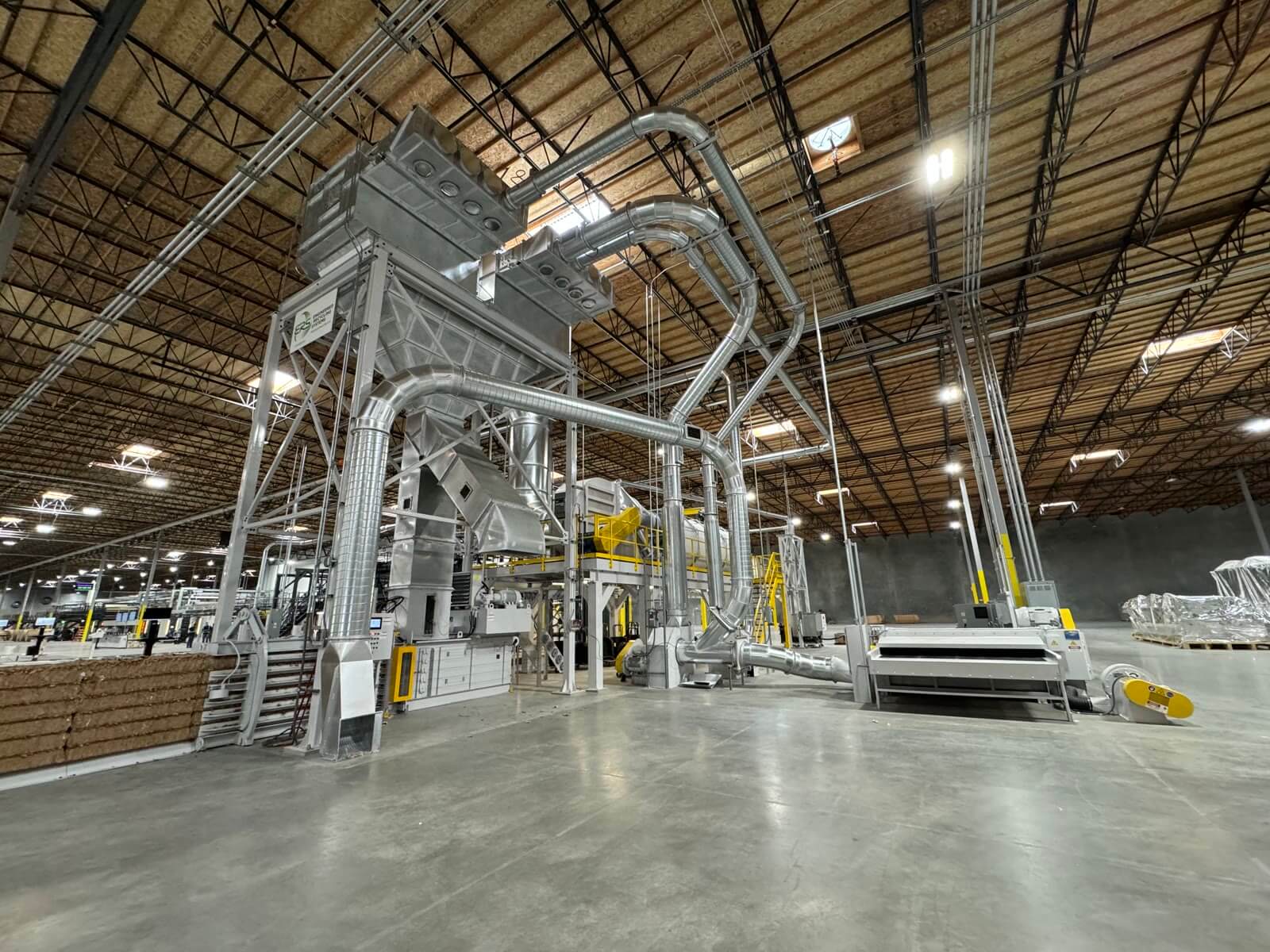
Direct mail manufacturing trim removal systems from Engineered Recycling Systems are built for nonstop print finishing: high-speed trim extraction, compact separators and CCM® dust filtration, specified as one system. Designed, installed and supported from Atlanta.
Why direct mail is its own problem
Thin substrates, variable data work and finishing equipment that is precise and intolerant of debris. The trims are narrow and light, the lines run fast, and a jam does not just stop production, on variable data work it can break the sequence.
That makes stable conveying a quality issue rather than only an uptime one, which is not the case on most paper work.
Volumes are high and margins are thin, so the cost of a stoppage is not only the lost hour. Reprinting sequenced work means re-running data, re-matching pieces and explaining a missed drop date.
Which operations it serves
Variable data printing, envelope inserting, high-speed booklet making, folding, cutting and addressing. Narrow-edge trims come off digital presses, inserters, folders and cutters and have to leave without disrupting product flow.
Lightweight scrap is the hardest thing to convey reliably. It responds to every pressure change in the duct, so the velocity has to be right across the whole run rather than at the design point.
Compact separation
Separation units integrate directly with mail lines, stackers and finishing equipment, diverting trim into balers or bins while taking as little floor space as possible.
Space is usually the binding constraint in these plants. Access, workflow and floor area are tightly managed, and a separator that needs a bay of its own will not get one.
Equipment also moves. Mail lines get reconfigured between campaigns more often than converting lines do, so the extraction has to be designed with that in mind rather than welded around one layout.
CCM® filtration
ERS dust collection uses CCM® Filter Technology, which cleans the filter media continuously without compressed air. It removes fine paper dust, toner dust and the particulate that digital and offset finishing produce.
Low pressure loss, stable airflow and long media life, with collected dust discharging through a cyclone separator. Performance is specified against OSHA, NFPA and indoor air quality standards.
Clean air matters twice over here. It is a workplace requirement, and it protects equipment that is sensitive to dust in a way a press is not, inserters and addressing systems read and handle individual pieces.
What dust does to a mail line
Misfeeds, double-feeds and read errors. On a line that has to produce a specific piece for a specific address, those are not just slowdowns, they are reprints.
That is the argument for extraction at the machine rather than housekeeping afterwards. By the time dust is somewhere it can be swept up, it has already been through the equipment.
Airflow control
Fan systems match airflow to production demand rather than running flat out, which cuts energy use and keeps performance stable when only part of the plant is running.
Direct mail work arrives in campaigns, so the plant load varies by the week. A system that cannot rebalance is sized permanently for the busiest campaign of the year.
Whole-system scope
Trim removal, vacuum transfer air dust collection and scrap system dust collection, designed together as one engineered system rather than three purchases from three suppliers.
Where cores have to be handled, a paper core shredder goes in alongside instead of leaving a manual job at the end of the shift.
The rest of the paper side
ERS covers commercial printing, which shares the pressroom problem, plus matrix and trim extraction for label work and flexible packaging.
Across the converting side there is paper converting, paperboard, corrugated and folding carton, with paper mills upstream and converting dust collection alongside.
What mail producers get out of it
Fewer jams, which on sequenced work is the expensive failure. Cleaner air around equipment that cares about it. And floor space kept for production rather than given to waste handling.
On campaign work the gain shows up in turnaround. A line that runs without interruption hits a mail date; one that stops to clear trim does not, and the deadline is usually external.
How a project starts
With your finishing lines, your substrates and your throughput. ERS surveys the plant before quoting, because in these facilities the available space and the routing decide as much as the equipment does.
Material can be run at the ERS test facility in Atlanta where a question needs settling. Every system ERS supplies is installed, commissioned and supported by ERS, with spare parts and service from Atlanta.
Talk to ERS about your lines, your substrates and where trim or dust is costing you a mail date.