


Clean Scrap, Clear Air Systems Built for Can Makers
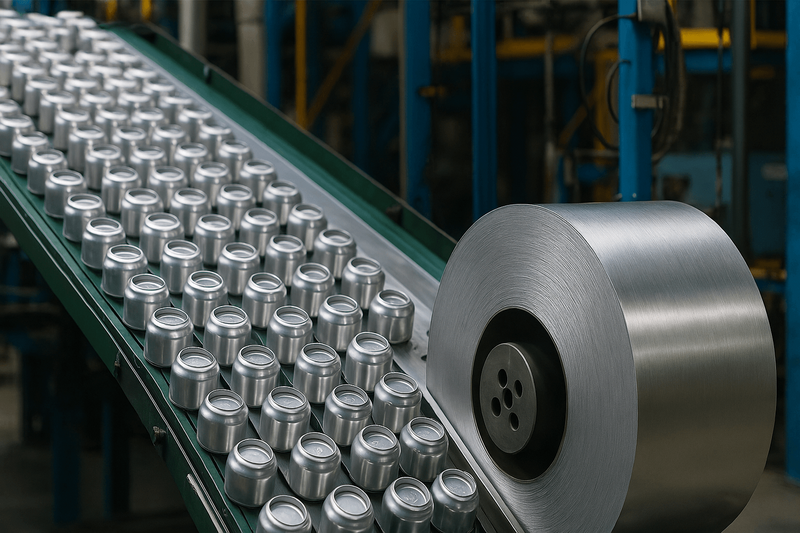
Aluminum scrap and dust collection systems are essential in beverage container manufacturing, one of the fastest and most demanding industrial processes in the world. From the moment aluminum coil enters the line, every stage of production generates scrap and fine dust that must be managed with precision to maintain efficiency, safety, and environmental compliance.
Cupping presses cut and shape the coil into cups, producing edge trim and offcuts that must be removed immediately to prevent buildup. Bodymakers form container walls at extremely high speed, generating fine aluminum dust and occasional mis‑drawn pieces that require controlled extraction. Trimmers remove excess material from formed bodies, producing continuous ribbons of scrap that must be conveyed cleanly out of the production area. Washers and decorators apply coatings and graphics, releasing overspray and airborne particulates that must be captured to protect air quality. Necking and seaming operations generate small amounts of trim and dust during forming and closing, while end‑making lines stamp and curl closures, producing slugs, trim, and fine particles.
Without a dedicated aluminum scrap and dust collection system, this byproduct accumulates quickly, reducing efficiency, creating housekeeping challenges, and complicating compliance with environmental standards. Aluminum dust in particular requires careful control to protect workers, equipment, and facility air quality. Effective systems capture material at the source and move it seamlessly out of the production environment, ensuring that high‑speed manufacturing remains stable and safe.
ERS systems are engineered to support every stage of beverage container production. Trim removal systems manage continuous ribbons from trimmers with consistent airflow and reliable conveyance. Dust collection systems control fine particulates from bodymakers, washers, and decorators, maintaining clean air and preventing buildup on equipment. Integrated scrap handling consolidates material flow, reduces manual intervention, and ensures that clean aluminum is recovered for recycling. Energy‑efficient designs lower operating costs while supporting compliance with environmental regulations and sustainability goals.
By turning aluminum scrap into a recoverable resource, manufacturers improve margins, support sustainability commitments, and maintain safer, cleaner production environments. With the right aluminum scrap and dust collection system in place, beverage container plants gain full control over their byproduct, ensuring that high‑speed production remains efficient, profitable, and environmentally responsible.
Next Steps for Your Aluminum Scrap and Dust Collection Project
If you’re evaluating aluminum scrap and dust collection systems or planning upgrades to your current setup, our engineering team is ready to support you. You can reach out through our contact form to request a quote or schedule a consultation with an ERS engineer. If you want to understand how your material performs in a real system, you can also send sample material to our facility, where our team will process it through an ERS‑engineered line and provide documented results to support your planning.