News & Projects

Innovation in Action – ERS News & Projects

ERS Industrial Project News highlights real‑world installations, system upgrades, engineering achievements, and field‑proven results across the industries we serve. This page brings together updates from metals recycling, paper converting, dust collection, and industrial scrap handling, offering a clear view into how Engineered Recycling Systems (ERS) delivers engineered performance in demanding production environments.

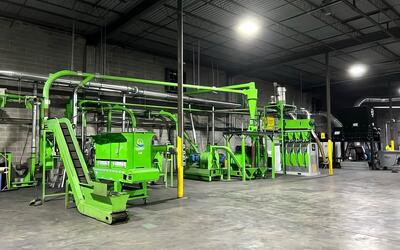
Recent updates in the metals sector showcase turnkey systems for copper wire chopping, aluminum separation, e‑scrap processing, and rare earth recovery from printed circuit boards. These projects feature engineered granulation lines, magnetic and eddy current separation, air classification, and high‑efficiency dust control designed to isolate high‑value fractions from complex scrap streams. Each installation is tailored to the customer’s material flow, facility layout, and throughput requirements, with a focus on rapid ROI, clean operation, and long‑term reliability.

ERS news also covers major advancements in paper converting and corrugated production. Recent installations include dust and trim removal systems for rotary die cutters, Flexo Folder Gluers, and high‑speed converting lines. Many of these systems feature the CCM® OCT Filter, a fully enclosed filtration platform that operates without compressed air and delivers consistent performance with minimal maintenance. Machine builders and OEM partners continue to integrate ERS dust control into their converting lines, reflecting the industry’s shift toward engineered, enclosed, and energy‑efficient filtration.

Across industrial scrap handling, ERS continues to modernize and upgrade non‑ERS systems. These projects include retrofits for pneumatic transport lines, improvements to magnetic separation platforms, and airflow stabilization upgrades for aging dust collection equipment. Field service teams provide on‑site diagnostics, operator training, and performance tuning to restore efficiency, reduce maintenance, and meet evolving compliance requirements.

The purpose of ERS Industrial Project News is to give customers a clear view of the work happening behind the scenes: the engineering decisions, the system integrations, the field adjustments, and the real‑world results that define ERS installations. Each update reflects the same core principles—engineered precision, clean operation, and long‑term system performance.

This page is updated regularly with new case studies, installation highlights, and customer success stories. Whether your operation is focused on metals recycling, paper converting, or dust‑intensive production, ERS Industrial Project News provides an inside look at how our systems solve complex challenges and support cleaner, safer, and more efficient facilities.

28. Aug 2026
ERS vacuum transfer system moving trim and scrap into a baler at a corrugated facility.
ERS Vacuum Transfer Systems: One Engineered System for Trim, Scrap, and Dust
by ERS
0

Most vacuum trim units on the market handle one job: pulling trim off the line. They stop there, leaving dust collection as someone else's problem and someone else's equipment.

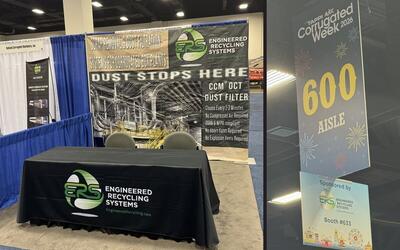
ERS vacuum transfer systems are engineered differently, as one complete system instead of a bolt-on component. High-velocity scrap conveyance moves trim and scrap without jams, flutter, or suction instability. A Low Profile Separator pulls that material cleanly out of the airstream. The CCM® OCT Filter handles dust collection at the same time, without compressed air and without the explosion venting standard baghouse systems require.

The result is one integrated system built for converting lines, corrugated, paper, and label production alike, instead of a patchwork of separate equipment that each need their own maintenance, their own downtime, and their own point of failure.

Ready to see what one engineered system can do for your line instead of three separate ones.

28. Aug 2026
ERS trim removal and dust collection system installation at a new corrugated box manufacturing plant expansion.
New Corrugated Box Manufacturing Plant Expansion Gets Complete ERS System
by ERS
0

Corrugated box manufacturers need trim removal and dust collection that keeps up with production, not equipment that becomes the bottleneck.

A new corrugated box manufacturing plant expansion is getting a complete engineered system built specifically for that challenge. The system moves trim and scrap without interruption, controls dust at the source, and keeps the production line running at full speed instead of slowing down to manage cleanup.

That means less downtime, a safer plant floor, and one integrated system to rely on instead of a patchwork of separate equipment bolted together over time. It's the same engineering approach behind every ERS trim and dust system: built for real production, not just spec sheets.

Discover how ERS engineers complete trim removal and dust collection systems built for real corrugated production.

27. Aug 2026
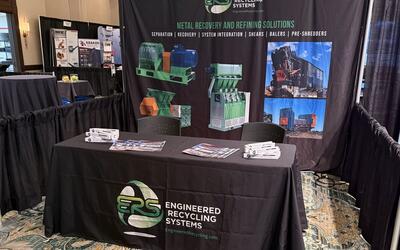
ERS exhibitor table at the RANC Annual Meeting 2026 in Wrightsville Beach, NC.
ERS Exhibits at RANC 2026 Annual Meeting in Wrightsville Beach
by ERS
0

Our team is on-site this week at the Recycling Association of North Carolina's 2026 Annual Meeting, taking place August 27-28 at Trailborn Surf & Sound in Wrightsville Beach. The event brings together processors, haulers, and industry decision-makers from across the region for two days of networking and industry insight.

Regional events like this one give processors and haulers a chance to compare notes on equipment, market conditions, and day-to-day operations in a smaller, more focused setting than the larger national shows. For ERS, these conversations usually start with a simple question: how much more value could a yard be pulling out of material it is already processing.

At our table, we are connecting with attendees about ERS metal recovery and refining solutions, engineered to help recycling operations get more value out of every load. Our systems are built around combining trim removal, dust collection, and metals recovery into a single, reliable process, so operators are not left stitching together equipment from multiple vendors. Every system is designed, built, and supported in-house, from initial engineering through ongoing parts and service.

It is a great event, a great location, and a great reminder of how connected this industry's regional network really is, even outside the big national shows. We look forward to staying part of that conversation and continuing to support RANC members in the year ahead.


21. Aug 2026
Shredder fines piling up at a scrap yard with no clear plan to recover the metal in it
Getting the Metals Out of Fines
by ERS
0

Most shredder yards are sitting on a growing pile of shredder fines. It is one of the biggest sources of lost value in a recycling operation, and most systems on the market are not built to recover it. Fines keep piling up because nobody has a real process for them, and eventually they end up baled off cheap, stockpiled, or sent to landfill entirely.

The typical approach runs fines across a high-frequency eddy current separator and calls it done. That process misses roughly half the metal. It does an alright job pulling aluminum, but it leaves almost all the copper behind, and it is not running the material past any further separation. Whatever the eddy current catches is the end of the line.

ERS takes a different approach to fines processing, engineered specifically to recover what a standard eddy current pass leaves behind. Instead of one pass and done, the material goes through a full system built for this exact fraction, and what comes out is not scrap anymore, it is a real metals concentrate ready to sell.

The difference shows up in what comes out the other end. Instead of a single mixed stream from an eddy current pass, the system actually separates red metals from aluminum. That distinction matters at the smelter. Mixed metal sells for less than sorted metal, every time, and a yard that is only running an eddy current pass on its fines is leaving that difference on the table on every load.

If shredder fines are piling up in your yard with no clear plan for them, there is a better way to process that material than sending it to landfill or baling it off for next to nothing.

Contact ERS to talk through what a recycling line built around your material stream could look like.

18. Aug 2026
ERS exhibiting at the RANC Annual Meeting 2026, Wrightsville Beach NC, August 27-28.
ERS Exhibiting at the RANC Annual Meeting 2026 in Wrightsville Beach, NC
by ERS
0

ERS will be participating in the RANC Annual Meeting 2026, North Carolina's premier gathering for recycling and materials management professionals. This event brings together processors, haulers, and industry decision-makers for two days of networking, education, and industry insights.

Visit us at our exhibitor table, we would welcome the opportunity to connect with the region's recycling industry leaders.

See us there.

Trailborn Surf & Sound
275 Waynick Blvd, Wrightsville Beach, NC 28480
August 27-28, 2026

11. Aug 2026
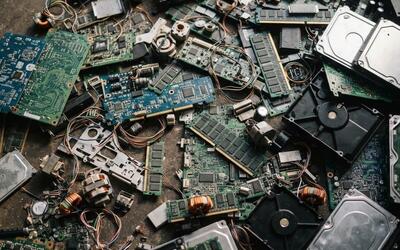
critical metals recycling material — circuit boards, battery cells, and electronic scrap ready for processing.
Recycling Critical Metals Domestically Reduces Foreign Dependence — Here's ERS's Role
by ERS
0

Most of the rare and critical metals used in batteries and electronics — lithium, cobalt, nickel, graphite, rare earth elements — come from a small number of foreign countries, with global refining concentrated in just a few of them. Recycling more of these materials domestically, instead of relying on new imports, is one of the most direct ways to reduce that dependence. Every battery, circuit board, or piece of electronic scrap recovered here is material the U.S. doesn't have to import.

That domestic recycling capacity comes from two different places: mining new ore, and recovering materials already in circulation. ERS works exclusively in the second one. ERS builds recycling equipment, not mining or ore-processing equipment — the raw material ERS handles has already been used once, in a battery, a circuit board, or industrial scrap, and the job is recovering the metal from it rather than extracting it from rock.

Before that recovered metal can be refined or reused, the raw scrap first has to be broken down and separated into a clean, workable feedstock. Shredded battery packs, mixed circuit boards, and complex electronic scrap all arrive as dense, mixed material, and getting from that raw state to something a refiner can actually use is a mechanical processing problem.

That's where ERS fits. ERS designs and builds the shearing, shredding, sorting, and separation equipment that turns raw recycled material into that feedstock — including black mass recovery systems that separate copper and aluminum out of shredded EV battery material, and electronics recycling systems that recover metals from circuit boards, cables, and mixed e-waste. Researchers and startups working on new ways to recover critical metals domestically often have the extraction chemistry solved before they have the equipment to process raw material at scale and that mechanical front end is exactly what ERS provides.

Contact ERS to talk through what a recycling line built around your material stream could look like.

07. Aug 2026
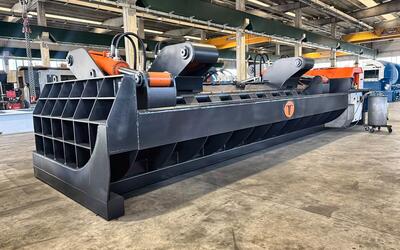
ERS HAKA entry-level shear baler processing mixed scrap metal at an outdoor recycling yard.
HAKA Entry-Level Shear Baler, Available Through ERS
by Andreas Fischer
0

ERS is adding HAKA to its shear baler lineup — a new entry-level machine built to deliver performance beyond what its category typically offers. Despite a compact, mid-sized footprint, HAKA reaches cutting forces of up to 800 tons, with a compression box up to 7000 mm and the option to configure two lid cylinders.

Structural robustness isn't optional on equipment that absorbs high stress, continuous impact, torsion, vibration, and wear every day — and HAKA holds consistent performance under that load despite its entry-level classification. Its frame is high-quality welded steel, with components joined using submerged-arc welding for uniform, fatigue-resistant weld seams, a critical detail for processing heterogeneous, demanding scrap. Every component is machined on high-precision CNC work centers, ensuring precise fits, straightforward assembly, and easy part interchangeability.

That structural approach lets HAKA process material typically reserved for higher-category machines, including steel, car bodies, pipes, beams, sheets, and mixed or bulky scrap.

HAKA is part of the TAURUS shear baler range offered by ERS. Contact ERS to learn more about HAKA and the rest of the equipment lineup.

07. Aug 2026
Article discussing how Section 232 tariffs increase the value of domestic scrap processing and highlight ERS engineered systems for shearing, shredding, sorting, and baling.
𝗦𝗲𝗰𝘁𝗶𝗼𝗻 𝟮𝟯𝟮 𝗧𝗮𝗿𝗶𝗳𝗳𝘀 𝗖𝗿𝗲𝗮𝘁𝗲 𝗮 𝗡𝗲𝘄 𝗩𝗮𝗹𝘂𝗲 𝗢𝗽𝗽𝗼𝗿𝘁𝘂𝗻𝗶𝘁𝘆 𝗳𝗼𝗿 𝗗𝗼𝗺𝗲𝘀𝘁𝗶𝗰 𝗦𝗰𝗿𝗮𝗽 𝗣𝗿𝗼𝗰𝗲𝘀𝘀𝗼𝗿𝘀
by ERS
0

Section 232 tariffs now apply a 𝟱𝟬% 𝗱𝘂𝘁𝘆 on imported 𝘀𝘁𝗲𝗲𝗹, 𝗮𝗹𝘂𝗺𝗶𝗻𝘂𝗺, and 𝗰𝗼𝗽𝗽𝗲𝗿 articles. These duties are calculated on the full customs value of the imported material, which significantly increases the cost of 𝘃𝗶𝗿𝗴𝗶𝗻 𝗺𝗲𝘁𝗮𝗹 entering the United States. 𝗦𝗰𝗿𝗮𝗽 𝗺𝗲𝘁𝗮𝗹, however, remains outside the high‑duty category. This difference has created a clear economic shift: 𝗱𝗼𝗺𝗲𝘀𝘁𝗶𝗰 𝗽𝗿𝗼𝗰𝗲𝘀𝘀𝗲𝗱 𝘀𝗰𝗿𝗮𝗽 has become a more attractive feedstock for 𝘀𝗺𝗲𝗹𝘁𝗲𝗿𝘀 and 𝗳𝗼𝘂𝗻𝗱𝗿𝗶𝗲𝘀 seeking to reduce tariff exposure.

For 𝗿𝗲𝗰𝘆𝗰𝗹𝗲𝗿𝘀 and 𝗶𝗻‑𝗵𝗼𝘂𝘀𝗲 𝗽𝗿𝗼𝗰𝗲𝘀𝘀𝗼𝗿𝘀, this shift is more than a policy update; it is a direct pricing signal. Smelters benefit when they can replace tariff‑heavy virgin imports with 𝘁𝗮𝗿𝗶𝗳𝗳‑𝗳𝗿𝗲𝗲 𝗱𝗼𝗺𝗲𝘀𝘁𝗶𝗰 𝘀𝗰𝗿𝗮𝗽, but they can only do so when the material arrives in a form that meets melt‑shop specifications. Loose, mixed, or oversized scrap does not provide that value. The margin appears only when the material is processed into 𝗰𝗹𝗲𝗮𝗻, 𝘀𝗶𝗻𝗴𝗹𝗲‑𝗺𝗲𝘁𝗮𝗹, 𝗳𝘂𝗿𝗻𝗮𝗰𝗲‑𝗿𝗲𝗮𝗱𝘆 feedstock.

ERS systems are built specifically to create that value. 𝗦𝗵𝗲𝗮𝗿𝗶𝗻𝗴 equipment reduces oversized material to melt‑shop dimensions. 𝗦𝗵𝗿𝗲𝗱𝗱𝗶𝗻𝗴 systems increase volume, improve uniformity, and liberate metals from composites. 𝗦𝗼𝗿𝘁𝗶𝗻𝗴 and 𝘀𝗲𝗽𝗮𝗿𝗮𝘁𝗶𝗼𝗻 systems remove contaminants and divide mixed streams into clean, single‑metal fractions. 𝗕𝗮𝗹𝗶𝗻𝗴 systems compress the final product into dense, uniform packages that smelters can charge efficiently. 𝗗𝘂𝘀𝘁 𝗰𝗼𝗹𝗹𝗲𝗰𝘁𝗶𝗼𝗻 and air‑handling systems maintain environmental compliance and improve the quality of downstream separation.

When these steps are performed in‑house, the recycler captures the value created by the processing rather than leaving it to someone else. Under the current Section 232 tariff structure, that value is amplified. Smelters are motivated to buy 𝗱𝗼𝗺𝗲𝘀𝘁𝗶𝗰 𝗽𝗿𝗼𝗰𝗲𝘀𝘀𝗲𝗱 𝘀𝗰𝗿𝗮𝗽 because it helps them avoid tariff‑inflated costs on imported virgin metal. Recyclers who can deliver 𝗳𝘂𝗿𝗻𝗮𝗰𝗲‑𝗿𝗲𝗮𝗱𝘆 𝗺𝗮𝘁𝗲𝗿𝗶𝗮𝗹 benefit directly from this shift in demand.

ERS provides integrated systems that allow processors to run the entire chain themselves. Instead of relying on multiple vendors or piecing together incompatible machinery, a recycler can operate a complete, engineered line that transforms incoming scrap into 𝗵𝗶𝗴𝗵‑𝘃𝗮𝗹𝘂𝗲 𝗳𝗲𝗲𝗱𝘀𝘁𝗼𝗰𝗸. The result is a more predictable product, stronger pricing, and a competitive advantage created by policy rather than eroded by it.

Section 232 tariffs have changed the economics of metal sourcing in the United States. They have made 𝗱𝗼𝗺𝗲𝘀𝘁𝗶𝗰 𝗽𝗿𝗼𝗰𝗲𝘀𝘀𝗲𝗱 𝘀𝗰𝗿𝗮𝗽 more valuable, and they have created an opportunity for recyclers who invest in the systems that upgrade their material. ERS systems help processors turn that policy shift into 𝗼𝗽𝗲𝗿𝗮𝘁𝗶𝗼𝗻𝗮𝗹 𝗮𝗱𝘃𝗮𝗻𝘁𝗮𝗴𝗲 by producing the furnace‑ready scrap smelters increasingly prefer.

For more information or to discuss system planning, contact ERS directly.

 
05. Aug 2026
Before and after comparison of an ERS turnkey industrial dust collection system installation: dust buildup on equipment, the engineered collection ductwork, the high-efficiency filter unit, and the clean, dust-free facility after installation.
ERS Support for Industrial Dust Collection Challenges
by ERS
0

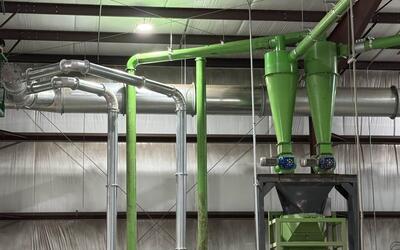
Many facilities are experiencing changes in production that lead to higher dust levels, new particulate types, or expanded operational demands. When this happens, companies often evaluate whether their current industrial dust collection setup can continue to support reliable performance or if a fully engineered turnkey system is required to maintain long‑term stability.

As operations evolve, dust loads can increase beyond what older systems were designed to handle. Facilities may introduce new machinery, reorganize production areas, or expand throughput, all of which can influence airflow patterns and particulate behavior. In these situations, companies frequently explore options for implementing a complete dust collection system that is engineered to meet updated requirements and provide dependable operation under changing conditions.

These evaluations often include reviewing equipment documentation, examining facility layouts, determining suitable collector placement, and identifying the correct airflow and ductwork configuration. Companies may also look for support with system sizing, accessory selection, installation coordination, startup, and commissioning — the same types of steps many organizations request when preparing for new equipment or addressing increased dust generation.

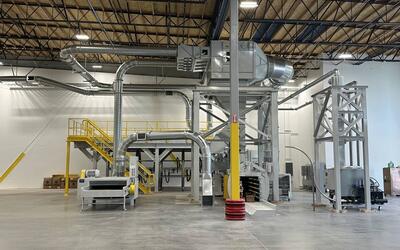
ERS designs and delivers turnkey dust collection solutions built for environments where consistent particulate control is essential. Our systems are configured to manage a wide range of dust loads and can be adapted to facility layouts, airflow demands, and future operational plans. A properly engineered turnkey system can help support production reliability, maintain safe working conditions, and provide scalability as facility needs continue to grow.

Organizations facing dust challenges, planning operational changes, or preparing for new equipment installations are invited to reach out to ERS to discuss their requirements and explore whether a turnkey industrial dust collection solution is the right path forward for achieving long‑term performance and reliability.

If your facility is evaluating dust issues or considering a system upgrade, ERS is available to assist with developing a complete, engineered, and installed solution tailored to your operational needs — contact us.

 
29. Jul 2026
ERS Engineered Recycling Systems Taurus mobile diesel shear baler for scrap metal processing
Growing US Demand for Taurus Mobile Shear Balers Highlights ERS's Expanding Scrap Processing Support
by ERS
0

Scrap processors and demolition contractors across the USA are increasingly turning to mobile, diesel-powered shear balers for the flexibility to process material on-site without relying on fixed infrastructure. As the exclusive US distributor for Taurus, ERS has seen growing inbound interest in the Taurus BLULINE mobile shear baler lineup — proof that European-engineered mobile processing equipment is resonating with the US scrap market.

The Taurus BLULINE mobile range includes the HIRU, a diesel-powered mobile shear baler with cutting force up to 1,300 tons, and the ELLE, a diesel-powered transportable shear baler with cutting force up to 1,000 tons. Both machines are built on Taurus's proven twin-cylinder shear design and honeycomb Hardox compression box construction, delivering the same durability and cutting performance found across the full BLULINE range — in a mobile, job-site-ready platform.

For scrap processors evaluating mobile or diesel-driven shear options, the BLULINE mobile lineup offers an alternative to fixed installations, with the ability to relocate equipment between yards or job sites as material volumes shift.

Interested in specs and pricing on Taurus mobile shear balers for your operation? Contact ERS today to speak with our team about the right Taurus solution for your scrap processing needs.

27. Jul 2026
ERS CCM® OCT Filter System installation project overview by Engineered Recycling Systems
CCM® OCT Filter System Installation
by ERS
0

Engineered Recycling Systems is completing a new installation of its CCM® OCT Filter System, a high‑performance solution engineered for continuous trim removal, matrix extraction, and dust control in demanding converting and recycling environments. The CCM® OCT Filter System is built around a high‑efficiency filtration module that maintains consistent airflow, stable suction, and clean operating conditions even in facilities running high‑speed production lines. The system captures fine particulate, paper dust, film scrap, and lightweight trim at the source, preventing buildup on equipment, reducing airborne contamination, and supporting compliance with modern environmental and workplace standards.

The CCM® OCT Filter System uses a compact, modular housing that fits easily into tight production layouts while delivering strong filtration capacity. Its automated cleaning cycle keeps the filter media operating at peak efficiency, reducing maintenance intervals and ensuring uninterrupted performance during long production runs. The integrated vacuum transfer and airflow management design stabilizes trim movement through the duct network, preventing jams, surges, and downtime. This installation demonstrates how ERS technology helps converters and packaging manufacturers maintain cleaner facilities, improve equipment reliability, and support higher throughput with consistent waste handling performance.

ERS continues to expand its portfolio of engineered recycling solutions with systems that combine durability, efficiency, and operational simplicity. The CCM® OCT Filter System reflects this commitment by providing a dependable, space‑efficient filtration platform that enhances productivity and environmental performance across the converting and printing industries.

 
23. Jul 2026
ERS Engineered Recycling Systems dust and scrap collection system with Low Profile Separator, CCM OCT filter, and baler for corrugated packaging producers
How ERS Helps Corrugated Packaging Producers Cut Dust, Scrap, and Downtime
by ERS
0

Corrugated packaging producers running high-speed converting lines face a common challenge: fine paper dust, edge trim, and loose scrap that pile up fast and threaten both compliance and floor space. ERS is currently completing a full dust and scrap collection system for a corrugated packaging facility — a solution built for exactly this challenge, and one that's readily adaptable for other converting operations facing the same constraints.

At the core of the system is ERS's Low Profile Separator (LPS), engineered for facilities where overhead clearance is limited. Unlike traditional separators, the LPS requires no roof penetration and no air lock, making it ideal for retrofits in tight pressroom or converting environments. Paired with the CCM® OCT Filter, the system continuously captures fine paper dust without manual cleanout, keeping operations compliant with air quality standards around the clock. A dedicated baler compacts recovered trim and scrap for efficient reclaim, while a corrugated sheet shredder clears loose sheet stock that would otherwise accumulate around the plant.

For corrugated, folding carton, and paper converting producers evaluating their own dust and scrap handling needs, this project is a clear example of how a space-constrained facility can achieve clean, compliant, high-throughput operation without a major footprint or facility redesign.

Is your facility facing similar dust, trim, or scrap handling challenges? Contact ERS today to learn more about our corrugated industry trim removal systems.


Engineered Recycling Systems

The trusted leader in industrial dust collection. Engineered Recycling Systems designs and delivers integrated dust control solutions using advanced technology, proven expertise, and a team of innovative engineers. From concept to commissioning, ERS builds smarter systems for cleaner, safer operations.

Contact the ERS Team

Engineered Recycling
Systems, LLC

5010 McDougall Dr. SW
Atlanta, GA 30336, USA

+1 770-954-8780

Copyright 2026. All Rights Reserved.
Settings saved
Privacy settings

We use cookies on our website. Some of them are essential, while others help us improve this website and your experience.
You are using an outdated browser. The website may not be displayed correctly.