News & Projects
Real installations, system upgrades and field results

Innovation in Action – ERS News & Projects

Recycling system installations from ERS are the subject of this page: real systems, real upgrades, and the engineering decisions behind them. It brings together work from metals recycling, paper converting, dust collection and industrial scrap handling — what was built, what it replaced, and how it runs.
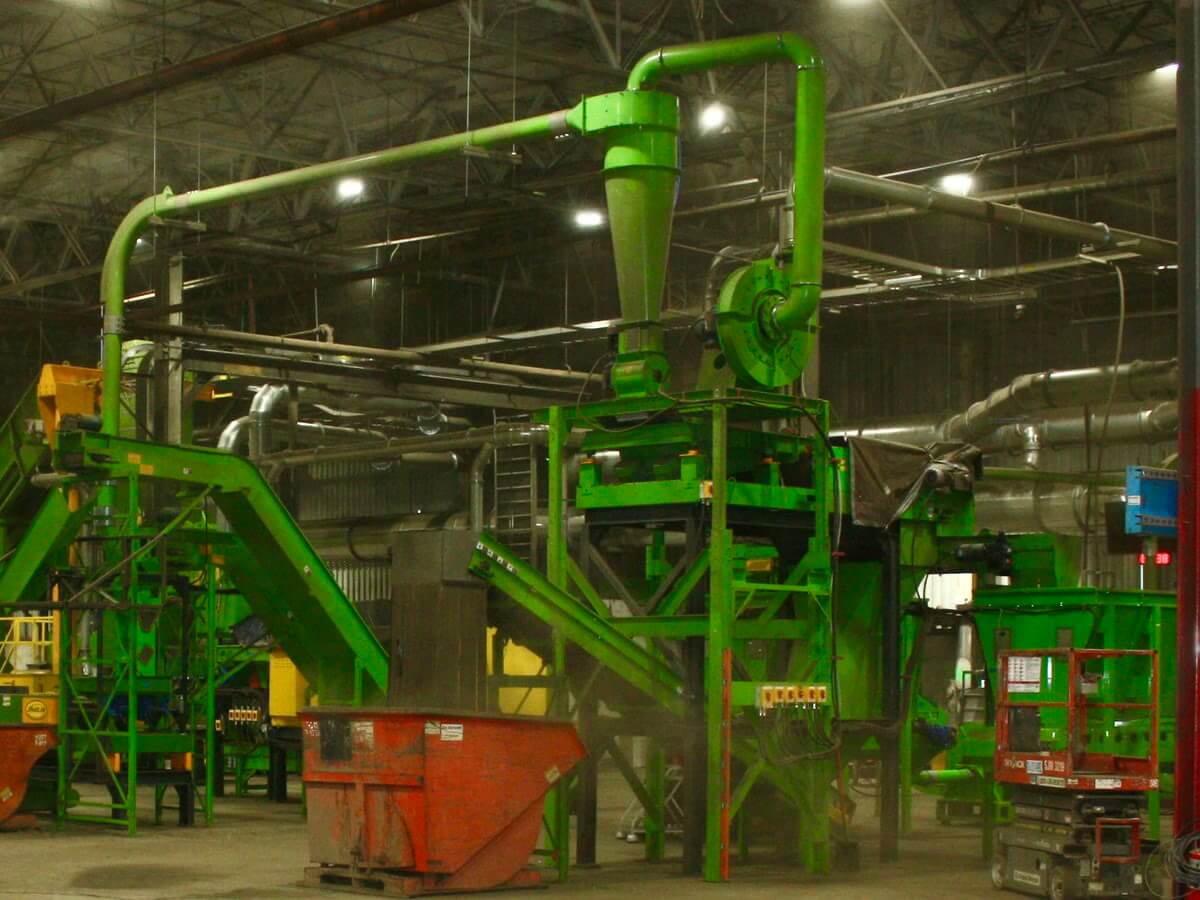
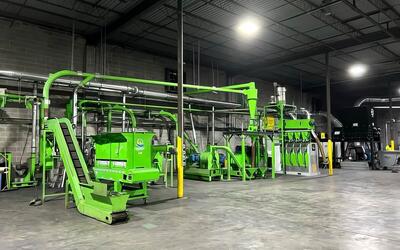
Recycling system installations in metals: a shredding, milling and separation line with green machine housings and conveyors between the stages.

Metals recycling systems

Turnkey lines for copper wire chopping, metal separation, e-scrap processing and recovery from printed circuit boards. Granulation, magnetic and eddy current separation, air and density separation, and the dust control that keeps them clean — each one built around the customer’s material, layout and throughput.
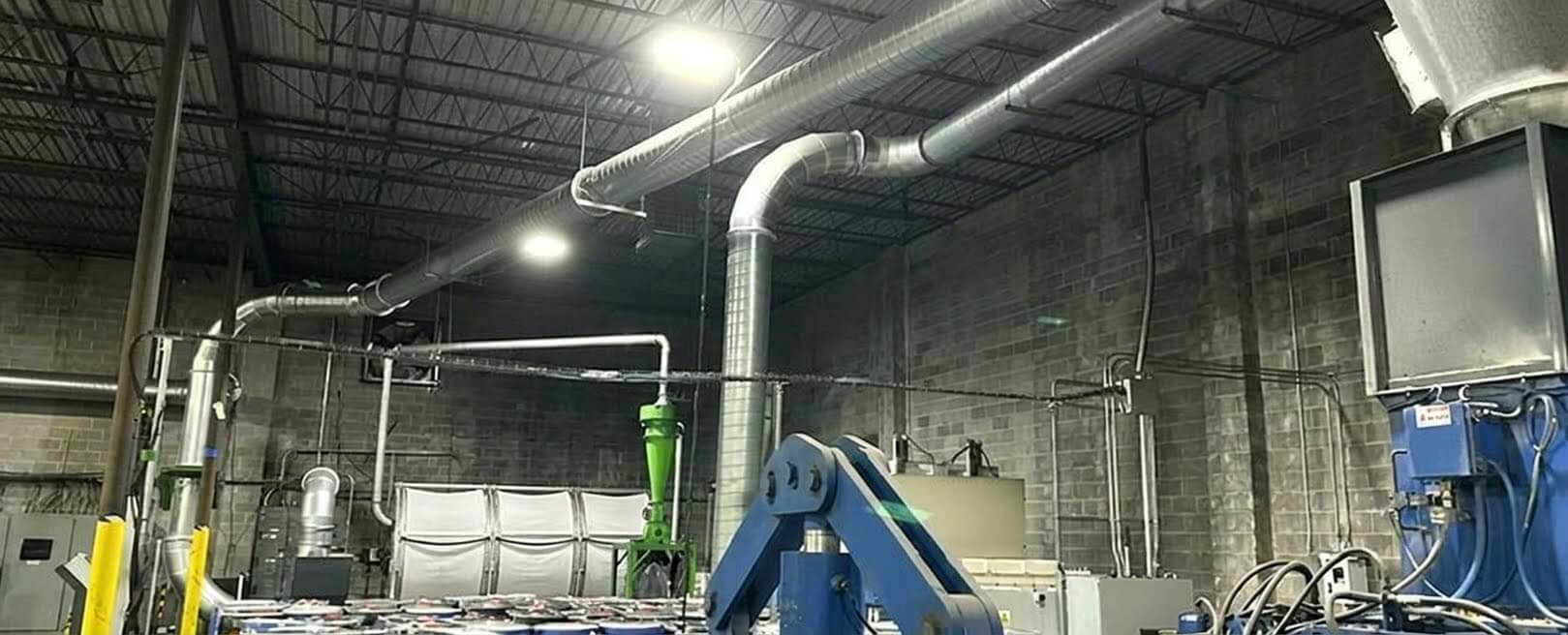
Recycling system installations in converting: ductwork rising to a cyclone and filter above a converting hall.

Paper, corrugated and tissue converting

Trim and dust removal for matrix and trim extraction, rotary die cutters, flexo folder gluers and high-speed lines in corrugated, folding carton and tissue plants. Many carry the CCM® OCT Filter, which cleans its own media while the plant runs and needs no compressed air.
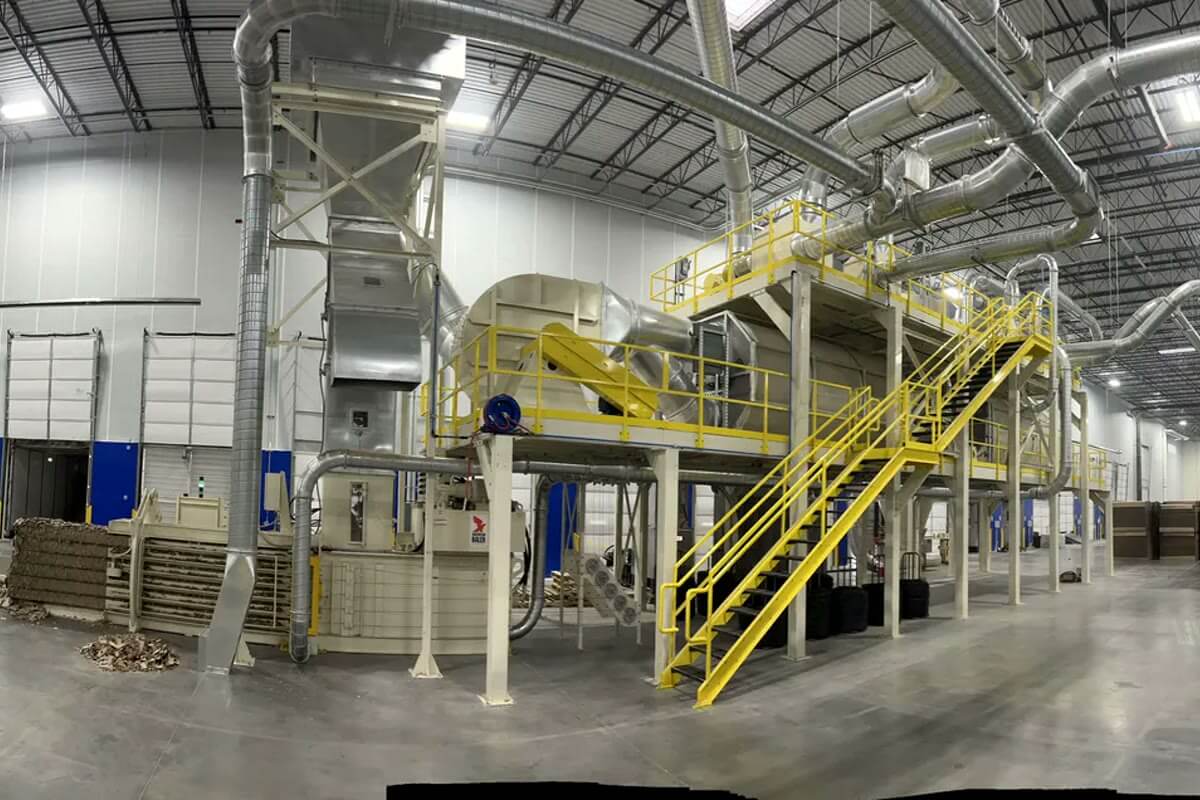
Recycling system installations as a retrofit: ducting running across a plant hall to a collector on a mezzanine, with the line working underneath.

Upgrades and retrofits

ERS also modernizes systems it did not build: retrofits to pneumatic transport lines, improvements to magnetic separation, and airflow stabilization for aging dust collection equipment. On-site diagnostics, operator training and performance tuning, backed by spare parts and service from Atlanta.

Why we publish these

The point is to show the work that normally stays behind the shutter: the engineering decisions, the system integrations, the field adjustments and the results that actually came out of them. Each report says what the plant was dealing with, what was installed, and what changed.

The page is updated as projects finish. Whether your operation is metals recycling, paper converting or dust-intensive production, these are the same problems in different buildings.

Want to talk about your own line? The contact form goes straight to the technical team, and the first question will be about your material rather than our machines.

A cyclone separator installed on a plant roof, part of a completed recycling system installation.

Built, then measured

Nothing here is a brochure render. Every project on this page was built, commissioned and run in a working plant.
01. Oct 2026
by ERS
0

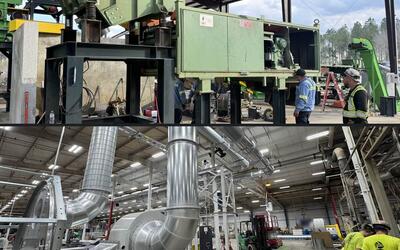
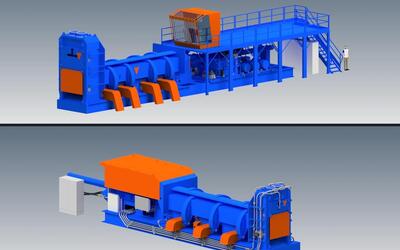
Friday 2 October is National Manufacturing Day, and recycled material sits at the center of it. Steel, aluminum, copper and fiber recovered in this country go straight back into American production. None of that happens on its own. ERS builds the equipment behind two industries, and neither of them runs without it. In scrap and metals recycling, we design and install the separation lines that pull clean metal out of mixed material — feed, shredding, milling, air density tables, metal separation and dust collection, engineered as one line. In paper and paper converting, we build the trim removal, vacuum transfer air dust collection and scrap system dust collection that keep high speed machines running and the plant clean. Both photographs above are our own crews partway through an install: a metals separation line on top, a paper dust collection system below. Not renders, not brochure shots. That is the work, and the people doing it are why the equipment is still running twenty years later.

01. Oct 2026
by ERS
0

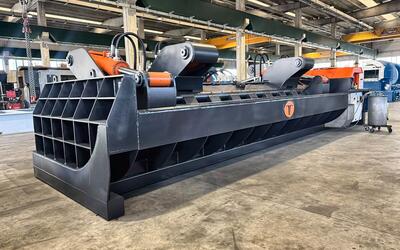
ERS builds and installs complete scrap processing lines across the United States, and the question we are asked more than any other is how to pick the scrap shear at the center of one. So we are publishing a five-part series on how to choose a scrap shear.

Part 1 starts where most buying decisions do not: the manufacturer. True shear manufacturers are few. Does the supplier have the size, the machine tools and the structure to build one? Go and see where your money is going.

Requirements have moved. Only a few years ago a 300-ton machine with a 600 mm blade and a 5-meter box was standard. Today 500 tons is considered small, the blade is never shorter than 800 mm, and pre-compression boxes run 6 to 7 meters with an opening over 2.4 m — the width of a truck bed.

The reason is the material. Clean collected scrap and end-of-life vehicles increasingly go elsewhere, leaving the shear the tough, bulky, structural work. Quality of the sheared product now matters more than tonnage. A shear is expected to give at least 20,000 hours of honest service.

ERS partners with TAURUS in the U.S. for shear balers and mobile scrap processing equipment, and engineers the feed, separation and dust collection around them as one line.

Parts 2 to 5 follow weekly: design and construction, the shear, the pre-compression box, and the hydraulic and control system.

29. Sep 2026
by ERS
0

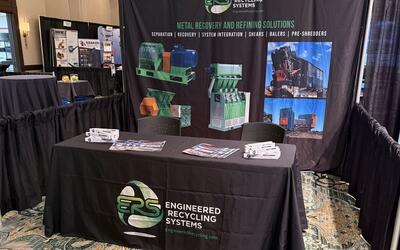
ERS is exhibiting at Southeast ReMA Connect 2026 in Birmingham, Alabama, September 28 to 30. You will find us at booth 19.

Southeast ReMA brings the regional recycling community into one room, which makes it a good place to have the conversation that actually matters: what your material is, and what a line built around it would recover.

Jeff Wair is on the stand for all three days, so bring the awkward questions. Mixed streams that will not separate cleanly. A shredder that stalls on the difficult loads. Copper still sitting in the reject fraction. Dust nobody has properly captured.

ERS designs and builds metals recovery systems rather than selling machines in isolation. Feed and conveying, shredding and milling, separation, dust capture and the baler at the end are engineered as one line, and supported by the same team afterwards.

Stop by booth 19 and tell us what your material stream looks like. If it is worth testing properly, we will run a sample through the ERS test facility in Atlanta and show you the result.

29. Sep 2026
by ERS
0

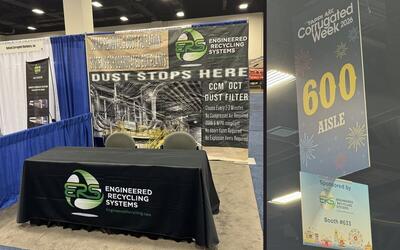
Corrugated Week 2026 is running this week at the Fort Worth Convention Center, and ERS is on the floor at booth 633. Every box plant produces trim and dust continuously, and all of it has to leave the machine without interrupting production. Handle one part of that chain well and the weakest link still sets the pace. ERS builds the complete system. Trim removal at the die cutter, printer and slitter. Vacuum transfer air dust collection moving material across the plant through ducted lines. Scrap collection and separation feeding the baler. And dust collection and filtration at the end of it. Because it is engineered as one system, the filtration side is specified around the standards that apply to that plant, which changes the ducting, the wall penetrations and the clearance zones a combustible dust installation normally demands. Self-cleaning every two to three minutes, with no compressed air required. The floor is open Tuesday 12:00 to 5:00 and Wednesday 12:00 to 4:00. Mike Carver and Michael Carver are on the stand both days.

25. Sep 2026
by ERS
0

Engineered Recycling Systems is exhibiting at Corrugated Week 2026 in Fort Worth, Texas, September 28 to 30. You will find us at Booth 633.

Corrugated Week puts the whole converting industry in one building, which makes it the right place to talk about the part of the plant that rarely gets designed properly: what happens to the trim after the machine has made the cut.

We are on the stand for all three days. Bring the problems you have stopped expecting anyone to solve. Trim that chokes the system on the heavy grades, a fan that has never quite kept up since the line was sped up, ductwork that was extended one machine at a time, a baler that cannot keep pace at full production.

ERS designs and builds complete trim removal systems rather than selling machines in isolation. Cutters and hoods at the machine, ducting and dust collection, the separator, and the baling system at the end are engineered as one line and supported by the same team afterwards.

Stop by Booth 633 and tell us what your line runs. If it is worth looking at properly, we will work through the numbers with you.


25. Sep 2026
by ERS
0

Insulated wire and cable is one of the few scrap streams where the value is obvious and the difficulty is in getting at it. The copper is worth recovering. The insulation has to come off cleanly, and whatever the process leaves behind is money still sitting in the tailings.

Guidetti chop lines are built for exactly that. The Sincro series takes insulated wire and cable through granulation and separation and delivers clean copper granulate, with models scaled from smaller in-house recovery volumes right up to continuous production. What separates one line from another is not whether it produces copper, it is how much copper stays in the reject stream.

That is where the back end of the line matters. The Sincro Mill Line and Reco Mill Line go after copper still bound up in plastic tailings after the first pass. Dry separation tables then sharpen final purity without adding water to the process, which keeps the output saleable and the plant dry.

Ahead of the chop line, PMG pre-shredders break bulky and mixed material down to a size the granulation stage can take without choking. Sized from the PMG 400 through to the PMG 1600, with hydraulic variants where the feed is heavier, they are what keeps a line running at rate instead of stalling on the awkward loads.

ERS supplies the full Guidetti range across the United States and builds it into engineered systems rather than selling machines in isolation. That means feed and conveying, dust capture at the transfer points, separation interfaces, controls, and service after commissioning, designed as one thing and supported by the same team afterwards.

Every material stream behaves differently, and two plants running what looks like the same wire can see very different recovery rates. If you want to know what a Guidetti line would actually recover from your material, send us a sample and we will run it through the ERS test facility in Atlanta and show you the result before you commit to anything.


21. Sep 2026
by ERS
0

Imported car body parts reach North American assembly and logistics operations on racks built from structural steel. The racks protect hoods, doors, fenders and side members in transit and let the load be handled through distribution centers. They do their job well, and then they reach the end of their service life.

At that point they become one of the more awkward materials in the yard. End-of-life transport racks have an open geometry, they are rigid, and they come in a range of sizes that never stack neatly. The result is bulky steel scrap with very low density, taking up far more space than its tonnage justifies and costing time every time it is moved. Processing it usually means cutting or breaking racks down by hand before anything else can happen.

ERS approaches steel transport rack recycling by removing that manual step. The MIZAR baler, which ERS supplies in North America as a partner of TAURUS, takes this material directly. Its compression chamber measures 1000 x 600 mm, roughly 39 by 24 inches, and is built in a tank shape with two flat swinging lids hinged to each other. The lower lid is hinged longitudinally to the vertical wall of the chamber, which grips awkward material more steadily and holds it in place through the cycle instead of letting it spring back. Every inner surface in contact with the scrap is thick wear-resistant steel plate.

Compression force is what makes the difference on rigid material. The MIZAR can be specified with three cylinders per lid, giving each lid a maximum of 300 tons, matched by the feed cylinder. That is enough to fold and consolidate structural steel scrap in one pass rather than working it repeatedly.

The result shows up immediately in the yard. Initial volume drops by 70 to 80 percent, and loose, snagging rack sections become compact, regular bales that stack and travel. Scrap volume reduction on that scale changes the logistics as much as the storage: fewer trips, fuller loads, and a consistent product going out to the mill. Fast cycle times mean large quantities move in a short working day.

If steel racks, frames or other rigid structural scrap are piling up faster than you can move them, talk to ERS about what a line built around that specific material would look like.

15. Sep 2026
by Andreas Fischer
0

ERS has put another metals recovery system into production in the United States, with a pre-shredder integrated at the head of the line to feed the recovery equipment behind it.

ERS designs and builds recycling systems. We engineer the line, we decide what equipment belongs at each stage of it, we build it, and we stand behind how it performs when your material runs through it. We will supply a single machine when a plant needs a replacement, but the system is the work. On this project the pre-shredder is one element inside a system, specified for the duty and sized to feed the line consistently.

The equipment at this stage of the line is a Guidetti PMG-H 1600, and the line is now running radiators in steady production. Mixed copper, aluminum and steel in a light, awkward bundle is exactly the material that separates a scrap processing system that runs all day from one that stalls every twenty minutes. That is a design problem before it is anything else, and it is the problem ERS exists to solve.

ERS will be at Southeast ReMA 2026 in Birmingham, Alabama, September 28 to 30, Booth 19. Come talk to us about the system your recovery line needs, not just the machine.


02. Sep 2026
by ERS
0

Engineered Recycling Systems is exhibiting at Scrap Expo 2026, September 9-10 at the Kentucky Exposition Center in Louisville, Kentucky. Scrap Expo is one of the industry's few live demonstration events, where equipment actually runs on the floor instead of sitting behind a sign.

Find ERS at Booth 317 to talk through wire chopping, granulation, and separation systems built to recover clean copper from insulated wire, cable, and mixed scrap, along with the rest of the ERS metals recycling equipment line.

Representatives from TAURUS will be on-site as well. ERS partners with TAURUS in the U.S. for shear balers and mobile scrap processing equipment, and visitors will have a chance to see the full range of TAURUS equipment ERS supports across the United States.

Stop by Booth 317 to see the equipment and talk through what a system built around your material stream could look like.

28. Aug 2026
by ERS
0

Most vacuum trim units on the market handle one job: pulling trim off the line. They stop there, leaving dust collection as someone else's problem and someone else's equipment.

ERS vacuum transfer systems are engineered differently, as one complete system instead of a bolt-on component. High-velocity scrap conveyance moves trim and scrap without jams, flutter, or suction instability. A Low Profile Separator pulls that material cleanly out of the airstream. The CCM® OCT Filter handles dust collection at the same time, without compressed air and without the explosion venting standard baghouse systems require.

The result is one integrated system built for converting lines, corrugated, paper, and label production alike, instead of a patchwork of separate equipment that each need their own maintenance, their own downtime, and their own point of failure.

Ready to see what one engineered system can do for your line instead of three separate ones.

28. Aug 2026
by ERS
0

Corrugated box manufacturers need trim removal and dust collection that keeps up with production, not equipment that becomes the bottleneck.

A new corrugated box manufacturing plant expansion is getting a complete engineered system built specifically for that challenge. The system moves trim and scrap without interruption, controls dust at the source, and keeps the production line running at full speed instead of slowing down to manage cleanup.

That means less downtime, a safer plant floor, and one integrated system to rely on instead of a patchwork of separate equipment bolted together over time. It's the same engineering approach behind every ERS trim and dust system: built for real production, not just spec sheets.

Discover how ERS engineers complete trim removal and dust collection systems built for real corrugated production.

27. Aug 2026
by ERS
0

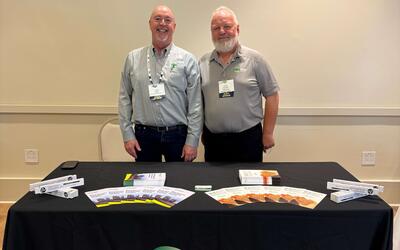
Our team is on-site this week at the Recycling Association of North Carolina's 2026 Annual Meeting, taking place August 27-28 at Trailborn Surf & Sound in Wrightsville Beach. The event brings together processors, haulers, and industry decision-makers from across the region for two days of networking and industry insight.

Regional events like this one give processors and haulers a chance to compare notes on equipment, market conditions, and day-to-day operations in a smaller, more focused setting than the larger national shows. For ERS, these conversations usually start with a simple question: how much more value could a yard be pulling out of material it is already processing.

At our table, we are connecting with attendees about ERS metal recovery and refining solutions, engineered to help recycling operations get more value out of every load. Our systems are built around combining trim removal, dust collection, and metals recovery into a single, reliable process, so operators are not left stitching together equipment from multiple vendors. Every system is designed, built, and supported in-house, from initial engineering through ongoing parts and service.

It is a great event, a great location, and a great reminder of how connected this industry's regional network really is, even outside the big national shows. We look forward to staying part of that conversation and continuing to support RANC members in the year ahead.


Copyright 2026. All Rights Reserved.
You are using an outdated browser. The website may not be displayed correctly.