Inclined Shearing at up to 100 Tons an Hour
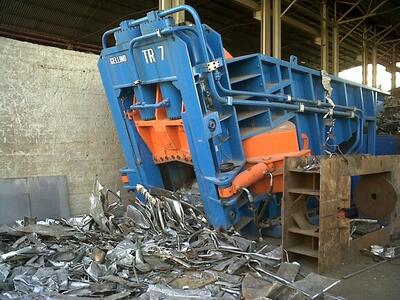
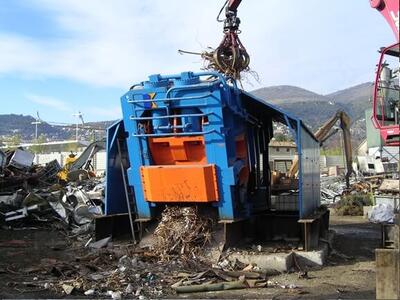
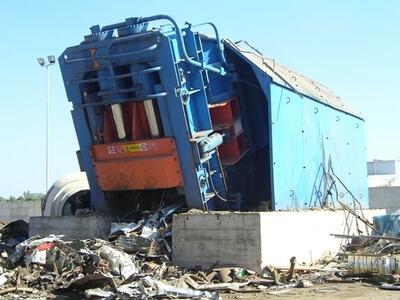
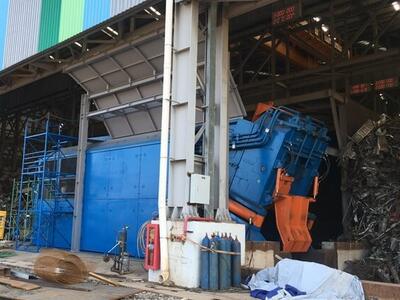
TAURUS Blackline inclined shears are engineered for continuous, high-volume processing of heavy scrap, mixed scrap and bulky demolition material. The updated TR Series — including the TR-VHD models with cutting forces up to 1,800 tons — handles profiles, pipes, steel sheets, rails, rebar and bales. This generation has been fully revised and strengthened for the demands of modern scrap yards. Engineered Recycling Systems supplies, installs and services them from Atlanta.
The inclined oscillating hopper
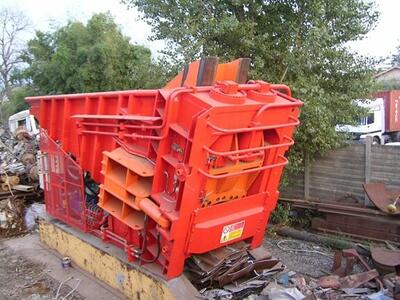
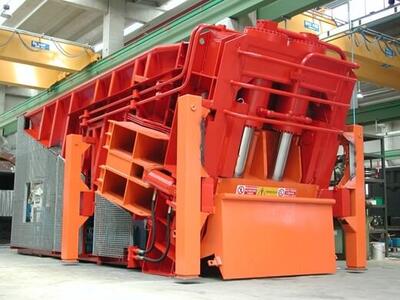
At the front of the system is an inclined, oscillating feed hopper that moves material toward the compression and cutting zone. It is closed at the sides, open at the top, and built on a closed inclined oscillating base fitted with steps that reduce friction and let gravity do part of the work.
A double-acting cylinder adds push, which keeps flow smooth even with large, irregular scrap. On this material the feed is usually what limits a shear rather than the cutting force, so the hopper is not a detail.
The TRS double-compression reducer
Material then enters the TRS reducer, a continuous two-ram system that compresses the scrap vertically and laterally. The first compression compacts from top to bottom; the second reduces width to fit the shear mouth.
That combination gives consistent sizing and stable feeding, which is what enables a continuous cutting cycle without manual pre-reduction. Removing the pre-reduction step removes a machine, a labor cost and a handling stage from the yard.
The shear assembly
A heavy-duty frame carries a mobile blade holder, a fixed blade holder, fixed guides and high-strength blades. A positive stop positions the scrap for accurate cutting length and prevents splinter escape during operation.
With cutting widths up to 1,400 mm, lateral and vertical compression forces up to 500 tons and installed power up to 950 kW, the TR Series reaches up to 100 tons per hour depending on material. That last qualifier matters: the figure follows the feed, not the machine alone.
Hydraulics
A robust hydraulic power unit supports the system with forged-steel manifolds, multi-stage filtration, air-oil cooling and easy-access pump groups. The tank is internally divided to optimize oil flow and air separation.
Air in the oil is what shortens component life on a machine cycling this hard, and filtration is what keeps contamination from doing the rest. Both are specification items rather than refinements.
Compact and foundation-free
The oscillating hopper, TRS reducer and high-force shear together form a compact, foundation-free system that concentrates weight where stress and wear occur. No foundation means no civil works, which on a yard project usually costs more and takes longer than the machine itself.
It loads from both sides and runs with a single operator, which is where the operating cost per ton actually comes from on continuous work.
Where it sits in the TAURUS range
Blackline is the inclined-shear platform for continuous high-volume work. Bluline shear balers cover continuous-feed shearing with a swinging-wing compression box, Redline is the reinforced platform for oversized and demolition material, and TLINE covers mills, rotary shears and balers. Where the work moves between sites, mobile shear balers are the answer.
The full range sits under TAURUS scrap processing equipment.
What feeds it, and what follows
Ahead of a shear, pre-shredders and shredders and mills open bulky material, and magnetic separation cleans the streams running alongside. Behind it, industrial balers take the lighter fractions and conveyors move material between stages.
The wider picture is under metals processing and scrap metal recycling systems, with the equipment range on the metals processing equipment page.
Support after commissioning
ERS supplies, installs, commissions and supports every TAURUS machine it sells, with spare parts and service from Atlanta. Blades, seals and hydraulic components are available without a lead time measured in months. Installed systems are written up under project news and system updates.
Next Steps for Your Metals Processing System
If you are evaluating inclined shears or upgrading a scrap line for throughput, durability or cutting performance, send your material streams, your yard layout and your throughput targets through the contact form.
If you want to see performance before committing, send material for testing to the ERS test facility in Atlanta. We run your feedstock and show you the cutting efficiency, the sizing and the throughput you can expect.