Shredders [&] Mills
ERS Systems for Shredder Wire, Waste Wire and Insulated Cable
Shredder wire and cable recycling systems take what comes off an auto shredder : short, tangled, contaminated lengths of copper and aluminum mixed with steel, plastic and dirt : and turn it into a clean, saleable metal fraction. It is one of the most valuable streams on a shredder yard and one of the hardest to recover properly. Engineered Recycling Systems builds those lines from Atlanta.
Why shredder wire is difficult
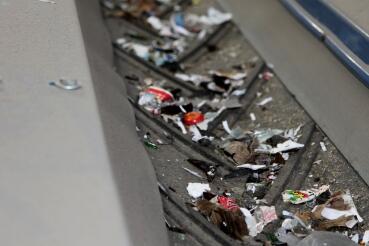
Clean cable comes in long, predictable lengths. Shredder wire does not. It arrives short, knotted, mixed with insulation fragments, steel fines and whatever else came through the shredder, and the copper content varies load to load.
That rules out equipment designed for clean feed. A line built for shredder wire has to tolerate contamination, liberate copper from insulation that has already been through a hammer, and separate a fraction where the particle sizes overlap.
How the line works
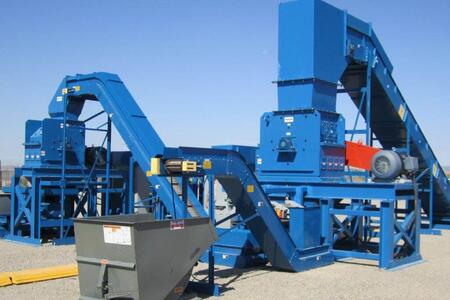
Reduction first. A pre-shredder opens up bundles and tangles, then granulation takes the material down to a size at which copper and insulation genuinely come apart. Liberation, not size, is what decides recovery here. Where the feed includes heavier material, shredders and mills handle it ahead of granulation.
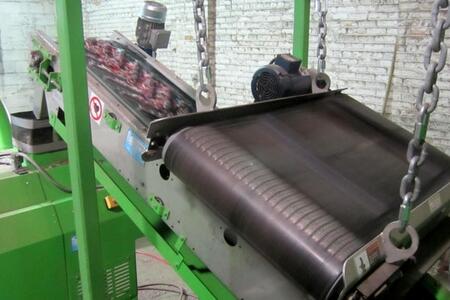
Separation follows. Magnetic separation pulls the ferrous contamination. Density separation and dry separation tables split copper from plastic, and the tables recover the fine fraction that older wet systems or simple air separation leave behind.
What is left in the plastic tailings still has value. A Reco Mill line goes back through that fraction and recovers the copper most operations send to landfill. On a yard running real volume, that recovered fraction alone can justify the stage.
What comes off the end
Four fractions, and all four have a destination. Copper granulate is the product, and its price depends on the purity reached in separation. Aluminum comes off separately where the feed carries enough to be worth splitting. Ferrous goes back into the yard's own steel stream. Plastic is the one most operations stop thinking about, and it is where the last recoverable copper sits.
A line that produces three clean fractions and one dirty one has not finished the job. Knowing what each fraction weighs, and what it is actually worth, is what tells you whether a stage is paying for itself.
The equipment behind it
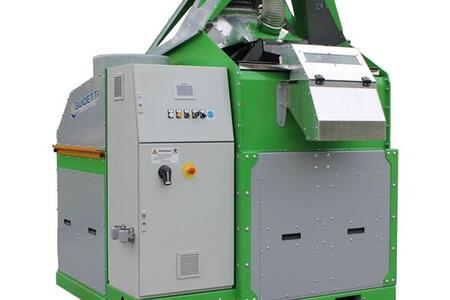
The Guidetti range covers granulation and separation: Sincro lines for cable recovery, Sincro Mill lines where the feed is dirtier, and Wire Pro for shredder wire and radiator work specifically.
For large-scale wire chopping the same principles apply at higher throughput, with the separation stages sized to match rather than bolted on afterwards. Where a manufacturer generates its own offcuts, in-house wire scrap recovery captures the value instead of selling it at scrap price.
Purity is the whole commercial question
Copper sells on purity. The gap between a 97% product and a 99.5% product is the difference between a commodity price and a mill price, and it is decided by the separation stages rather than by the granulator.
Reaching higher purity costs equipment and floor space, so the right target is a commercial decision, not a technical one. ERS works backwards from what your buyer pays for, which is why the specification conversation starts with the offtake rather than with the machine.
What decides the specification
Copper content and how much it varies between loads. Contamination level. Tons per hour at peak rather than average. The purity required. And the floor space available, which in most shredder yards is the real constraint.
Feed consistency matters more than people expect. A line fed by grab in surges behaves differently from one fed steadily by conveyor, and the buffering between stages has to account for that or the separation drifts.
Dust is part of it
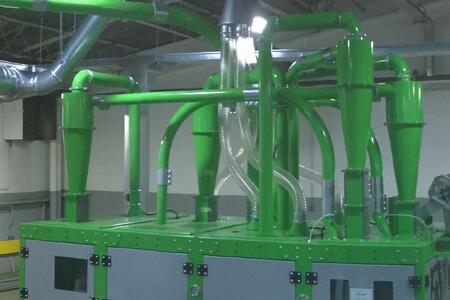
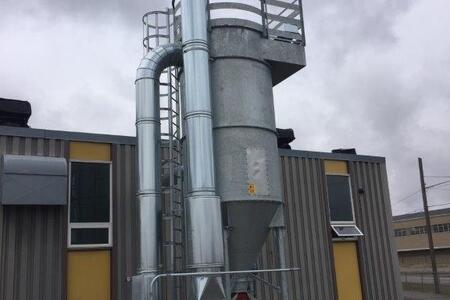
Granulating wire generates fine dust carrying both copper and plastic. Dust collection is designed with the line, not added afterwards, because those fines are both a recovery opportunity and, in some material, a genuine fire risk.
Material moves between stages on conveyors or through pneumatic transport, depending on the fraction and the layout.
Wear and running cost
Granulator knives and screens are consumables, and contaminated feed wears them faster than clean cable does. What decides their real cost is not the price of the part but how long the line stands still while it is changed, so access is designed in rather than worked around.
How a project starts
With a sample. Shredder wire varies so much between yards that a written specification tells you very little. Material can be run at the ERS test facility in Atlanta, and the recovery figures from that run are what the line gets designed around.
Every system is installed, commissioned and supported by ERS, with spare parts and service from Atlanta. Where a yard also needs shears or balers, ERS supplies TAURUS scrap processing equipment alongside.
Talk to ERS about what your wire fraction looks like and what you need out of it : the contact form is the quickest route.