Learn more about
our systems
Midlings and Tailings Getting the Metal Out of What the Line Missed
Midlings and tailings metal recovery systems take on what a recycling line fails to sort the first time: the middle fraction that is neither clean metal nor clean waste. ERS builds the stage that goes back through it and takes the metal out. Engineered Recycling Systems designs, installs and supports these systems from Atlanta.
What midlings and tailings actually are
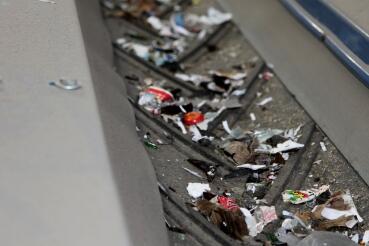
Midlings are the intermediate fraction a separation stage cannot call either way : part metal, part not, usually because the particles are mixed or the size spread is too wide for one setting to handle.
Tailings are what leaves at the end: the stream a plant currently pays to dispose of, still carrying recoverable copper, aluminum and stainless in amounts that are easy to underestimate because nobody weighs them.
Why the metal is still in there
No single sorting stage is perfect, and the losses are worst at the extremes. Very fine material slips past a density table. Composite particles report to whichever side their average density favors. Anything still joined to plastic behaves like plastic.
A primary line is tuned for the bulk of the feed, which is the right decision : chasing the last few percent in the main line slows everything down. The answer is a second stage sized for that fraction alone.
It is also why the losses are usually invisible. Nobody assays what leaves in the residue skip, so the metal in it is a number the plant has never actually seen. The first thing a recovery project produces is that number.
How ERS sorts it out
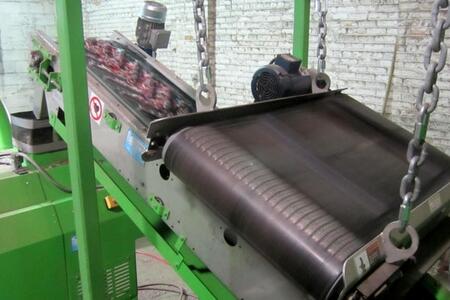
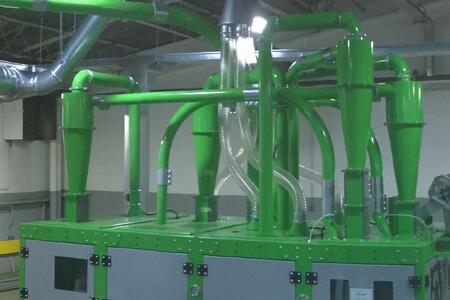
Controlled size reduction first, so the composite particles are liberated rather than simply moved along. Then the sorting: density separation, air classification and magnetic separation, in the order the material needs.
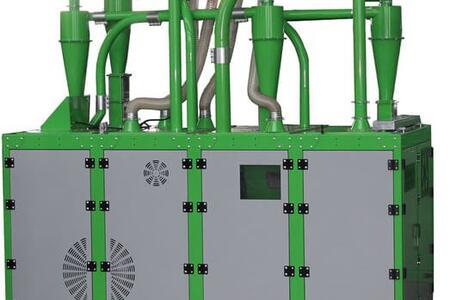
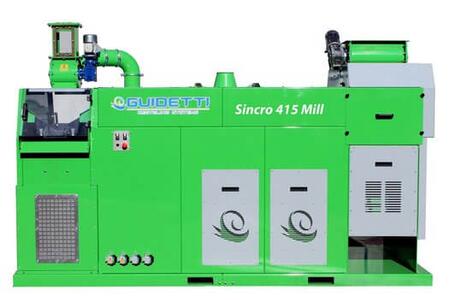
Fine-tuning modules go in where a stream justifies them. Dry separation tables make the density split, and a Reco Mill handles the fine copper that granulation tailings carry.
What it recovers
Copper, aluminum, stainless steel and other high-value metals, from partially processed material that would otherwise be landfilled or sold at a residue price.
Purity is the point rather than volume. A clean fraction has a buyer and a price; a mixed one is discounted every time it moves. That is the whole economic case for the stage.
Which streams it suits
ASR and car fluff midlings, which are the commonest. Wire-derived tailings from cable granulation. Mixed industrial residues, and the heavy fraction off a e-waste line.
Each one behaves differently, which is why the arrangement is not standard. The same three technologies in a different order, with different settings, is a different machine as far as the material is concerned.
Shredder residue and granulation tailings are the two extremes. Residue is coarse, variable and full of composites; granulation tailings are fine and consistent. A stage built for one will underperform badly on the other.
Fitting it to an existing plant
These systems go in behind what a plant already runs, without rebuilding it. That matters more than it sounds: a recovery stage that requires the primary line to stop or change is rarely worth the disruption, however good the recovery.
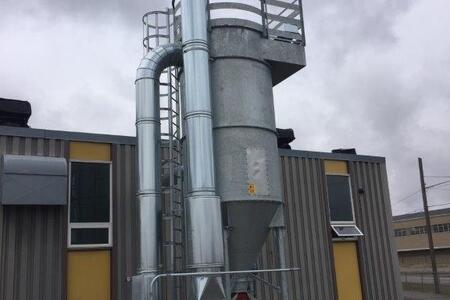
ERS fits them with conveyors and dust collection so the fraction reaches the stage continuously. Fine material handled badly is how a plant acquires a dust problem it did not have before.
Sizing and scaling
Capacity follows the volume of midlings the primary line actually produces, which is not a fixed percentage of throughput : it depends on the feed and on how the primary line is tuned.
The systems are modular, so stages can be added and capacity raised as production changes. A plant can start with the sorting it can justify today and extend later without replacing the frame.
What it is worth
Three numbers decide it: the recoverable metal in the fraction, the current disposal cost of that fraction, and the metal price. ERS works through those with the plant rather than quoting a generic payback.
Durable construction, energy-efficient operation and low maintenance are what keep the figure honest over years rather than months. A recovery stage that needs constant attention stops being run.
How a project starts
With a sample of the actual midlings or tailings, not a description of them. ERS looks at what the current line is losing, in what volume, and what that fraction costs to dispose of now.
Material can be run at the ERS test facility in Atlanta before anything is specified, which on residual fractions is the only way to get a recovery figure anyone should build a business case on.
Every system ERS supplies is installed, commissioned and supported by ERS, with spare parts and service from Atlanta, alongside the rest of the ERS metals processing lineup.
Talk to ERS about what your line is currently throwing away.