Industrial Mills for Metals Processing and Recovery
Industrial mills do the work that decides what a recycling line actually recovers. A shredder makes material small enough to handle. A mill makes it the right size and, more importantly, breaks the bond between materials that were never meant to come apart. Engineered Recycling Systems supplies and integrates them from Atlanta.
Why liberation matters more than size
Most scrap arriving at a plant is not one material. It is copper bonded to plastic, aluminum laminated to steel, boards carrying a dozen metals at once. Separation equipment can only sort what has already been separated physically, so if the mill has not liberated the fraction, no amount of magnetic or density separation downstream will find it.
That is the real job of a mill. Particle size is the specification. Liberation is the outcome.
Hammer mills
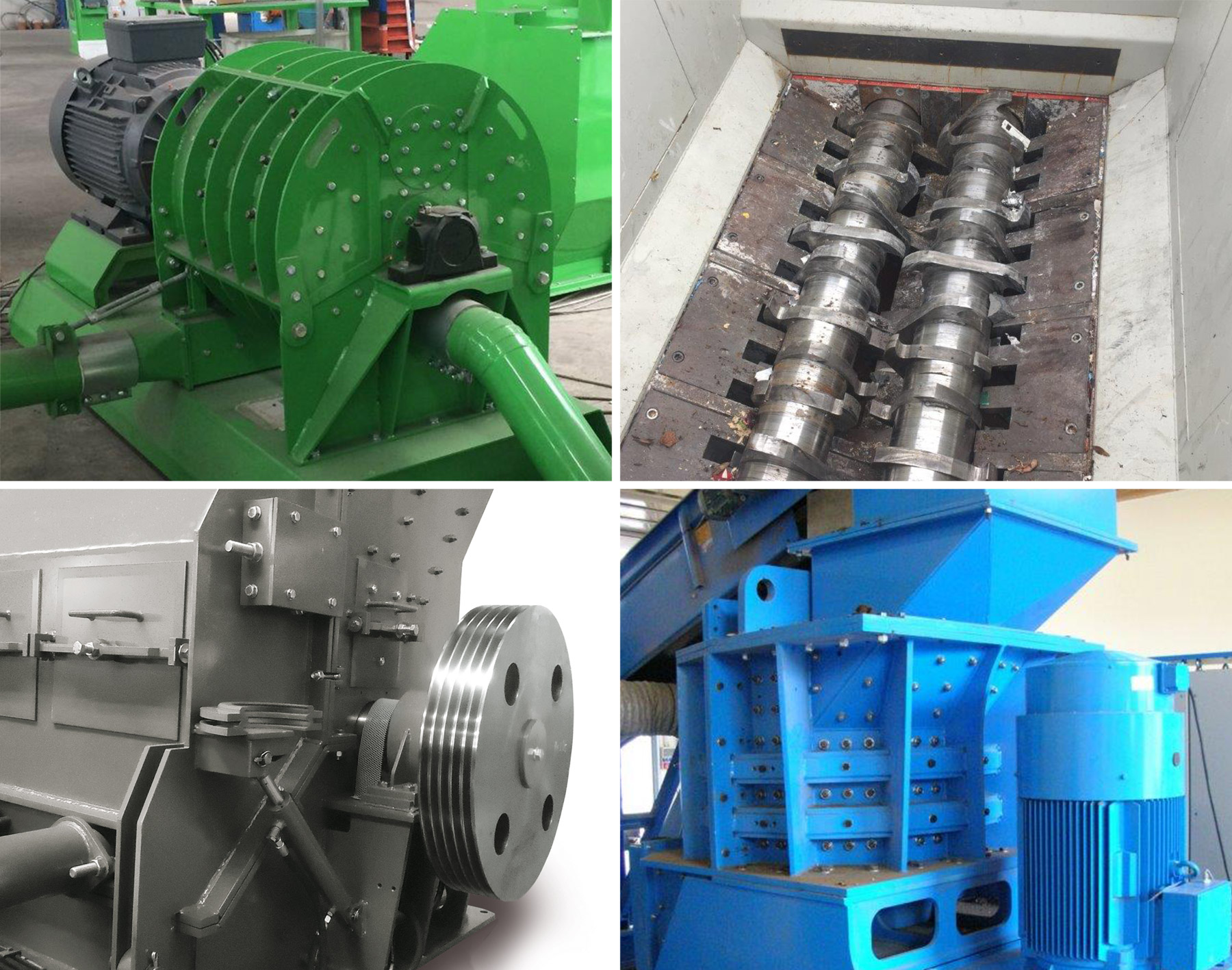
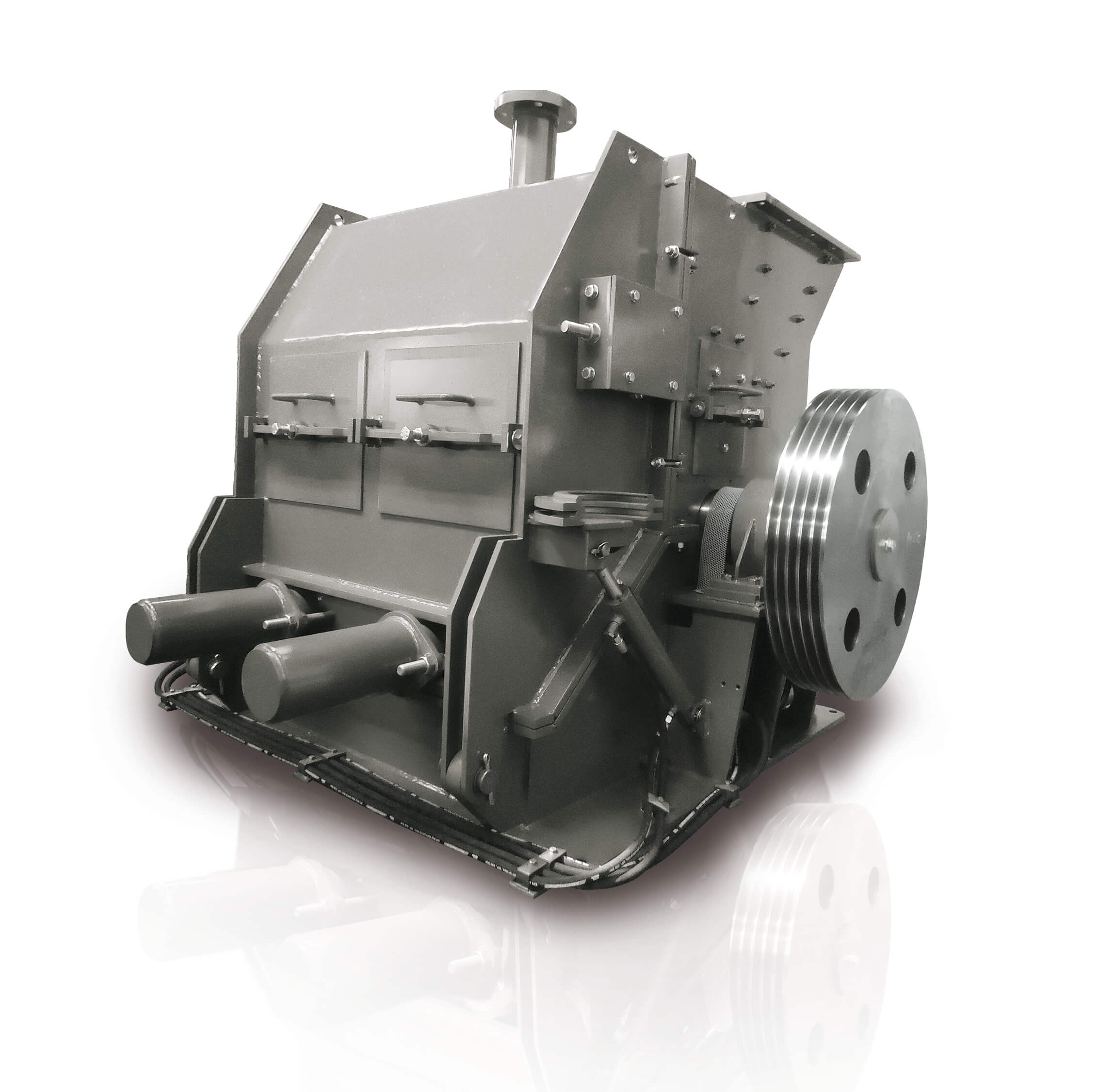
Hammer mills are the workhorse for hard and brittle material. Free-swinging hammers on a rotor strike the feed against breaker plates and a grate until it passes through, which gives consistent particle sizing and efficient liberation of bonded metals.
They are the standard choice in ASR processing, electronics recycling and fluff separation, where precision grinding is what isolates the valuable commodity from the carrier material. ERS draws from a wide range of hammer mill configurations, each matched to a throughput requirement and a material characteristic rather than sold from a single specification.
Turbo mills
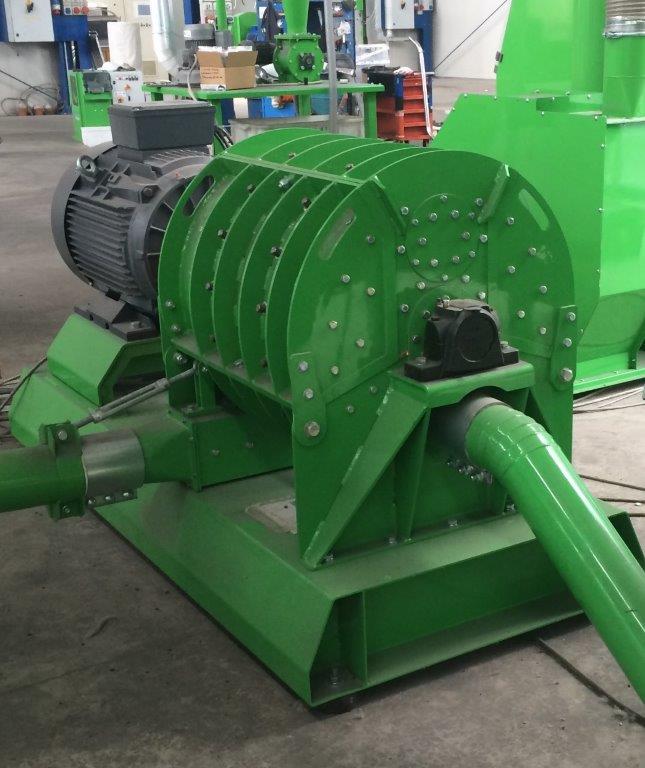
Turbo mills work differently. Rather than shattering material, they ball it into uniform pieces, and that reshaping is what delaminates layered scrap. Laminated metals, coated wires and multi-layer components that resist impact grinding come apart under this action.
The result is a feed that density and eddy current separation can actually work with. For complex streams the balling effect routinely recovers material that a hammer mill leaves bonded.
Vertical mills
Vertical mills use a balling mechanism on difficult-to-handle material, and they do it in a smaller footprint. For PCB recycling, e-waste and composite scrap where conventional grinding falls short, the vertical design handles material flow efficiently and fits where floor space is the constraint.
In plants that are already full, which is most of them, the footprint is often what decides the specification rather than the throughput figure.
MC combines
An MC combine puts shredding and granulation into one machine. Where a line would otherwise need two stages with a transfer between them, the combine does both, which removes a conveyor, a transfer point and a dust pickup from the design.
That is not always the right answer. Two separate stages give more control over each. But where space, budget or simplicity matter, a combine is worth putting on the table.
Choosing the mill against the shredder
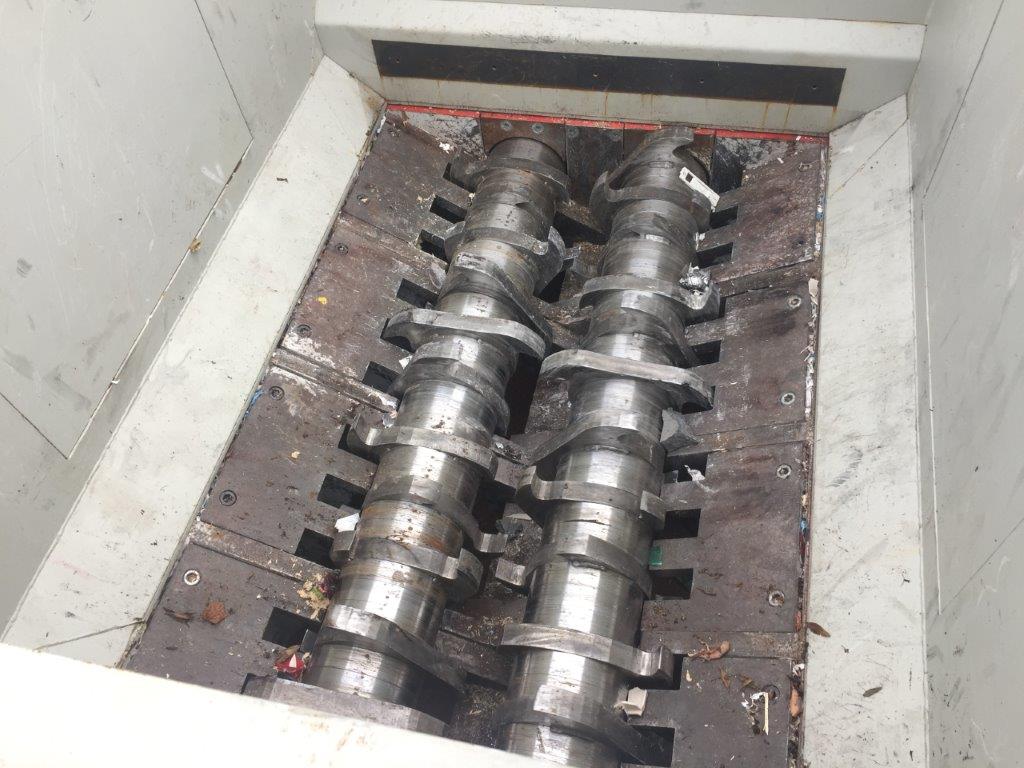
Shredder and mill are specified together, never one after the other. The shredder decides what the mill receives, and the mill decides what the separation stages receive. Get the pairing wrong and the symptom shows up three stages later as poor recovery that nobody can trace.
A single-shaft shredder already produces a screened, consistent fragment, so the mill behind it is doing final sizing. A Tritone handling whole tires or heavy cable delivers something far coarser, and the mill behind it is doing the real reduction work.
Where mills sit in the line
ERS engineers mills together with conveyors, screens, magnetic separation, density tables and dust collection, so the whole line balances. A mill that outruns the separation behind it does not raise recovery. It just moves the bottleneck.
Milling also generates far more fines than shredding does, and fines are where both the recovery and the risk sit. Capture at the source, ductwork and filtration are designed with the mill, not added once the line is running.
Durability and maintenance
Hammers, breaker plates and grates are consumables. What decides their real cost is not the price of the part but how long the line stands still while they are changed, so access is designed in rather than worked around.
Every ERS mill is built for integration flexibility, which matters because almost no mill is installed into an empty building. It goes into a plant that is already running, around equipment that is already there.
How a project starts
With the material. ERS looks at what is being processed, in what volume, what has to be recovered and the building it has to fit inside. Material can be run at the ERS test facility in Atlanta before anything is committed, so the mill is chosen on your scrap rather than on a published figure.
Every mill ERS supplies is installed, commissioned and supported by ERS, with spare parts and service from Atlanta. Where a project needs shears and balers alongside the line, ERS also supplies TAURUS scrap processing equipment.
Talk to ERS about what you are processing and what has to come out of it.
Turbo Mills
Our Turbo mills are design to ball material into more uniform pieces. We can then send the material to its final separation system achieving the best results in the world.
Hammer Mills
We draw from a wide range of hammer mills primarily used for size reduction. These mills help us to prepare material for further processing by reducing large pieces in size and liberating different materials from each other.
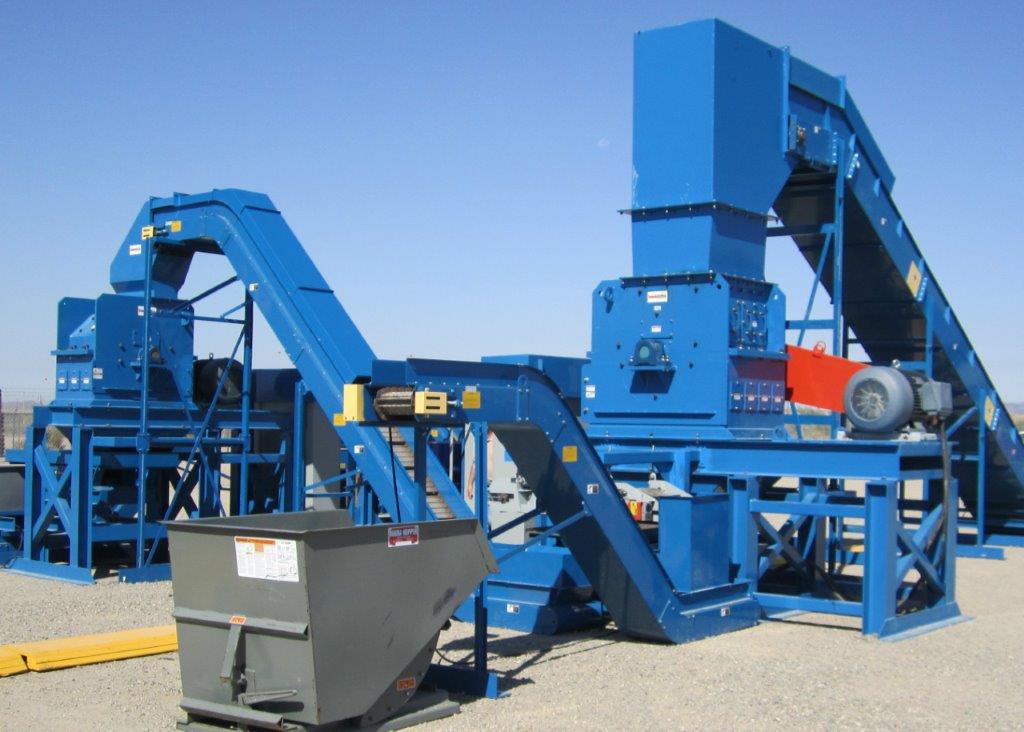
Vertical Mills
Our vertical mills are uniquely designed to ball up material for further processing. The balling affect helps us to delaminate difficult to handle material and send it to further processing for the best commodity separation anyone in the world has to offer.
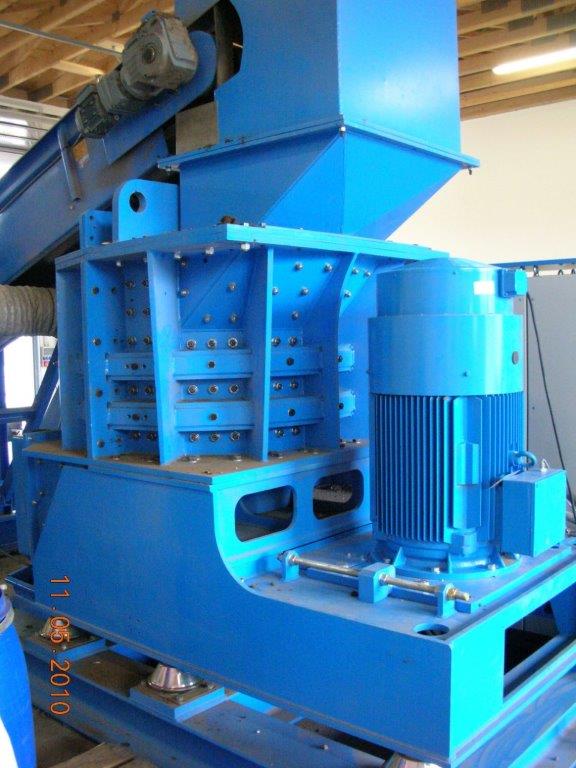
Shredders
Engineered Recycling Systems draws from a large range of primary shredders to help reduce bulky loads. These shredders can be bulk or conveyor fed and are used for primary reduction at the beginning of our processing systems.