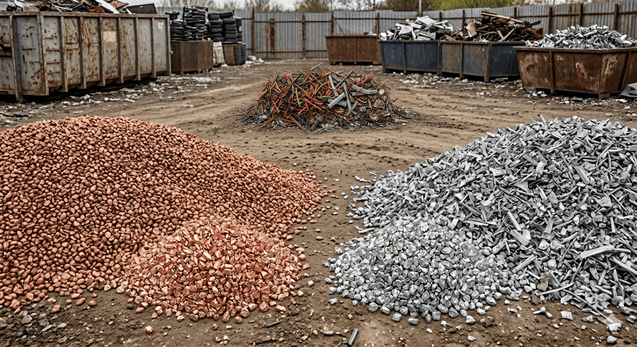
Accurate material proportions are essential for maintaining stable performance in modern wire‑recycling systems. When incoming cable waste varies in density, insulation type, or metal content, the separation stages must compensate to keep the output consistent. Engineered Recycling Systems focuses on creating predictable material flow by controlling feed rates, stabilizing the reduction process, and ensuring that each stage receives a balanced volume of material.
A reliable wire‑recycling line depends on the interaction between size reduction, air separation, and density separation. When these stages receive evenly distributed material, the system maintains clean copper and aluminum fractions with minimal loss. Correct proportions also reduce wear on equipment, prevent overload conditions, and support long‑term operational efficiency.
Maintaining proportion accuracy begins at the start of the process. Controlled dosing prevents sudden surges of mixed cable, allowing the granulator to operate at a steady load. Once the material is reduced, the separation units rely on consistent particle size and density to achieve clean output. When the proportions are correct, the system produces stable granulate quality and predictable recovery rates.
Quality standards in wire‑processing require more than clean output. They depend on repeatability, balanced material flow, and controlled separation conditions. By maintaining correct proportions throughout the process, recycling operations achieve higher recovery efficiency, reduced contamination, and improved downstream value.
For more insight into optimizing wire‑recycling performance and maintaining consistent material flow, the ERS team is available to support your operation.