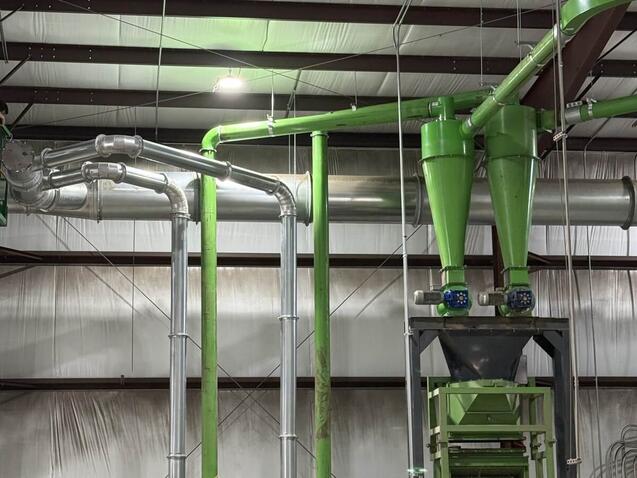
A metals separation line upgrade inside a working plant is mostly a sequencing problem. New conveyors, new separators and new electrical have to go in around equipment that is still earning money, in a building that was laid out for something else.
On this one ERS added a full separation stage: an eddy current separator, high-speed classification, screening, and more than a dozen conveyors — HSCS infeed, heavies and waste, screen overs and fines, zorba, and the ferrous discharge and waste lines — each with its own stands, chutes and transfer points.
What the drawings said and what the site allowed were not the same. Two cross-beams for the separator frame arrived fabricated wrong and were cut to size on site. Mounting brackets on the support beams did not line up with the conveyor holes, so new holes were drilled. The zorba conveyor, set exactly to drawing, left a three-inch gap to the separator frame. Ground had to be flattened and packed before the telehandler could reach the waste conveyors — and at one point it was stuck in the mud.
None of that is remarkable. It is what a retrofit is. The question is only whether the crew can fabricate, re-drill and re-route on site without the schedule moving, and whether someone is keeping the whole sequence in their head while the electricians work alongside them.
That is the part ERS carries. Metals processing systems, engineered, installed and commissioned as one line — including into plants that are already running.