ERS designs and builds e-waste recycling systems in the United States, and the question we are asked more than any other is what one actually consists of.
It is five stages, not one machine.
Shredding reduces whole devices — towers, drives, boards — to a controlled particle size. Fines removal screens out the small, high-value fraction before it is lost downstream. Metal separation takes the ferrous out magnetically, then aluminium and mixed metals by eddy current. Density separation splits the remaining metal from plastic. Dust collection handles the fine, abrasive dust the process generates, which on electronics is a safety question, not housekeeping.
Get the sequence wrong and material leaves the building as mixed scrap at a mixed price. Get it right and every fraction leaves as a clean, saleable product.
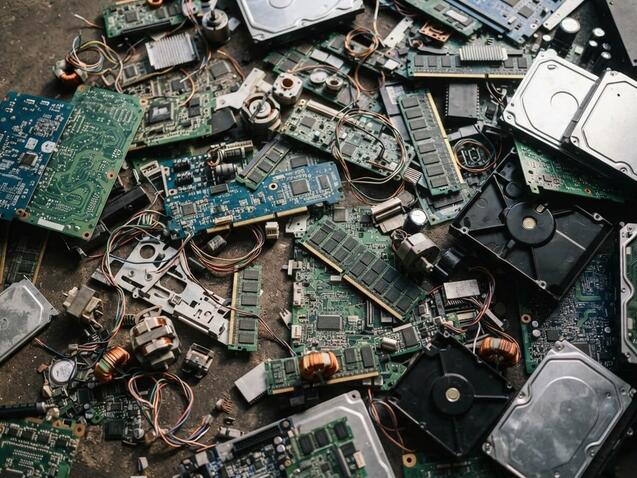
The picture above is typical incoming material: boards, RAM, hard drives, small motors, power supplies and cable. Each one needs a different route through the line.
ERS engineers the whole line for processors across the US and Canada — feed, shredding, separation and dust collection as one system, from one supplier.