


How ERS builds a dust collection system
Industrial dust collection systems from ERS are engineered around the process that creates the dust, not bolted on after it. We size the hoods, the ducting, the separator and the filter as one system, for the air volume your plant actually moves and the material it actually makes.
Most of what we collect is fibrous and high-volume: paper trim, corrugated dust, tissue fly, wood, insulation, lightweight particulate. That material behaves nothing like metal fines, and a filter sized from a catalog will blind within weeks. Ours are specified for the airflow and the dust in front of them.
Capture, transport, separation
A complete system has three stages, and all three are sized against the same air volume and the same static pressure.
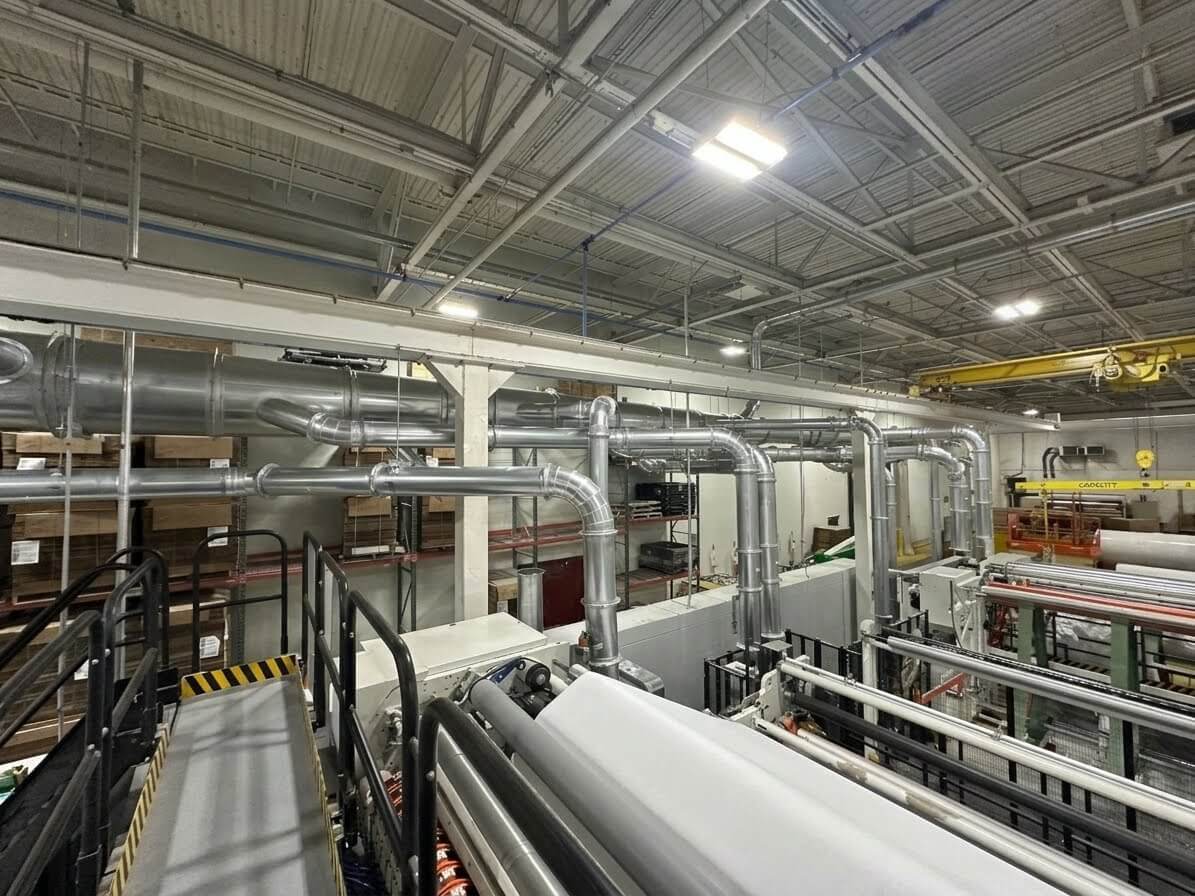
Capture at the machine
Hoods and pickup points placed where the material actually leaves the process, sized to the width and speed of the line rather than to a catalog number.
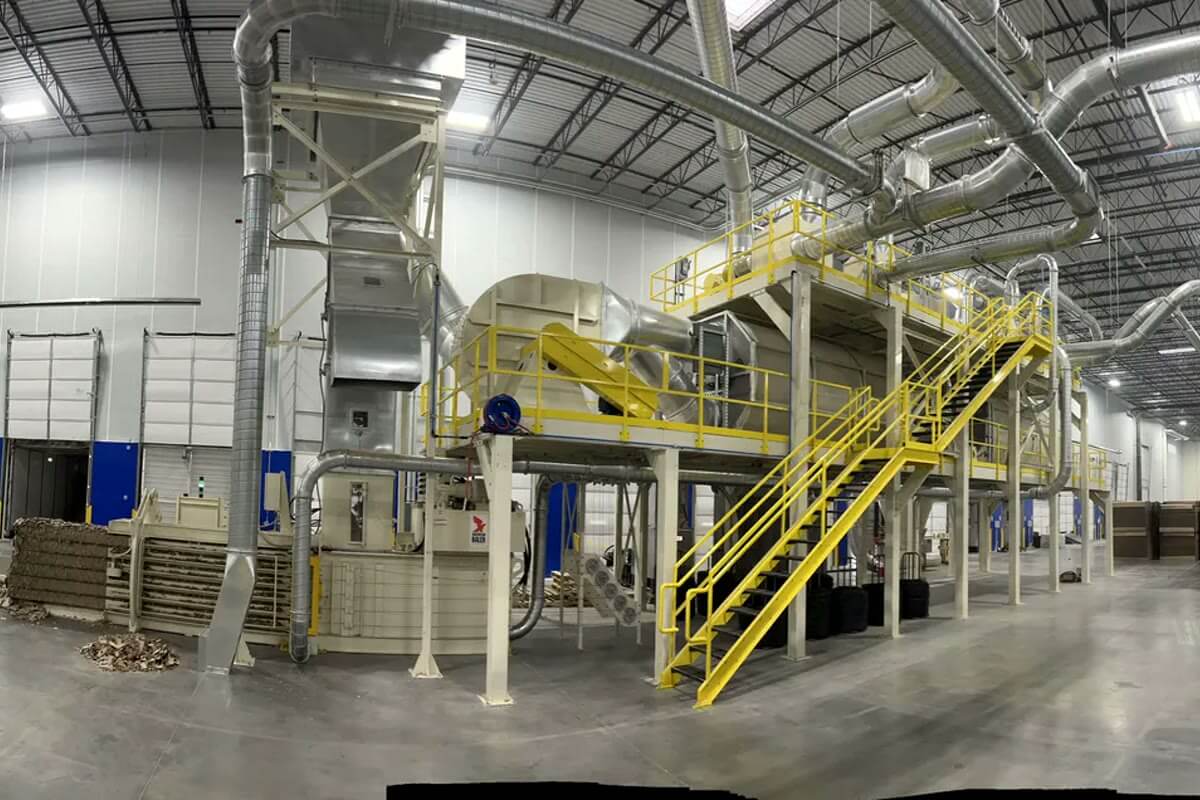
Transport through the plant
Ducting sized for the real conveying velocity, which is what keeps material moving instead of settling in the duct. Where the air off that transfer also needs cleaning, that is vacuum transfer air dust collection.
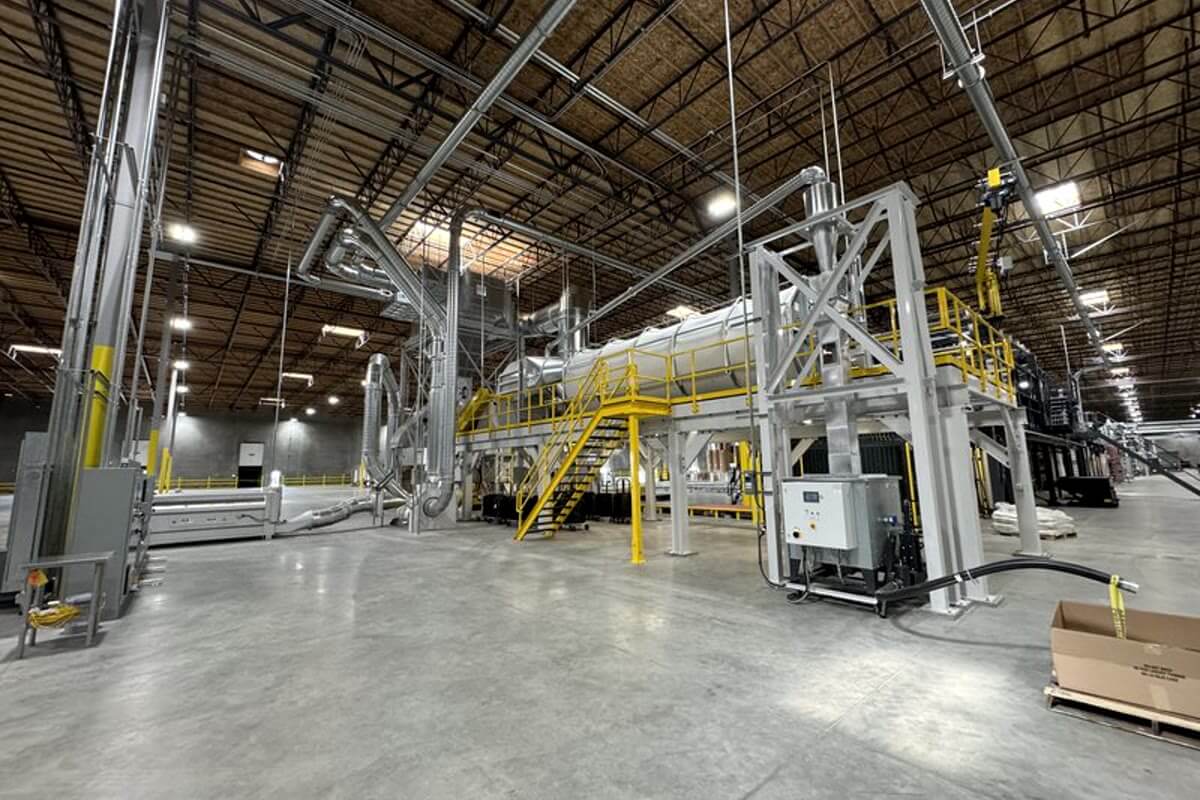
Separation and filtration
The material drops out of the airstream and clean air goes back into the building, rather than being exhausted and reheated. That returned air is the single largest operating saving the system makes.
Choosing the separator and the filter
Which one you need is decided by the dust and by the building, not by a price list.
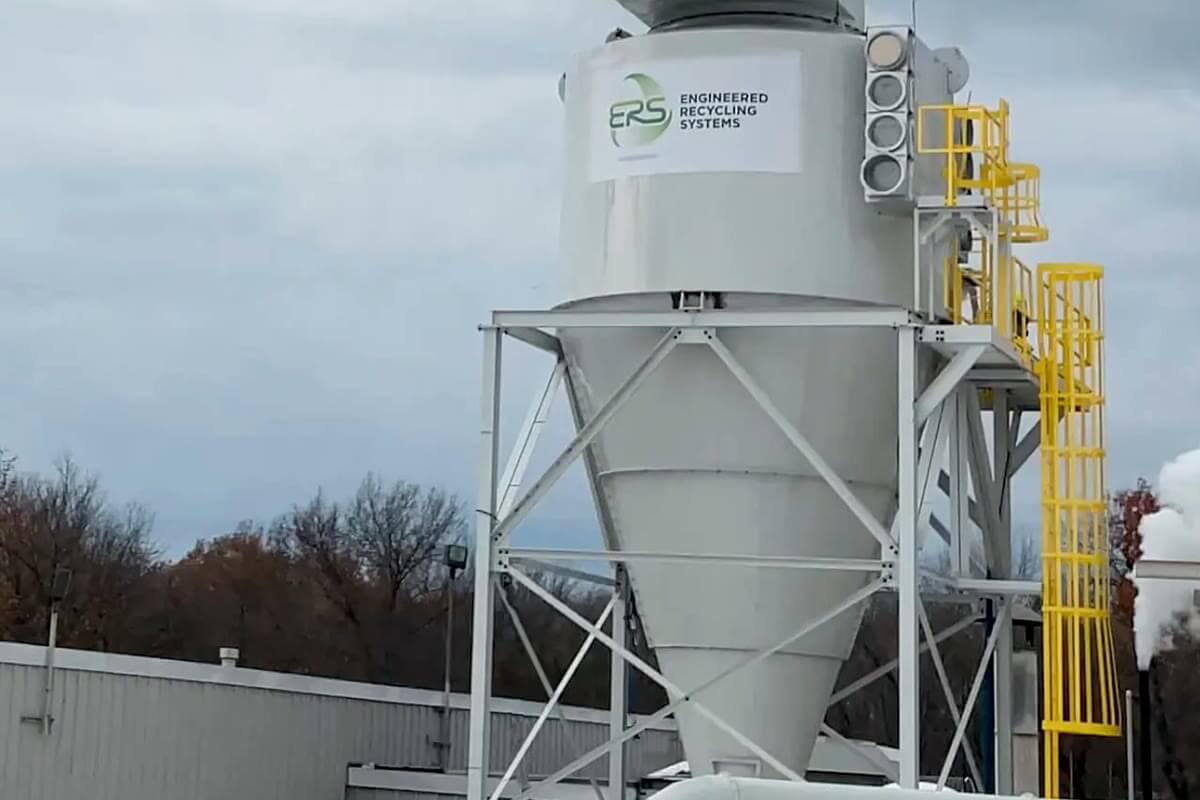
Cyclone Separator
Specified where the dust is low in fiber and granular. Correctly sized cyclone separation ahead of the filter is part of what makes returned air possible.
Explore →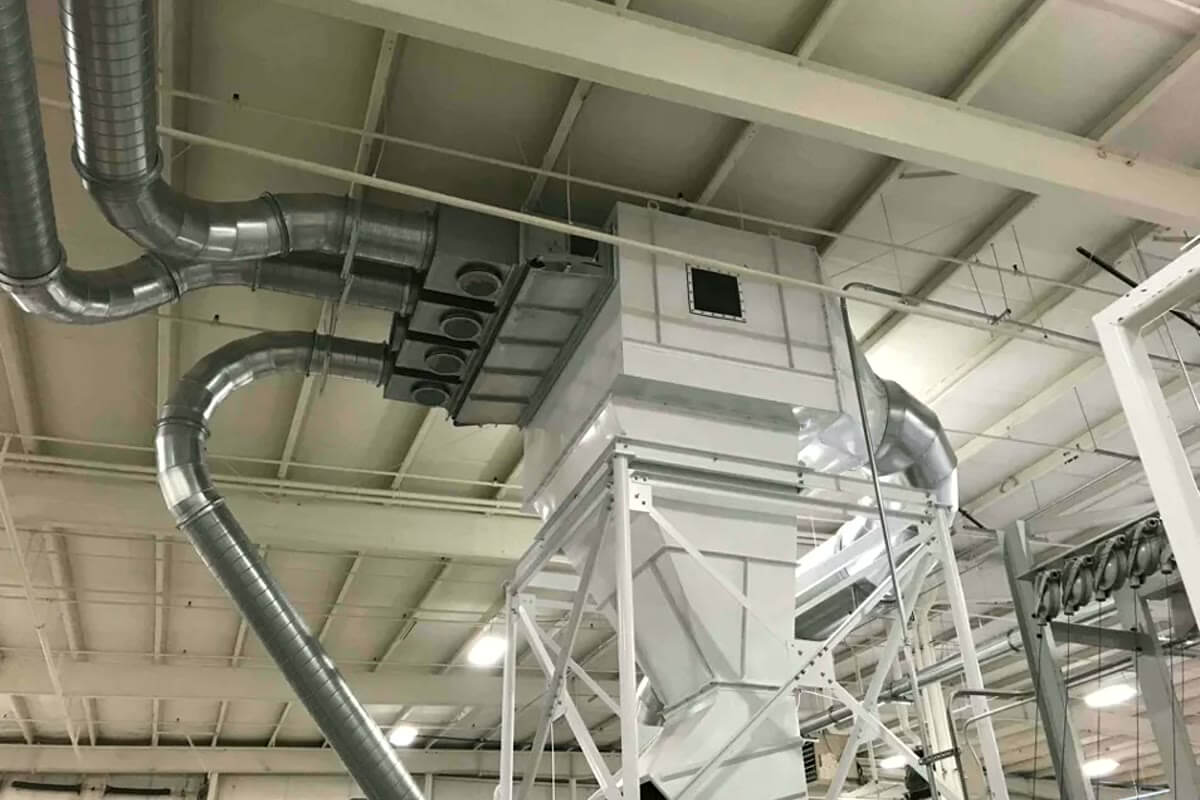
Low Profile Separator
Where headroom is the constraint: on a mezzanine, or under an existing roof where a conventional cyclone will not fit. Same job, a fraction of the height.
Explore →CCM® OCT Filter
For continuous operations. It cleans itself while it runs, on a single drive mounted outside the dust, so there is no cleaning cycle and no shutdown. Media changes are tool-free and take minutes.
Explore →Combustible Dust Filtration
Where combustible dust is in play, the filtration is specified against the hazard rather than around it.
Explore →Where these systems run
In most plants the trim and the dust are one problem with one solution, which is why the same engineering sits behind our trim removal work.
Corrugated Plants
Corrugators and box plants, where the dust comes off the line continuously and at volume.
Explore →Paper Converting
Dust collection sized for converting lines, engineered alongside the trim removal rather than after it.
Explore →Tissue & Hygiene
Tissue fly is light, fast and everywhere. The capture and the airflow are designed for how it behaves.
Explore →Rotary Die Cutting
Short bursts of scrap and dust at the die cutter, with hoods and air volume matched to the pattern.
Explore →Aluminum Can Production
Scrap and dust handling for beverage container lines, where volumes are high and the metal is worth protecting.
Explore →Trim Removal & Dust Collection
The combined system, engineered as one against the same static pressure instead of bought as two.
Explore →Vacuum Transfer Air Dust Collection
Cleaning the air off the transfer line, built as part of the same system.
Explore →Turnkey Waste Conveyance
The complete installed path from machine to baler, delivered and commissioned as one package.
Explore →What it costs to run
The question we get asked most is not what the system costs to buy, but what it costs to keep running. The honest answer is that the two biggest numbers are air and media.
Air
The one most plants underestimate. Every cubic foot you exhaust is a cubic foot you have already paid to heat or cool, and it has to be replaced from outside. A system that returns filtered air to the building removes that penalty for most of the year. On a 40,000 cfm installation in a northern plant that is not a rounding error. It is the single largest operating saving the system makes, and it recurs every winter.
Filter media
Media life depends almost entirely on how hard the filter is being asked to work, which is set by the design, not by the brand of fabric. A filter that is correctly sized and continuously cleaned runs for years; one that is undersized blinds, drives up fan power, and gets changed twice a season. That is why we size the filter to the airflow rather than to the price point.
Downtime
The cost nobody budgets for. A dust system that forces a production stop to clean itself costs more in lost output than it ever saves in capital. That is the argument behind building trim removal and dust collection as one engineered system instead of two purchases.
Maintenance in year two should be unremarkable: a visual check of the nozzles, the scrapers and the media, and a differential pressure reading that tells you whether anything has changed. Nothing is replaced on a calendar. When media does need changing, it comes out by hand and goes back in the same shift, and spare parts and service come out of Atlanta rather than off a boat.
How ERS delivers it
We survey the building first, measure the volumes and talk to the people running the machines.
We fabricate, install around your production schedule, balance the system under real load and train your maintenance people before we leave.
After that it stays ours to look after, with spare parts and field service out of Atlanta. Installed systems are written up as they go in, under project news and system updates.
Run your material first
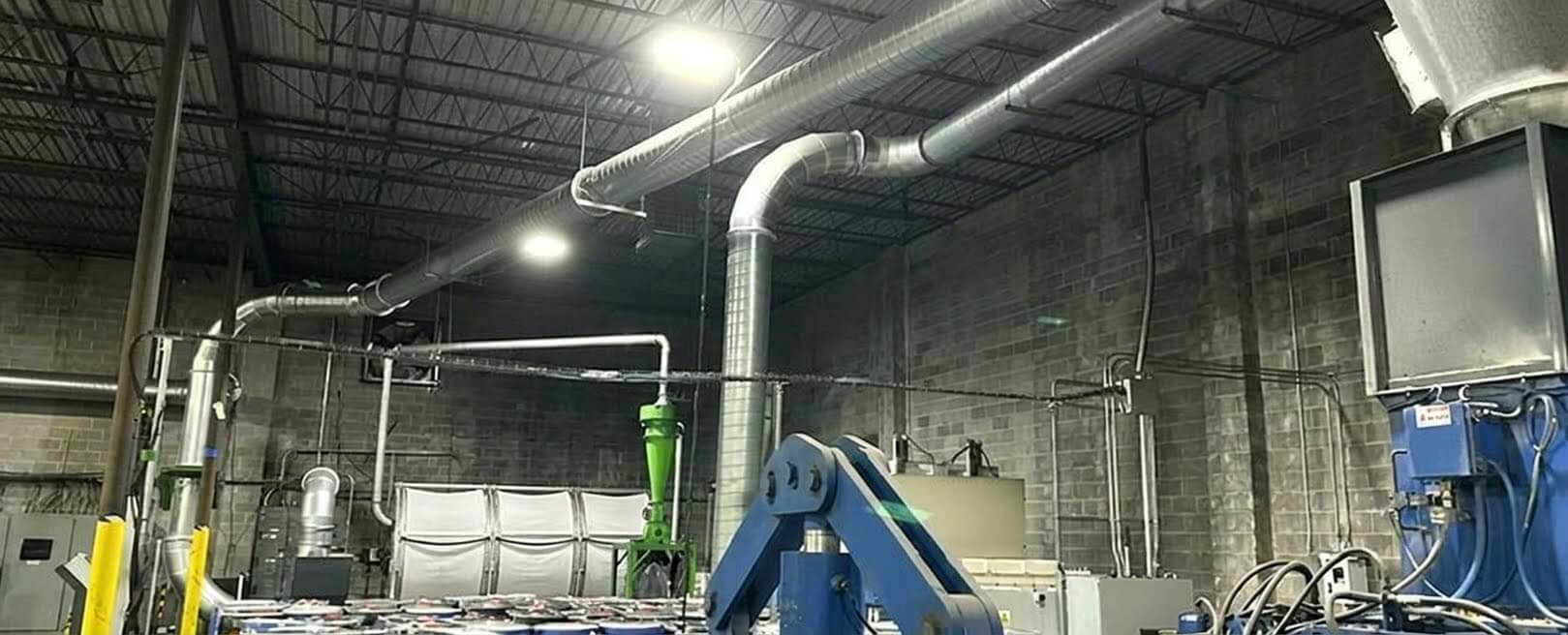
Bring your material to our test facility in Atlanta and we will run it before you commit. You see what it does on a line rather than a figure in a brochure.
Arrange a trialTalk to ERS about your plant
If dust is getting away from your process, if your filter blinds every season, or if you are installing a new line and want the air handled properly from the start, ERS can help.
Call +1 770-954-8780, email info@engineeredrecycling.com or use the contact form, and we will arrange a plant survey.