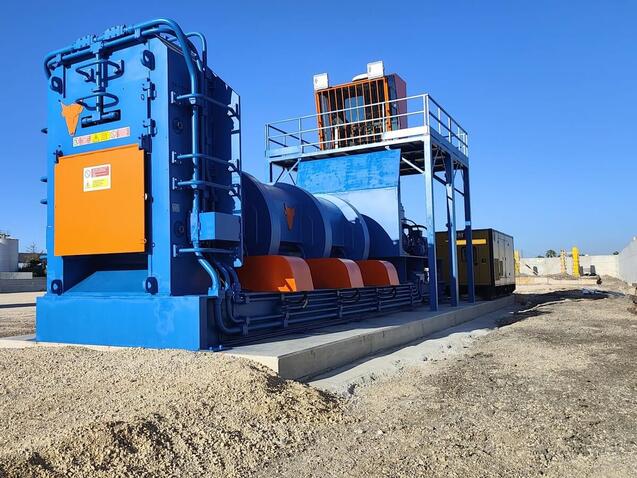
Part 5 closes our series on how to choose a scrap shear with the electronics, the part that now does more and more of the work.
Lasers instead of mechanical limit switches. Lasers control the stroke of the clamp and the shear, so the machine runs with fewer moving parts to adjust.
Encoders on the lid cylinders. Linear or rotary encoders track the lids and smooth out pressure peaks and shocks.
Sensors in the feed cylinder. Lasers and proximity sensors built into the cylinder control the feed stroke.
Transducers for pressure, temperature and filters. They take the place of mechanical pressure switches and report filter clogging, all on an operator panel where the working parameters are set.
A control program built on experience. The software that runs a shear well comes from years of work and testing.
The conclusion of the whole series: tell what costs from what is truly worth its price. A shear chosen with care may cost more on day one, and it keeps its value for years, for you and for the next owner.
ERS partners with TAURUS in the U.S. for shear balers and inclined shears, and engineers the feed, separation and dust collection around them as one line.
Read the previous part: Part 4, the hydraulic system.