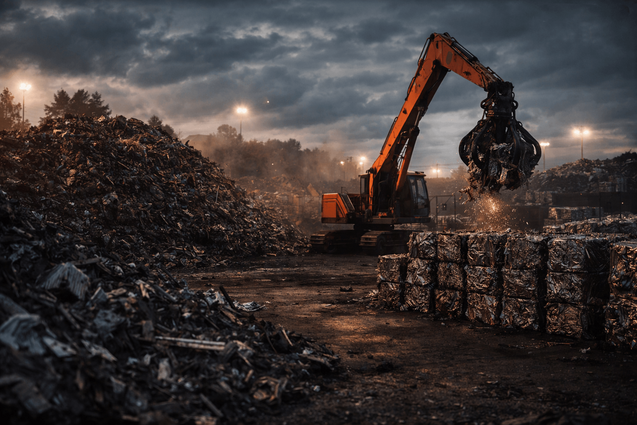
Section 232 tariffs now apply a 𝟱𝟬% 𝗱𝘂𝘁𝘆 on imported 𝘀𝘁𝗲𝗲𝗹, 𝗮𝗹𝘂𝗺𝗶𝗻𝘂𝗺, and 𝗰𝗼𝗽𝗽𝗲𝗿 articles. These duties are calculated on the full customs value of the imported material, which significantly increases the cost of 𝘃𝗶𝗿𝗴𝗶𝗻 𝗺𝗲𝘁𝗮𝗹 entering the United States. 𝗦𝗰𝗿𝗮𝗽 𝗺𝗲𝘁𝗮𝗹, however, remains outside the high‑duty category. This difference has created a clear economic shift: 𝗱𝗼𝗺𝗲𝘀𝘁𝗶𝗰 𝗽𝗿𝗼𝗰𝗲𝘀𝘀𝗲𝗱 𝘀𝗰𝗿𝗮𝗽 has become a more attractive feedstock for 𝘀𝗺𝗲𝗹𝘁𝗲𝗿𝘀 and 𝗳𝗼𝘂𝗻𝗱𝗿𝗶𝗲𝘀 seeking to reduce tariff exposure.
For 𝗿𝗲𝗰𝘆𝗰𝗹𝗲𝗿𝘀 and 𝗶𝗻‑𝗵𝗼𝘂𝘀𝗲 𝗽𝗿𝗼𝗰𝗲𝘀𝘀𝗼𝗿𝘀, this shift is more than a policy update; it is a direct pricing signal. Smelters benefit when they can replace tariff‑heavy virgin imports with 𝘁𝗮𝗿𝗶𝗳𝗳‑𝗳𝗿𝗲𝗲 𝗱𝗼𝗺𝗲𝘀𝘁𝗶𝗰 𝘀𝗰𝗿𝗮𝗽, but they can only do so when the material arrives in a form that meets melt‑shop specifications. Loose, mixed, or oversized scrap does not provide that value. The margin appears only when the material is processed into 𝗰𝗹𝗲𝗮𝗻, 𝘀𝗶𝗻𝗴𝗹𝗲‑𝗺𝗲𝘁𝗮𝗹, 𝗳𝘂𝗿𝗻𝗮𝗰𝗲‑𝗿𝗲𝗮𝗱𝘆 feedstock.
ERS systems are built specifically to create that value. 𝗦𝗵𝗲𝗮𝗿𝗶𝗻𝗴 equipment reduces oversized material to melt‑shop dimensions. 𝗦𝗵𝗿𝗲𝗱𝗱𝗶𝗻𝗴 systems increase volume, improve uniformity, and liberate metals from composites. 𝗦𝗼𝗿𝘁𝗶𝗻𝗴 and 𝘀𝗲𝗽𝗮𝗿𝗮𝘁𝗶𝗼𝗻 systems remove contaminants and divide mixed streams into clean, single‑metal fractions. 𝗕𝗮𝗹𝗶𝗻𝗴 systems compress the final product into dense, uniform packages that smelters can charge efficiently. 𝗗𝘂𝘀𝘁 𝗰𝗼𝗹𝗹𝗲𝗰𝘁𝗶𝗼𝗻 and air‑handling systems maintain environmental compliance and improve the quality of downstream separation.
When these steps are performed in‑house, the recycler captures the value created by the processing rather than leaving it to someone else. Under the current Section 232 tariff structure, that value is amplified. Smelters are motivated to buy 𝗱𝗼𝗺𝗲𝘀𝘁𝗶𝗰 𝗽𝗿𝗼𝗰𝗲𝘀𝘀𝗲𝗱 𝘀𝗰𝗿𝗮𝗽 because it helps them avoid tariff‑inflated costs on imported virgin metal. Recyclers who can deliver 𝗳𝘂𝗿𝗻𝗮𝗰𝗲‑𝗿𝗲𝗮𝗱𝘆 𝗺𝗮𝘁𝗲𝗿𝗶𝗮𝗹 benefit directly from this shift in demand.
ERS provides integrated systems that allow processors to run the entire chain themselves. Instead of relying on multiple vendors or piecing together incompatible machinery, a recycler can operate a complete, engineered line that transforms incoming scrap into 𝗵𝗶𝗴𝗵‑𝘃𝗮𝗹𝘂𝗲 𝗳𝗲𝗲𝗱𝘀𝘁𝗼𝗰𝗸. The result is a more predictable product, stronger pricing, and a competitive advantage created by policy rather than eroded by it.
Section 232 tariffs have changed the economics of metal sourcing in the United States. They have made 𝗱𝗼𝗺𝗲𝘀𝘁𝗶𝗰 𝗽𝗿𝗼𝗰𝗲𝘀𝘀𝗲𝗱 𝘀𝗰𝗿𝗮𝗽 more valuable, and they have created an opportunity for recyclers who invest in the systems that upgrade their material. ERS systems help processors turn that policy shift into 𝗼𝗽𝗲𝗿𝗮𝘁𝗶𝗼𝗻𝗮𝗹 𝗮𝗱𝘃𝗮𝗻𝘁𝗮𝗴𝗲 by producing the furnace‑ready scrap smelters increasingly prefer.
For more information or to discuss system planning, contact ERS directly.