


Paper Mills Wide Webs, Thick Trim, Heavy Dust Loads
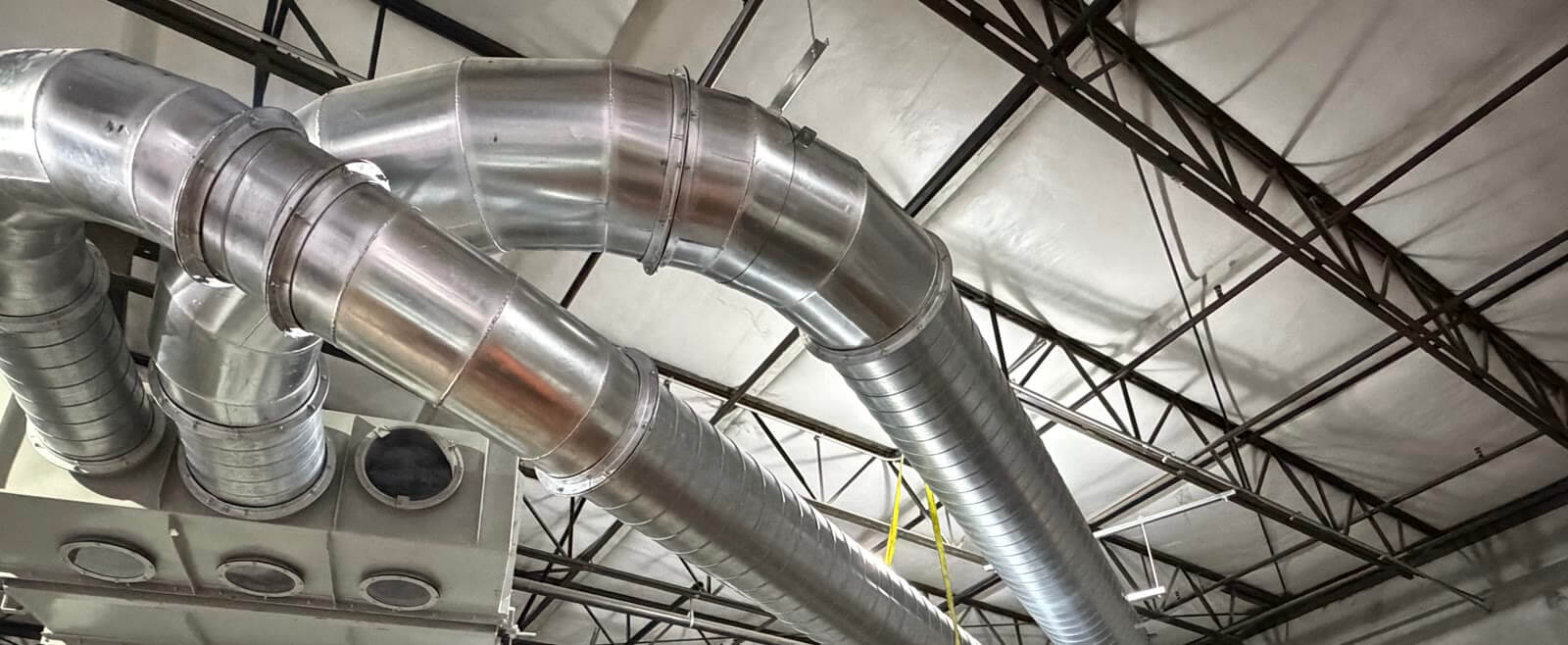
Paper mills trim removal systems from Engineered Recycling Systems are built for kraft linerboard, coated papers and specialty grades, combining high-volume trim conveyance, heavy-duty separators and CCM® dust filtration. A mill is the hardest environment this equipment works in, and it is specified accordingly.
Why a mill is different
Thick edge trim, abrasive material and high dust loads, all at widths and speeds that a converting plant does not see. A system that performs well on a corrugated line will not simply scale up to a mill.
Humidity is the other factor. Fiber-dense, high-humidity air changes how dust behaves in a duct and how a filter has to be cleaned, which is why mill systems are not converting systems with bigger fans.
Abrasion compounds both. Coated and filled grades carry mineral content that wears ducting from the inside, and a bend that lasts years on uncoated stock can need replacing far sooner on coated.
Wet end to rewinder
ERS systems support the full production process, from the wet end through to the rewinder, as one integrated installation rather than separate collections bolted on where problems appeared.
That matters for maintenance as much as performance. A mill running several independent extraction systems is a mill with several independent things to go wrong, usually at different times.
High-volume trim conveyance
Wide, thick edge trim is transported at speed from primary sheeters, winders, slitters and cutters. Reinforced ducting, industrial-grade components and airflow designed around the actual trim load are what keep it conveying rather than packing.
A duct that blocks on a mill line is not an inconvenience. It stops the machine, and on a wide-web line that is measured in tons of lost production rather than minutes.
Heavy-duty separators
Separators take the trim out of the airstream and direct it to balers, compactors or shredders, which removes the manual handling and keeps material flowing continuously across mill-wide lines.
They are built for abrasive, fiber-dense service, because that is what shortens component life in a mill. Equipment specified for cleaner air simply wears faster.
CCM® filtration, without compressed air
ERS dust collection uses CCM® Continuous Cleaning Filter Technology, which captures fine fiber dust, pulp residue and paper fines without compressed air. That removes a whole utility and a whole failure mode from the installation.
The filter holds low pressure loss, stable airflow and long media life, which is what makes it suitable for the dust loads generated during sheeting, slitting and finishing. Collected dust discharges through a cyclone separator for consolidated handling.
Combustible dust
Paper dust is combustible, and that is the reason the system exists at the scale it does rather than as a housekeeping measure.
Keeping conveying paths clean and airborne particulate controlled reduces fire risk and keeps the burden off operators, which on a continuous mill is the difference between running and stopping to clean.
Airflow control and energy
ERS fan systems match air volume to trim load and system pressure rather than running flat out. Power consumption falls, wear falls with it, and operation stays stable across several production lines drawing on one system.
On a mill, extraction is a continuous load twenty-four hours a day. A system that draws only what the moment needs is a different annual energy bill from one sized permanently for the worst case.
It also protects the system itself. Running fans at full output around the clock to cover a peak that happens twice a shift wears everything in the line faster than the work actually requires.
Core and offcut handling
Where cores have to be dealt with as well, a paper core shredder handles them alongside the trim system instead of leaving a manual job at the end of each shift.
Whole-system scope is the point: trim removal, vacuum transfer air dust collection and scrap system dust collection, specified together under one engineered design.
The rest of the paper side
ERS covers paper converting, paperboard, tissue converting with its own tissue and hygiene dust collection, plus commercial printing, flexible packaging and matrix extraction for labels.
A mill feeding its own converting operation can have both sides designed by the same engineers, which avoids the usual argument about where one system's responsibility ends.
How a project starts
With your grades, your web widths, your line speeds and your existing ducting. ERS reviews all four before proposing a configuration, because those are what determine whether a system performs.
Material can be run at the ERS test facility in Atlanta where that helps settle a question. Every system ERS supplies is installed, commissioned and supported by ERS, with spare parts and service from Atlanta.
Talk to ERS about your widths, your speeds and where your current system is costing you production.