Pneumatic Transport Moving Material Between Machines on Air
ERS pneumatic transport systems move shredded and granulated material between processing stages on air rather than by hand or by open conveyor. Nothing is carried, nothing is tipped, and the material stays enclosed from one machine to the next. Engineered Recycling Systems designs, installs and supports them from Atlanta.
What it replaces
In most plants the gap between two machines is bridged by a bin, a forklift and a person. That works, and it is also where material gets lost, mixed, contaminated and spilled, and where the line waits.
Air-powered transfer closes the gap. Material goes from the discharge of one machine into the infeed of the next without anyone touching it, which removes the handling cost and the inconsistency at the same time.
Why enclosed matters on this material
Shredded cable and granulated metal are light, dry and dusty. Moved in the open they shed fines, and the fines are the fraction carrying the most value per kilo.
Enclosed transfer keeps them in the stream, keeps the air in the building clean, and stops two streams cross-contaminating each other — which matters when the plant is selling on purity.
How the line is built
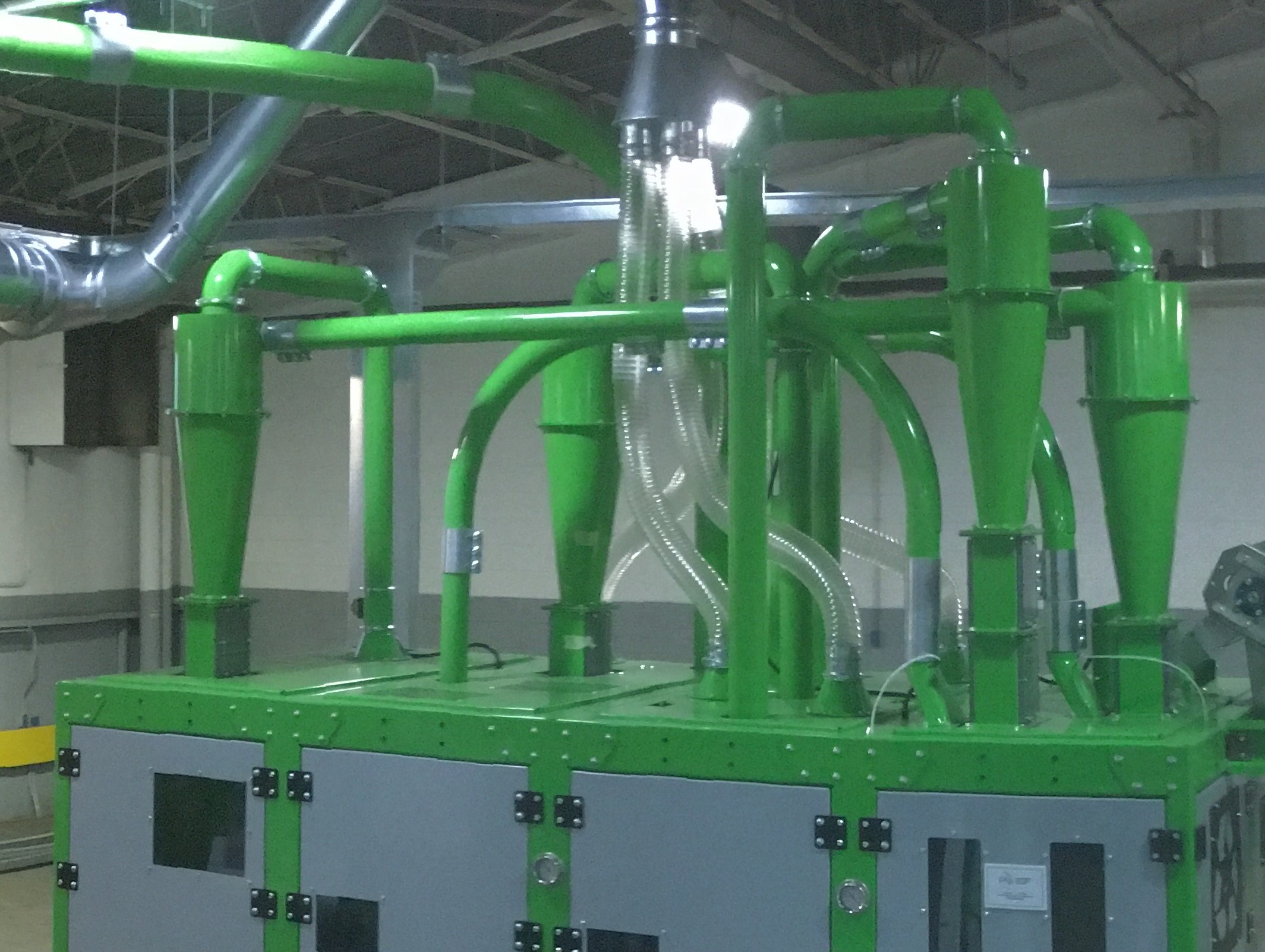
Blower, ducting, and a separation point at the discharge end. Low-profile separators and cyclones drop the material out of the air stream, and a dust collection unit handles the air that carries on.
That last part is not optional. A pneumatic line without proper filtration at the end simply moves a dust problem from one part of the building to another.
Designing the airflow
Too little air and material drops out in the duct. Too much and it costs power and wears the bends. Either way it is the airflow calculation rather than the equipment that decides whether the line runs for years without attention.
ERS designs each installation around the actual material density, particle size and duct run. A system copied from another plant with different material will disappoint in exactly this way.
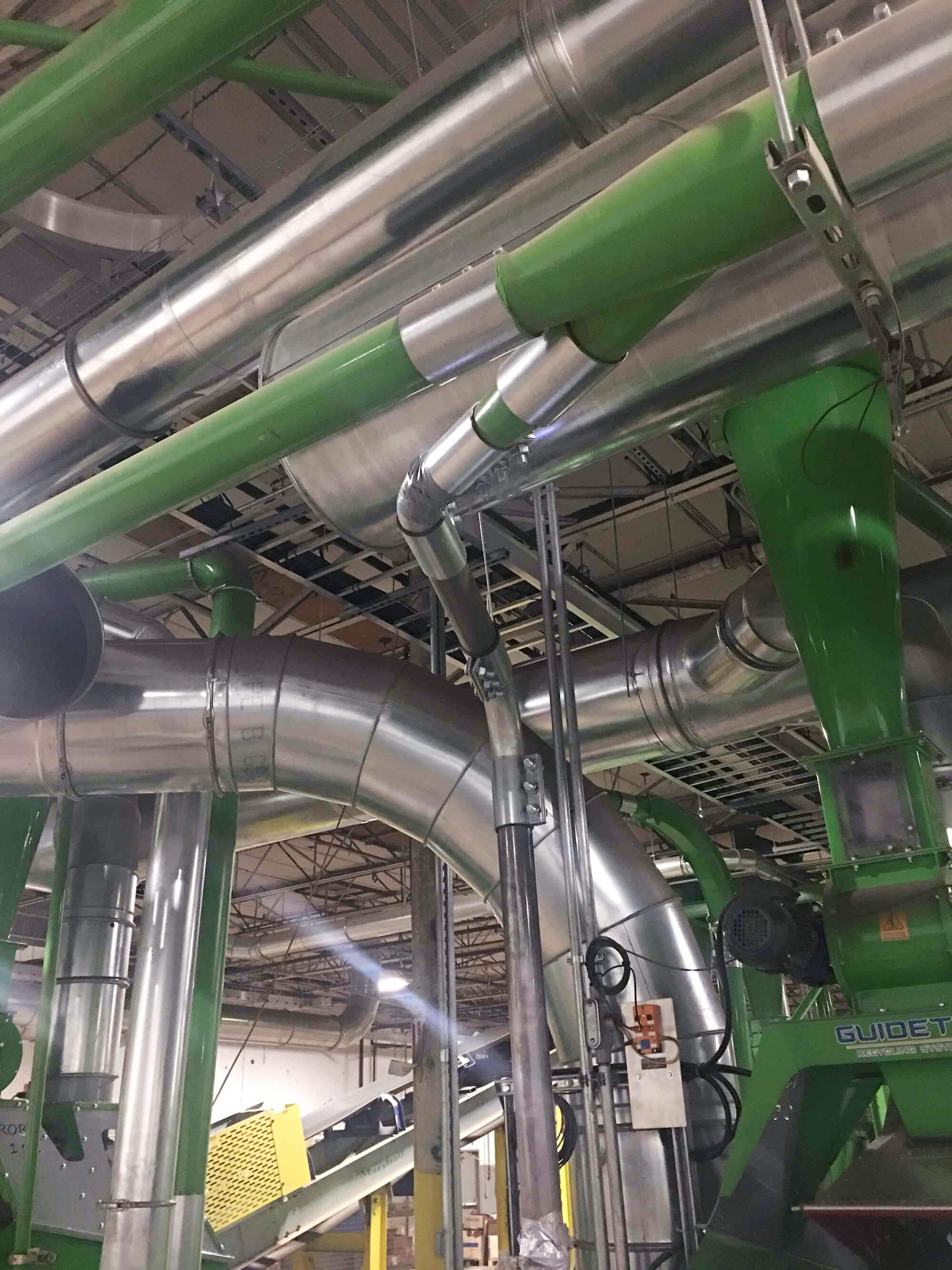
Bends are where the calculation shows up. Every change of direction costs pressure and takes wear, so a route with four bends and a short run can be harder on a blower than a long straight one.
Where it fits
Feeding a granulator, discharging from a pre-shredder, or staging material before a separation stage. Anywhere two machines have to be connected and the material is light enough to move on air.
ERS integrates it with the full Guidetti range — granulators and dry separation tables — along with conveyors and magnetic separation where the stream needs them.
Which streams suit it
Copper wire and cable recycling, which is where most of these systems go. E-waste fractions once they are sized, and light non-ferrous streams generally.
Heavy, wet or stringy material does not suit air transfer and should go on a conveyor instead. Knowing which is which before the line is designed saves an expensive correction later.
Mixed streams are the awkward case. A duct sized for the light fraction will block on the heavy one, so where a stream varies the honest answer is usually to separate first and transfer second.
Layout freedom
Ducting goes where a conveyor cannot — up, over, around a structure, across an aisle. In a building that was not laid out for the process, that freedom is often what makes an upgrade possible at all.
It also keeps floor space clear. A conveyor occupies the route it takes; a duct occupies the air above it, and the floor underneath stays usable.
Build and controls
Durable components, sealed bearings, reinforced housings and a programmable PLC, built for continuous operation with minimal supervision. Soundproofed and CE compliant.
The modular design is what keeps maintenance simple. Sections come apart where wear actually occurs, which on a pneumatic line is the bends rather than the straight runs.
What it changes in the plant
Less manual handling, so less labor tied to moving material and fewer injuries from doing it. Cleaner air, because the material is enclosed rather than open. Steadier feeding, which is what every machine downstream wants.
And less material lost between stages. On a plant selling recovered metal, the fines that used to end up on the floor are the part the business was built on.
How a project starts
With the material and the building. ERS looks at what has to move, how far, how high, and at what rate, then designs the airflow and the separation point around it.
Material can be run at the ERS test facility in Atlanta before anything is specified. Every system ERS supplies is installed, commissioned and supported by ERS, with spare parts and service from Atlanta, alongside the rest of the ERS metals processing lineup.
Talk to ERS about what you are moving and where it has to go.