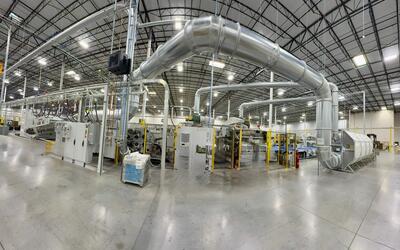
News & Projects
Real installations, system upgrades and field results

Innovation in Action – ERS News & Projects

Recycling system installations from ERS are the subject of this page: real systems, real upgrades, and the engineering decisions behind them. It brings together work from metals recycling, paper converting, dust collection and industrial scrap handling — what was built, what it replaced, and how it runs.
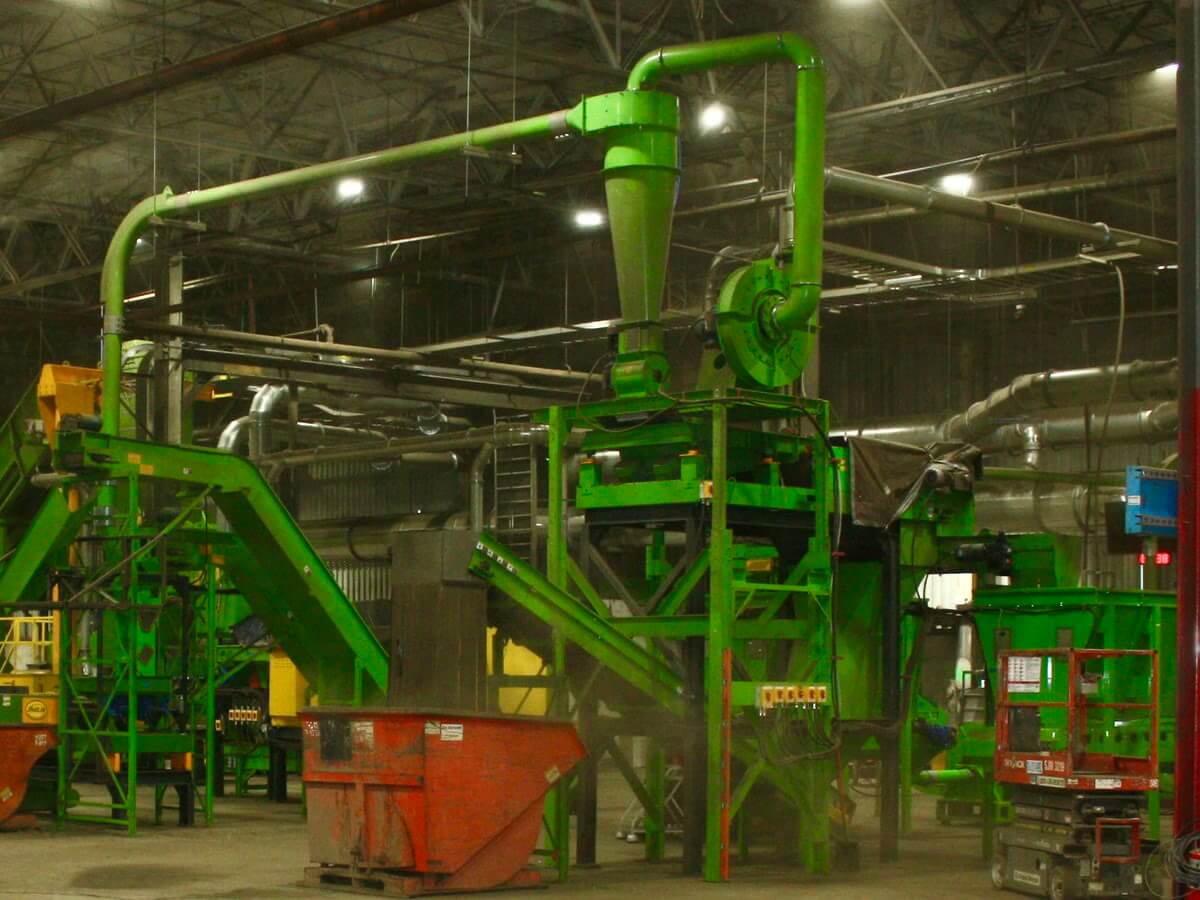
Recycling system installations in metals: a shredding, milling and separation line with green machine housings and conveyors between the stages.

Metals recycling systems

Turnkey lines for copper wire chopping, metal separation, e-scrap processing and recovery from printed circuit boards. Granulation, magnetic and eddy current separation, air and density separation, and the dust control that keeps them clean — each one built around the customer’s material, layout and throughput.
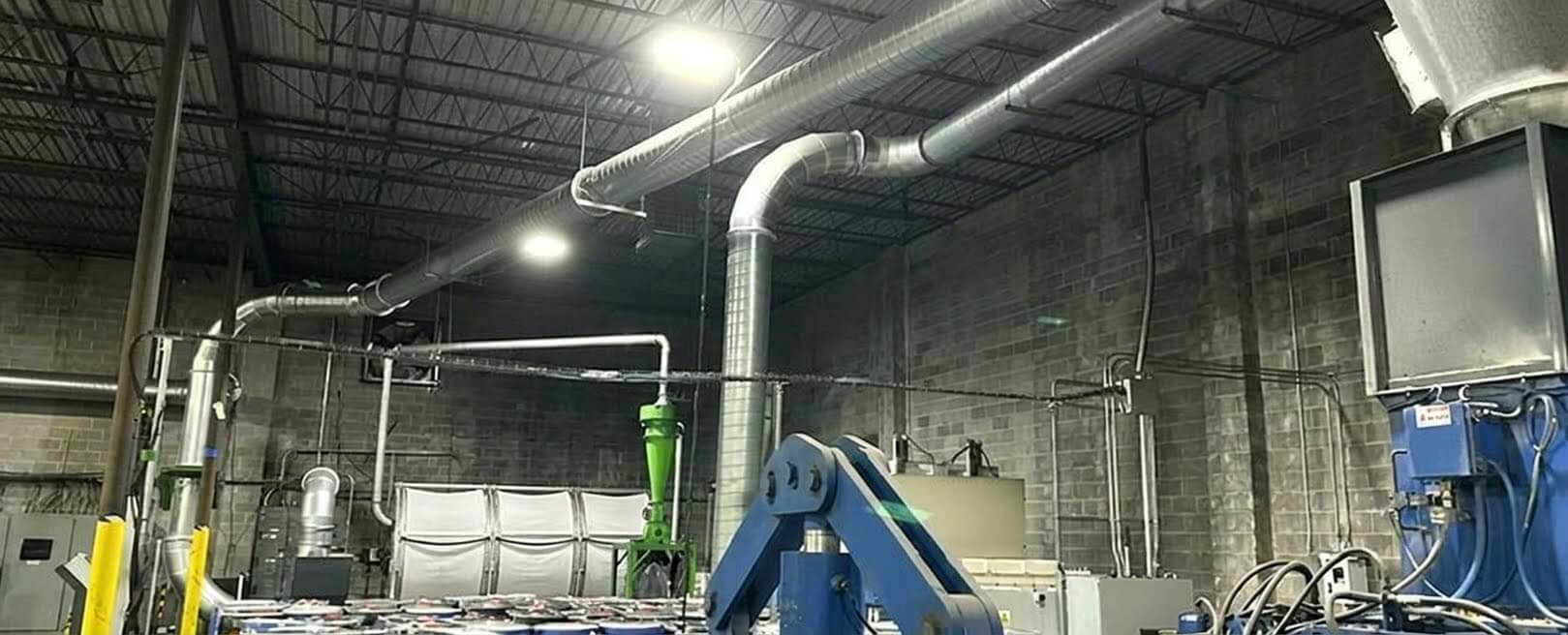
Recycling system installations in converting: ductwork rising to a cyclone and filter above a converting hall.

Paper, corrugated and tissue converting

Trim and dust removal for matrix and trim extraction, rotary die cutters, flexo folder gluers and high-speed lines in corrugated, folding carton and tissue plants. Many carry the CCM® OCT Filter, which cleans its own media while the plant runs and needs no compressed air.
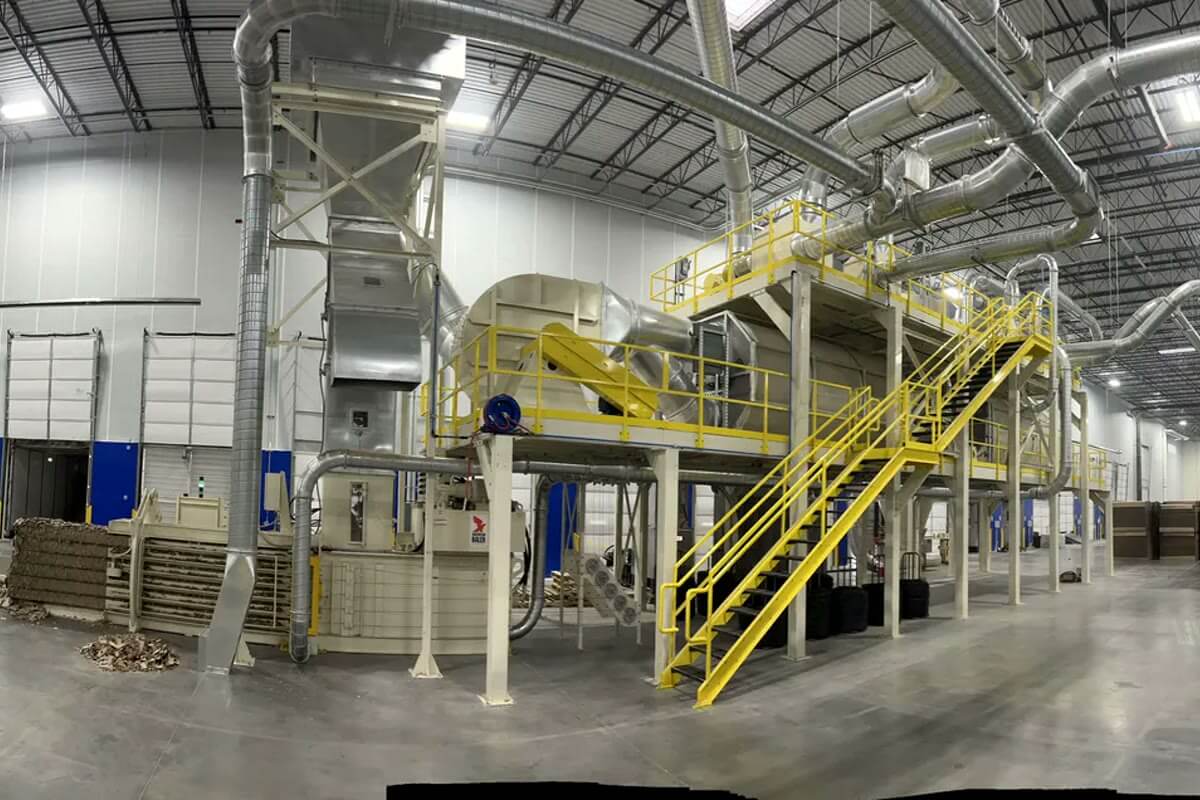
Recycling system installations as a retrofit: ducting running across a plant hall to a collector on a mezzanine, with the line working underneath.

Upgrades and retrofits

ERS also modernizes systems it did not build: retrofits to pneumatic transport lines, improvements to magnetic separation, and airflow stabilization for aging dust collection equipment. On-site diagnostics, operator training and performance tuning, backed by spare parts and service from Atlanta.

Why we publish these

The point is to show the work that normally stays behind the shutter: the engineering decisions, the system integrations, the field adjustments and the results that actually came out of them. Each report says what the plant was dealing with, what was installed, and what changed.

The page is updated as projects finish. Whether your operation is metals recycling, paper converting or dust-intensive production, these are the same problems in different buildings.

Want to talk about your own line? The contact form goes straight to the technical team, and the first question will be about your material rather than our machines.

A cyclone separator installed on a plant roof, part of a completed recycling system installation.

Built, then measured

Nothing here is a brochure render. Every project on this page was built, commissioned and run in a working plant.

27. Jan 2026
by ERS
0

Avionics teardown facilities, electronics dismantlers, and specialized recycling operations are increasingly exploring ways to recover the high‑value precious metals contained in older electronic assemblies. Many legacy avionics units and electronic components include elevated concentrations of gold, silver, platinum, palladium, and other valuable metals that can be reclaimed when supported by the right processing approach.

Engineered Recycling Systems provides metals recovery solutions designed to help your operation evaluate opportunities and determine the most effective path toward in‑house processing. Whether you are handling limited initial volumes or planning for long‑term expansion, ERS systems can be configured to support the specific requirements of high‑value electronic scrap.

With engineered separation technology, controlled material handling, and proven recovery performance, ERS helps your team outline practical system layouts that align with your operational goals. Our engineers work closely with you to review material streams, assess feasibility, and develop tailored solutions that support efficient precious‑metal recovery while maintaining a scalable foundation for future growth.

Facilities interested in exploring metals recovery for avionics, electronics, or other high‑value components can connect with Engineered Recycling Systems for a system review and customized recommendations.

26. Jan 2026
by ERS
0

Tissue converting environments demand consistent, high‑performance dust control to maintain clean operation, reduce cleanup time, and protect equipment from airborne fibers generated during production. Engineered Recycling Systems continues to support tissue manufacturers with Dust Collection Systems engineered specifically for the challenges of high‑speed converting lines, including those processing tissue produced on TAD (Through‑Air‑Dried) paper.

Facilities operating TAD‑based products often experience elevated levels of lightweight airborne dust due to the material’s structure and softness. ERS systems are designed to stabilize airflow, capture fine particulate at the source, and maintain clean operating conditions throughout the converting process. For plants with existing dust collection systems, ERS provides upgrade paths that improve capture efficiency, reduce manual cleaning, and enhance overall system performance without disrupting production.

With engineered filtration technology, optimized duct design, and the CCM® OCT Filter System, ERS delivers reliable dust control solutions that help tissue manufacturers maintain cleaner converting floors, reduce downtime, and support long‑term operational stability.

Facilities looking to evaluate their current dust collection performance or explore improvement options can connect with Engineered Recycling Systems for a system review and tailored recommendations.

 
20. Jan 2026
by ERS
0

Engineered Recycling Systems has delivered another high‑performance Dust Collection System engineered for the demanding environment of modern tissue manufacturing. High‑speed production creates a constant stream of airborne fibers and fine dust that settle on equipment and require frequent cleanup, reducing available run time and interrupting overall efficiency. Managing this airborne dust is essential for maintaining a stable, predictable, and safe production environment.

This installation features the ERS CCM® OCT Filter System, designed to maintain consistent airflow and capture airborne dust directly at the source before it spreads across the machine area. By returning clean, filtered air to the facility, the system reduces cleanup demands, improves visibility around the line, and supports more reliable operation at full production speed. The result is a cleaner converting floor and more uptime with fewer interruptions.

ERS systems are built for the unique challenges of tissue, towel, and paper‑product manufacturing, combining efficient dust capture, robust pneumatic conveyance, and advanced filtration technology. Our solutions integrate seamlessly into existing production lines and support both new installations and facility upgrades. With a focus on durability and long‑term stability, ERS helps manufacturers reduce maintenance, extend equipment life, and maintain a cleaner, safer, and more productive facility.

To evaluate your current system or discuss upgrade options, connect with Engineered Recycling Systems and discover how modern airflow and dust control technology can strengthen your tissue production workflow.

16. Jan 2026
by ERS
0

Many facilities across North America still operate older V‑style filters, Vee drum filters, and traditional air drum filtration systems originally designed for light‑to‑medium dust loads. While these units were effective in their time, today’s production environments demand higher airflow stability, easier maintenance, and continuous‑duty performance that older designs struggle to deliver.

Engineered Recycling Systems (ERS) is announcing a modern replacement and upgrade solution for operators of these legacy systems: the CCM® OCT Filter System, our next‑generation industrial filtration platform engineered for high‑efficiency dust control, simplified service, and long‑term reliability.

Facilities running older V‑style or drum‑style filters often face challenges such as declining airflow, inconsistent cleaning cycles, difficult access for maintenance, and limited adaptability to higher‑speed production lines. The ERS CCM® OCT Filter System addresses these issues with a compact, modular design, continuous self‑cleaning technology, and robust construction built for demanding industrial environments.

The CCM® OCT Filter System offers:

  • Consistent, high‑efficiency dust removal even under heavy fiber and particulate loads

  • Low‑maintenance operation with easy access to all service points

  • Stable airflow and pressure control for modern converting, packaging, and manufacturing lines

  • Modular configurations that integrate seamlessly into existing plant layouts

  • Reduced downtime through durable components and simplified cleaning mechanisms

For facilities currently operating older V‑style or drum‑style filtration units, ERS provides full system evaluations, upgrade paths, and turnkey replacements that improve performance while reducing long‑term maintenance costs. Whether a plant needs a direct retrofit or a complete filtration redesign, the CCM® OCT Filter System delivers a measurable improvement in efficiency, reliability, and operational stability.

ERS continues to support manufacturers seeking to modernize their dust collection infrastructure with technology designed for today’s production demands. Our engineering team is available to review existing systems and recommend the optimal upgrade strategy.

14. Jan 2026
by ERS
0

A new generation of bladeless recycling systems is changing what cable and WEEE processors can expect. By removing knives from the reduction stage, these systems take out one of the most maintenance-intensive components found in traditional granulators. Without blades, there is no sharpening, no adjustment, and no replacement cycle, which reduces the amount of service work required and removes a major source of downtime.

The absence of knives creates a more stable and predictable workflow. Throughput remains consistent because the system no longer depends on the condition of cutting tools, and operators benefit from a process that runs longer between service intervals. Over the lifetime of the equipment, this leads to lower operating costs, fewer interruptions, and a simpler maintenance routine for plant personnel.

For facilities handling mixed cables, electronic scrap, or variable feedstock, bladeless technology offers a reliable and efficient alternative to conventional cutting-based systems. It provides a cleaner, more controlled process that supports higher uptime and long-term operational stability.

ERS continues to evaluate and support technologies that move recycling performance forward. If your operation is exploring next-generation processing solutions, this development is worth close attention.

08. Jan 2026
by ERS
0

Engineered Recycling Systems (ERS) is expanding its metal scrap recovery solutions to support a wide range of can‑manufacturing environments. Modern production lines for beverage cans, food cans, pet food containers, aerosol formats, and specialty metal packaging generate substantial volumes of trim, slugs, and offcuts during forming, decorating, and end‑making processes. This scrap represents valuable material — and losing it to outside recyclers means losing profit.

ERS systems are engineered to capture, convey, and process metal scrap directly at the source, enabling manufacturers to recycle their own material in‑house rather than shipping it out. Integrated shredders, granulators, and separation modules transform production scrap into clean, reusable metal streams that can be fed back into the facility’s recycling loop or sold at higher value.

This approach reduces dependency on third‑party recyclers, protects material value, and supports circularity goals across aluminum, steel, and composite can formats. Whether a facility produces DWI cans, tinplate food containers, or multi‑material specialty packaging, ERS systems ensure consistent scrap handling at full production speed.

Air filtration remains part of the overall solution — but as a supporting component. ERS provides stable airflow and particulate control to maintain clean conveyance and protect equipment, while the core system focuses on maximizing metal recovery and eliminating scrap‑related production losses.

As demand grows for recyclable, lightweight metal packaging, ERS continues to deliver systems that help manufacturers retain material value, improve efficiency, and strengthen sustainability performance.

 
08. Jan 2026
by ERS
0

Engineered Recycling Systems (ERS) is preparing a new CCM® OCT Filter System for a company operating in the rapidly growing textile circularity and material‑recovery sector. As apparel waste increases and sustainability commitments intensify, recycling platforms are scaling shredding and grinding lines to process post‑consumer textiles and textile‑based footwear at higher volumes than ever before.

These operations generate significant amounts of lightweight fiber dust, mixed‑material particulates, and airborne contaminants during size reduction and material liberation. Without a dedicated filtration system, facilities can face housekeeping challenges, reduced equipment uptime, and difficulty maintaining compliance with air‑quality and worker‑safety standards.

The ERS CCM® OCT Filter System is engineered specifically for fiber‑rich, abrasive recycling streams that include garments, soft goods, and textile‑based footwear components. Its optimized airflow design, high‑capacity filter modules, and automated cleaning technology deliver continuous filtration efficiency and stable performance during peak production. Energy‑efficient operation supports sustainability goals while reducing long‑term operating costs.

As textile circularity platforms expand to meet global demand, ERS continues to deliver filtration solutions built for the speed, precision, and environmental requirements of modern recycling facilities.

Learn more about the CCM® OCT Filter System.


08. Jan 2026
by ERS
0

Engineered Recycling Systems (ERS) is progressing with another installation of its CCM® OCT Filter System for a major producer in the specialty printing and paperboard packaging industry. As production volumes and graphic quality requirements continue to rise across markets such as personal care, food and beverage, healthcare, and household products, facilities in this sector face increasing demands on dust control, air quality, and system reliability.

The CCM® OCT Filter System is engineered to manage high‑volume paper dust and trim particulates generated by modern lithographic, digital, and finishing operations. The system provides continuous filtration efficiency, stable airflow, and reduced maintenance requirements — all critical for facilities running multiple presses, sheeting lines, and value‑added finishing equipment.

This installation includes ERS’s optimized airflow design, high‑capacity filter modules, and automated cleaning technology to maintain consistent performance during peak production. The system supports cleaner working environments, improved equipment uptime, and long‑term compliance with air quality and safety standards.

ERS continues to expand its footprint in the printing and packaging sector with filtration solutions built specifically for high‑graphic production environments.

Learn more about the CCM® OCT Filter System.

07. Jan 2026
by Andreas Fischer
0

Electrification is accelerating across industries, and copper demand continues to surge. Wire and cable scrap streams are becoming critical to supply stability, requiring precision systems that maximize recovery and purity.

Engineered Recycling Systems (ERS) has delivered a new copper recovery solution tailored to the speed, precision, and compliance demands of modern wire and cable recycling operations. The system integrates shredders, granulators, turbo mills, and air table separators to liberate metals efficiently and ensure high-purity copper separation while reducing contaminants.

Unlike adapted equipment, ERS systems are engineered specifically for wire and cable scrap. Energy-efficient designs lower operating costs, while integrated recovery supports sustainability goals and regulatory compliance.

As copper becomes increasingly vital to electrification, ERS continues to lead with systems built for performance, purity, and long-term reliability.

Explore ERS Copper Recovery Systems

07. Jan 2026
by ERS
0

ERS has completed another engineered trim removal and dust collection project supporting a North American converting facility focused on high-speed production and material efficiency.

The customer faced growing challenges as web speeds increased: edge trim and matrix waste were accumulating at the machine, housekeeping demands were rising, and maintaining consistent uptime was becoming more difficult. They needed a solution that would allow them to operate at full web speed while maximizing material use and reducing waste in the production environment.

ERS designed an integrated trim removal and dust collection system that captures matrix and edge trim directly at the source and conveys it reliably to a centralized collection point. The system is engineered to maintain consistent airflow and vacuum levels at production speed, helping the plant protect product quality, reduce manual handling, and improve overall housekeeping.

With ERS, converters gain a trim and dust control solution built for speed, precision, and reliability — supporting productivity, compliance, and long-term sustainability targets.

Learn more about ERS trim removal and dust collection systems.

02. Jan 2026
by ERS
0

Demolition and interior renovation contractors are seeing a steady rise in insulated copper wire generated during building tear‑outs, electrical removals, and large‑scale interior strip‑outs. As project volumes increase and material streams become more diverse, many contractors are reassessing how they handle wire once it leaves the jobsite. The traditional approach of sending mixed insulated wire directly to scrap yards is shifting, driven by higher copper values, tighter project margins, and a growing interest in capturing more of the material’s true worth.

Across the demolition industry, contractors are exploring whether bringing wire recovery in‑house can create a more predictable and profitable workflow. With insulated wire now representing a meaningful portion of project scrap, the ability to convert this material into clean copper granules is becoming an attractive option. Contractors who manage multiple projects per month, or who regularly remove wiring from commercial, industrial, or institutional buildings, are finding that consistent volumes can justify a dedicated recovery system.

Engineered Recycling Systems (ERS) works closely with demolition companies, interior strip‑out specialists, and building service contractors who want greater control over their wire stream. Many are looking for a cleaner, more efficient way to handle the material they already generate, without relying solely on fluctuating scrap yard pricing. By integrating a compact, scalable wire recovery system into their operation, contractors can streamline material handling, improve output quality, and create a more stable revenue channel from the wire they remove every day.

As the demolition sector continues to evolve, more companies are recognizing the value of treating insulated wire as a recoverable resource rather than a low‑value byproduct. ERS supports this shift by designing systems that fit the pace, space, and workflow of demolition operations, from small contractor yards to larger regional facilities. With cleaner output, consistent performance, and engineered reliability, these systems help contractors strengthen their material strategy and capture more value from the work they already perform. Engineered Recycling Systems is ready to support demolition and interior contractors who want to explore dedicated wire recovery solutions for their operations.


18. Dec 2025
by Andreas Fischer
0

The tissue industry continues to face mounting pressure to maintain clean air, reduce waste, and work to strict safety standards across high-speed converting lines. Dust and scrap accumulation from kitchen roll, paper towels, and hygiene tissue production threatens equipment performance and adds to the housekeeping burden on the line. Engineered Recycling Systems (ERS) builds dust and scrap collection systems for the tissue sector. ERS systems are engineered to capture fine airborne fibers and production scrap directly at the source — supporting hygienic operations, reducing maintenance, and improving overall plant efficiency. Key features include: Balancing Fan Technology — Stabilizes airflow and reduces energy consumption across the system. CCM® Filter System — Maintains high filtration efficiency with continuous nozzle cleaning every 2 to 3 minutes. Modular Integration — Easily adapts to existing converting and packaging lines. Dust Puck Compaction — Enables clean disposal or reintegration into the waste stream. Engineered to the Plant — Each installation is engineered to the standards that apply to that plant, and reviewed on site. ERS is currently installing another full-scale dust and scrap collection system at a tissue manufacturing facility, reinforcing its commitment to clean air and sustainable production in the hygiene sector. The system will support high-volume converting with minimal downtime and consistent filtration performance. ERS systems are in daily use on facial tissue, kitchen roll, paper towel and hygiene product lines — because in modern tissue manufacturing, clean air isn't optional, it's operational.

Copyright 2026. All Rights Reserved.
You are using an outdated browser. The website may not be displayed correctly.