Guidetti
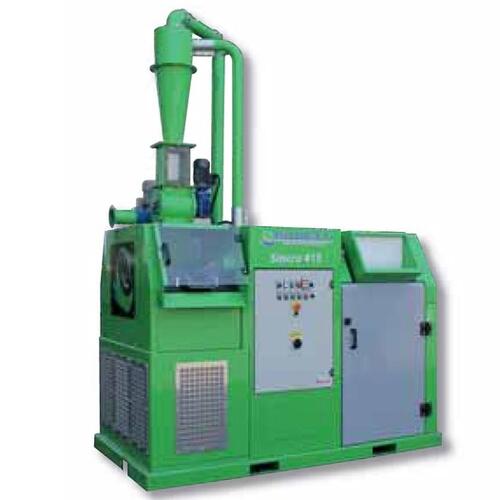
Sincro
415
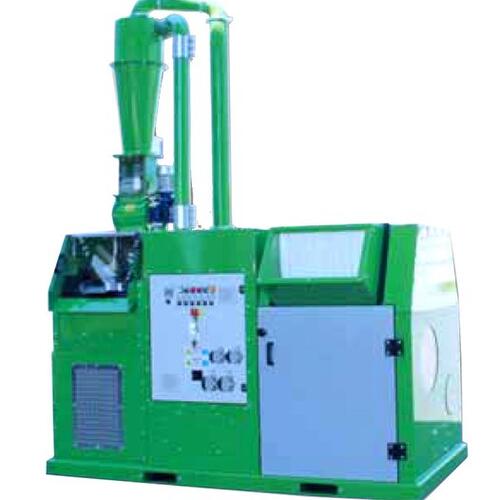
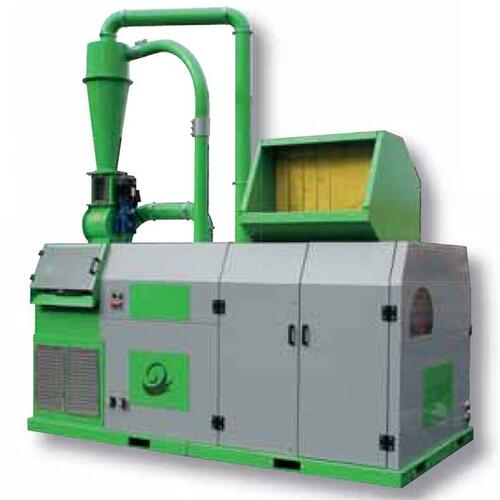
Sincro Line for Copper and Aluminum Cable Recovery
The Guidetti Sincro Line granulates copper and aluminum cable and sorts the metal from the insulation in one compact line. Rigid and flexible conductor run together without pre-selection, which is the practical difference between this and most cable equipment. Engineered Recycling Systems supplies and integrates it from Atlanta.
The four models
The Sincro 415 delivers up to 440 lb/h (200 kg/h) at 20 HP (15 kW). The Sincro 530 reaches 880 lb/h (400 kg/h) at 30 HP (22 kW). The Sincro 950 tops the range at 1,985 to 2,425 lb/h (900 to 1,100 kg/h) with 64 HP (48 kW) installed.
Below them the Sincro 315 handles up to 285 lb/h (130 kg/h) on an 8 HP (6.1 kW) motor in a footprint of 51 x 40 x 62 inches (1300 x 1010 x 1565 mm) — small enough for a workshop corner rather than a dedicated hall. All four are CE compliant and take manual or automated feeding.
Throughput is the obvious number, but it is rarely the one that decides the model. Cable diameter, copper content and how consistently material arrives matter more, because a line fed in bursts never reaches its rated figure anyway.
How the sorting works
A blade granulator cuts the cable and liberates the metal from the insulation. Sorting starts there: the mixed granulate passes a zig-zag separator, which uses airflow to take the light plastic fraction out, and a turbo mill where finer liberation is needed.
A dry densimetric table does the final sorting on density — the stage that lifts the product from a mixed granulate to a saleable copper grade. Dry throughout: no water, no effluent, no drying stage. For most plants that is what makes the installation practical at all.
Thick metals such as plugs and connectors come out early rather than travelling through the line, which protects the granulator and keeps them out of the product.
Purity decides what it earns
Copper sells on purity, and the gap between a 97% and a 99.5% product is the difference between a commodity price and a mill price. That gap is decided by the sorting stages, not by how hard the granulator cuts.
Which is why the right target is a commercial question rather than a technical one. ERS works backwards from what your buyer actually pays for, because reaching higher purity costs equipment and floor space that only pays back if the offtake rewards it.
Where it sits in the line
Ahead of it, a PMG pre-shredder opens up reels, bundles and tangled drops so the granulator sees a feed it can accept. Behind it, dry separation tables take the final fraction, and a Reco Mill line recovers copper from the plastic tailings most operations send to landfill.
Between the sorting stages run dosing conveyors, magnetic separation for ferrous contamination, and dust extraction. Granulating cable produces fine dust carrying both copper and plastic, so the extraction is a recovery stage as well as a housekeeping one.
Where the feed is dirtier or more mixed, the Sincro Mill line is built for it. Where the footprint is the constraint, the Sincro Eko line does the same work in less space.
What runs through it
Insulated copper wire and cable of any diameter. Aluminum conductor. Telecom and data cable, automotive harness, building wire and production offcuts.
Shredder wire off an auto shredder behaves very differently — short, tangled and contaminated — and usually needs a line specified around that rather than around clean cable.
Where a manufacturer generates its own scrap, in-house wire scrap recovery keeps the copper value in the business instead of selling it at scrap price.
Running costs
Blades and screens are the consumables, and contaminated feed wears them faster than clean cable. What decides their real cost is not the price of the part but how long the line stands still while it is changed.
Energy consumption is low for the throughput, which on a line running continuously is a genuine operating figure rather than a specification line.
How a project starts
With a sample. Cable scrap varies enormously between sources, and the recovery figures from a trial are what the line gets designed around rather than anything written on a data sheet. Material can be run at the ERS test facility in Atlanta before anything is committed.
Every Sincro line ERS supplies is installed, commissioned and supported by ERS, with spare parts and service from Atlanta.
Talk to ERS about the cable you are processing and the grade you need out of it.