


Briquette Press C 150 / C 170
The briquette press C 150 and the larger C 170e are the compact end of the range ERS supplies, built to take loose chips, shavings, sawdust and paper dust and turn them into solid briquettes. Most of them sit directly under a dust collection system, which is where the material is already arriving.
What the machine does
Material drops into the hopper, either by hand or straight from the collection system. An agitator keeps it moving toward an opening in the base, an auger fills the pressing chamber, and a hydraulic cylinder densifies it into a briquette shaped roughly like a hockey puck.
No glue and no binder is used. The briquette holds together on compaction alone, so what comes out is a clean product that can be stacked, stored, sold on or burned for heat.
Technical data
| C 150 | C 170 | |
| Weight | 1,760 lbs (800 kg) | 2,205 lbs (1,000 kg) |
| Briquette diameter | 2" (50 mm) | 2.8" (70 mm) |
| Hydraulic oil quantity | 26.5 gal (100 L) | 26.5 gal (100 L) |
| Hydraulic motor | 9 hp (6.6 kW) | 12 hp (9 kW) |
Which of the two
The choice is throughput and briquette size rather than capability. The C 150 makes a 2" briquette on a 9 hp drive and suits lower volumes and tight installations. The C 170e makes a 2.8" briquette on 12 hp and takes more material per hour.
Where the volume is beyond either, the range continues through the TH-Series, the TH 800 M and the TH 1500 M. The overview of the whole range sits on the briquette press page.
Options worth specifying
A level sensor, hydraulic oil heating and cooling, and automatic length adjustment are all available. The oil heating matters more than it sounds in an unheated building, because cold oil changes how the press behaves on the first cycles of a shift.
Automatic length adjustment is worth having wherever the briquettes are going into a container or onto a conveyor and a consistent size makes the handling predictable.
What the press wants to see
Briquetting is sensitive to what arrives. Material that is reasonably consistent in size and not soaking wet compacts predictably; a feed that swings between fine dust and long shavings produces briquettes that vary in density and length. Where a stream is mixed, size reduction upstream through a shredder evens it out before the press ever sees it.
Tramp metal is the other thing worth designing out. A bolt or an offcut traveling with the shavings reaches the auger eventually, so on mixed streams ERS puts magnetic separation ahead of the press rather than relying on the operator noticing.
Maintenance and wear
The wear parts are where the material does the work: the auger, the pressing chamber and the die. Abrasive feedstock such as MDF dust or metal-bearing material shortens their life considerably compared with clean softwood shavings, which is worth knowing when the machine is specified rather than when the first parts are ordered.
Access is the practical point. A press installed hard against a wall under a cyclone is a press that takes twice as long to service, so ERS plans the position for the maintenance as well as for the duct run. Wear parts are held and supplied from Atlanta.
What briquetting changes
The main gain is volume. Loose chips and dust take up a great deal of space for very little weight, so a plant ends up paying to store and haul air. Briquettes are dense, dry and stackable, which cuts disposal, transport and storage costs.
The second gain is the product itself. Briquettes are a higher quality secondary raw material than loose shavings, they have real heating value, and compacting fine dusty material into solid form takes it out of open containers around the shop floor.
Where it sits in the plant
A briquette press is the discharge end of something larger. Material usually arrives through cyclone separation after being collected, and the press sits below it. On the paper and converting side that collection comes from dust collection for paper converting; on metals it is part of metals processing.
ERS specifies the press alongside the collection and conveying it depends on, rather than as a machine bought on its own, because the feed rate into the hopper is what decides whether the press runs steadily or in bursts.
How a project starts
With the material and the volume: what the stream is, how much arrives per hour, how it is currently collected and where the briquettes need to end up. Material can be run at the ERS test facility in Atlanta when a question is better settled than estimated.
Every system ERS supplies is installed, commissioned and supported by ERS, with spare parts and service from Atlanta. Talk to ERS about your material and your volumes.
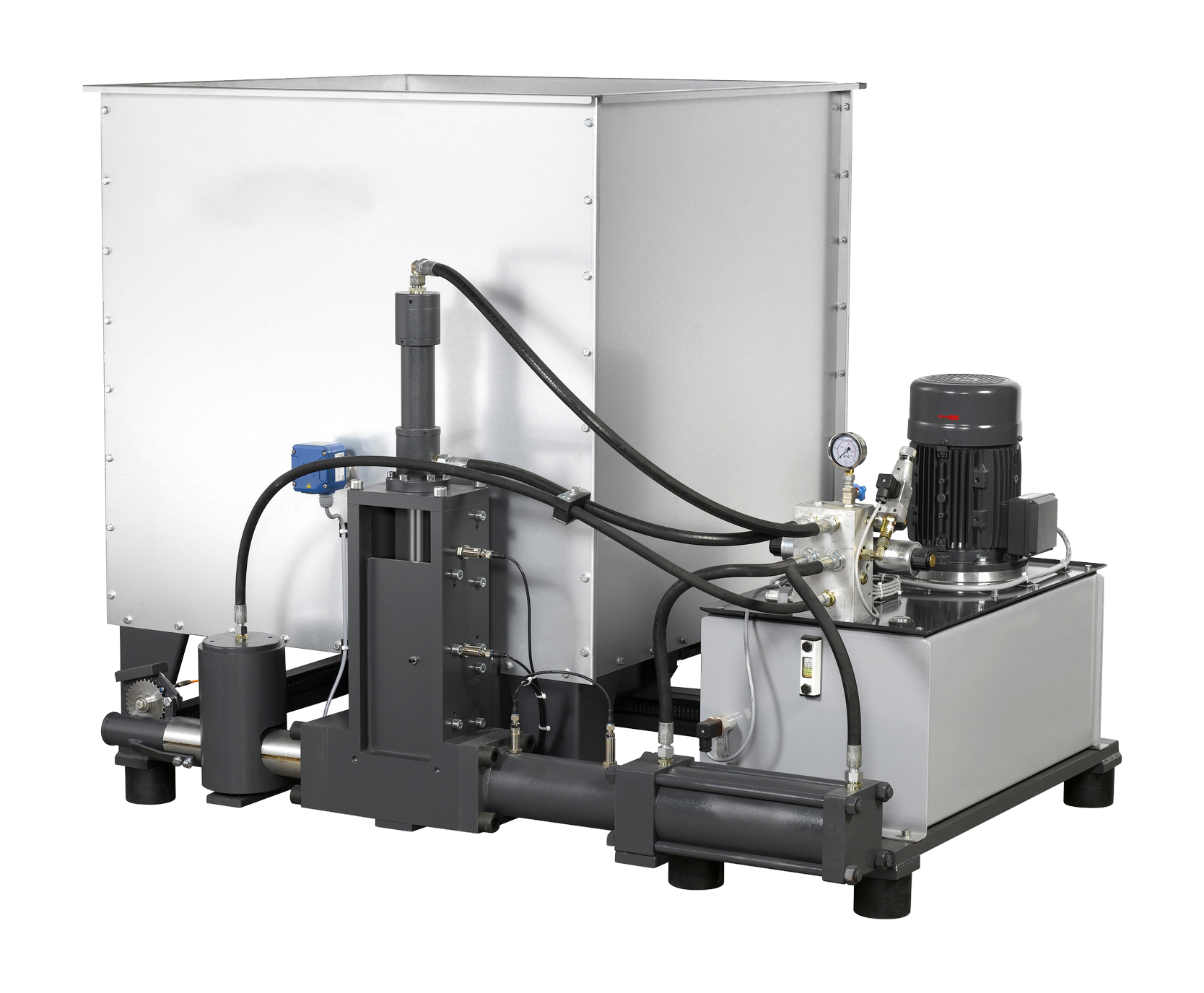
Technical Data C-Series
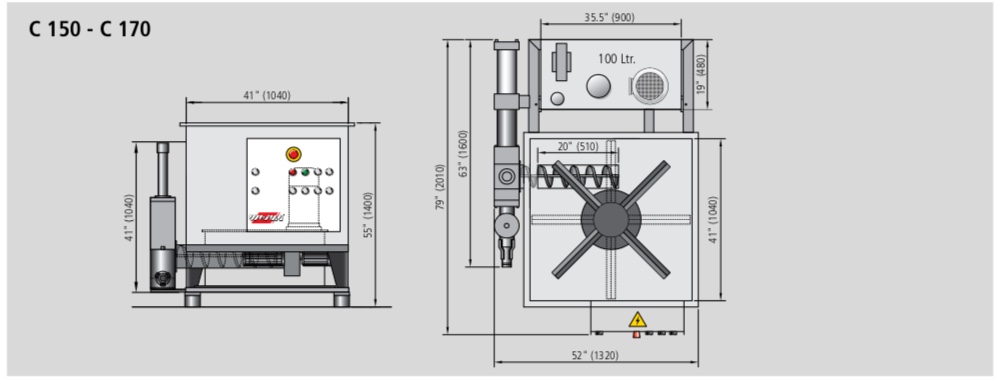
| C 150 | C 170 | |
|---|---|---|
| Weight | 1,760 lbs (800 kg) | 2,205 lbs (1,000 kg) |
| Briquette Diameter | 2" (50 mm) | 2.8" (70 mm) |
| Hydraulic oil quantity | 26.5 g (100 L) | 26.5 g (100 L) |
| Hydraulic motor | 9 hp (6.6 kW) | 12 hp (9 kW) |