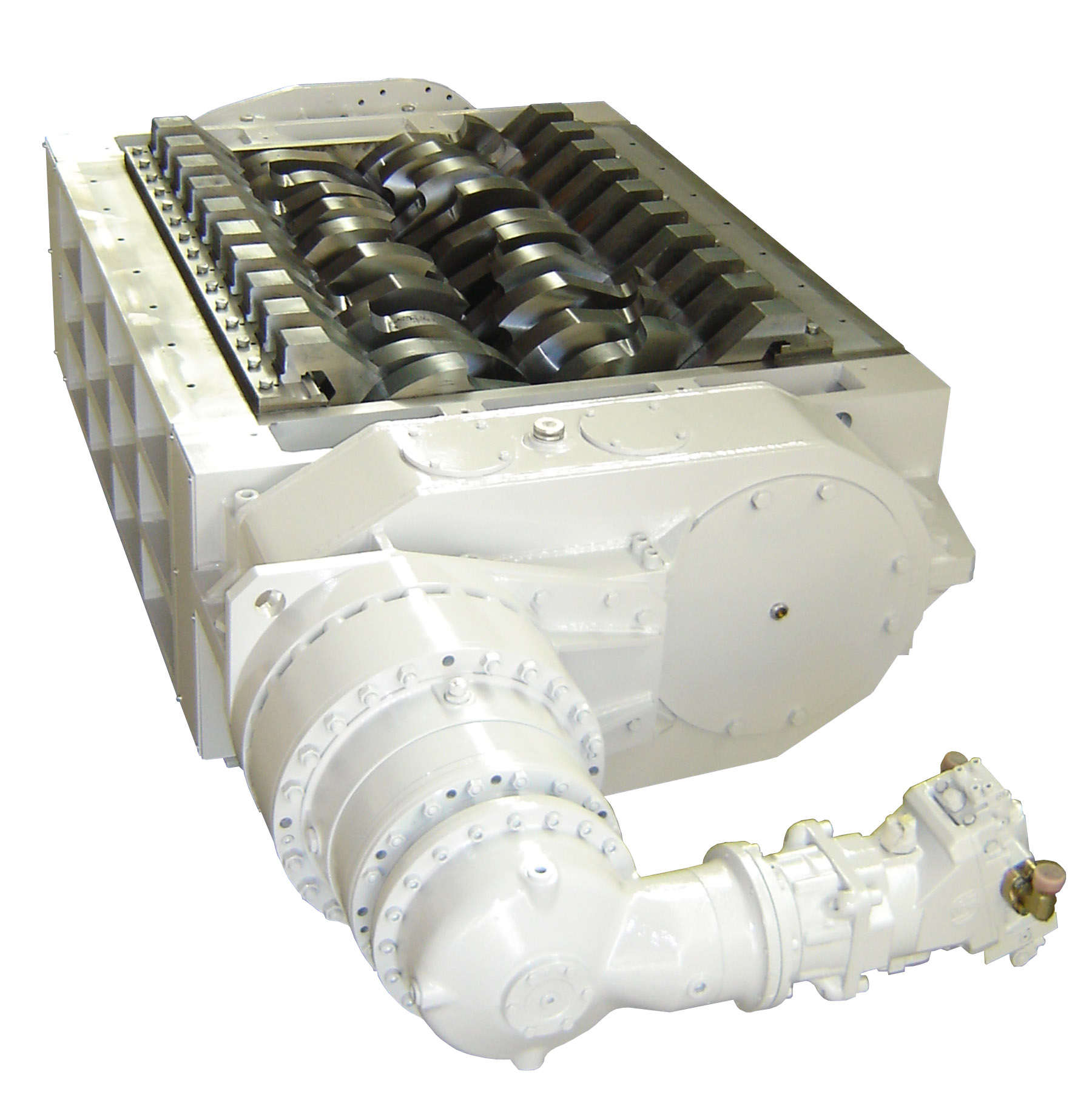
Two-Shaft Shredder
Two-shaft shredders from Engineered Recycling Systems are engineered for high-torque, low-speed reduction of metals, tires and bulky industrial waste. These machines handle compressible and irregular scrap streams with consistent performance, long-term durability and minimal maintenance.
How the dual rotors work
ERS two-shaft shredders use dual rotors that rotate slowly and independently, pulling material inward and fragmenting it through intermeshing cutter stacks. This low-speed, high-torque approach minimizes dust, reduces noise and delivers uniform particle sizing without the need for screens or secondary grinding.
The result is a clean, controlled reduction process that prepares scrap for downstream separation or compaction. Independent rotor control is also what lets the machine pull in material that a single rotor would push away — which is the whole reason this configuration exists.
Built for heavy, irregular feed
Each shredder is built with rib-reinforced housings and precision-machined components to maintain shaft alignment and gearbox stability under heavy loads. The cutter stacks are arranged for aggressive intake and efficient fragmentation, which suits tires, aluminum profiles, steel drums and mixed industrial waste.
ERS offers multiple rotor lengths and cutter configurations to match material type and throughput requirement. Picking those from a chart rather than from the material is how a two-shaft machine ends up underperforming on the one stream it was bought for.
Tires, drums and the awkward cases
Tires are the material this configuration is best known for, and for a reason. Steel belt and bead wire wreck a hammer mill but give a two-shaft machine something to grip, and the low rotor speed means the rubber is cut rather than heated. Passenger, truck and off-road tires all behave differently, and rotor length and cutter spacing follow from which of them actually arrives.
Steel drums are the other common case. They are light for their size, they resist compression, and they skid across anything turning quickly. A slow rotor pulls them in instead of pushing them away. Whether they arrive empty, lined or part-full changes both the cutter choice and what the dust system behind it has to handle.
Drive options
Hydraulic drive is available where a facility needs enhanced torque and overload protection. Those systems give variable speed control, automatic reversal and smooth operation under fluctuating material loads — useful when the feed arrives in surges rather than steadily.
Gearbox-driven models give consistent performance on predictable scrap streams, with lower energy consumption and simpler maintenance. Which suits depends on how variable the feed actually is, not on which is nominally better.
Where it sits in the line
ERS integrates two-shaft shredders into complete processing lines, pairing them with conveyors, mills, separators and dust collection. Whether the material is automotive scrap, e-waste or bulky packaging waste, the shredder serves as the primary reduction stage, preparing material for final sizing and commodity recovery.
Where the feed is compressible and stringy rather than bulky, a single-shaft shredder cuts rather than tears and is usually the better answer. For the heaviest and most irregular material a two-shaft ripper opens it first, and a three-shaft shredder gives finer output in one pass. Final sizing goes to hammer mills, and PMG pre-shredders handle the front end on cable and bulky waste.
Maintenance and wear
Maintenance access is streamlined through hinged covers and service panels, so operators can inspect and clean the shredder without extended downtime. Shaft couplings and bearing assemblies are designed for longevity, with protective seals that resist contamination and wear.
Cutters are the consumable on this machine, and how long a cutter change takes matters more across ten years than the purchase price did on day one. ERS builds the maintenance interval into the handover rather than leaving it to be discovered.
What it does for the plant
Performance here supports high recovery rates, reduced labor cost and compliance with environmental standards. Low-speed operation is quieter and generates less dust than a high-speed machine, which matters in a building where people work alongside the line.
ERS engineers each system to match facility layout, material flow and operational goals, so the shredder is sized against the separation behind it rather than in isolation. A reduction stage that outruns the stages after it does not raise throughput — it moves the bottleneck somewhere harder to see.
How a project starts
With the material. ERS looks at what is being processed, in what volume, what has to be recovered from it, and the building it has to fit. Material can be run at the ERS test facility in Atlanta before anything is specified.
Every system is installed, commissioned and supported by ERS, with spare parts and service from Atlanta, alongside the rest of the ERS metals processing lineup and the full equipment range. Where a yard also needs shears or balers, ERS supplies TAURUS scrap processing equipment and industrial balers alongside.
Talk to ERS about what you are shredding and what you need out of it.