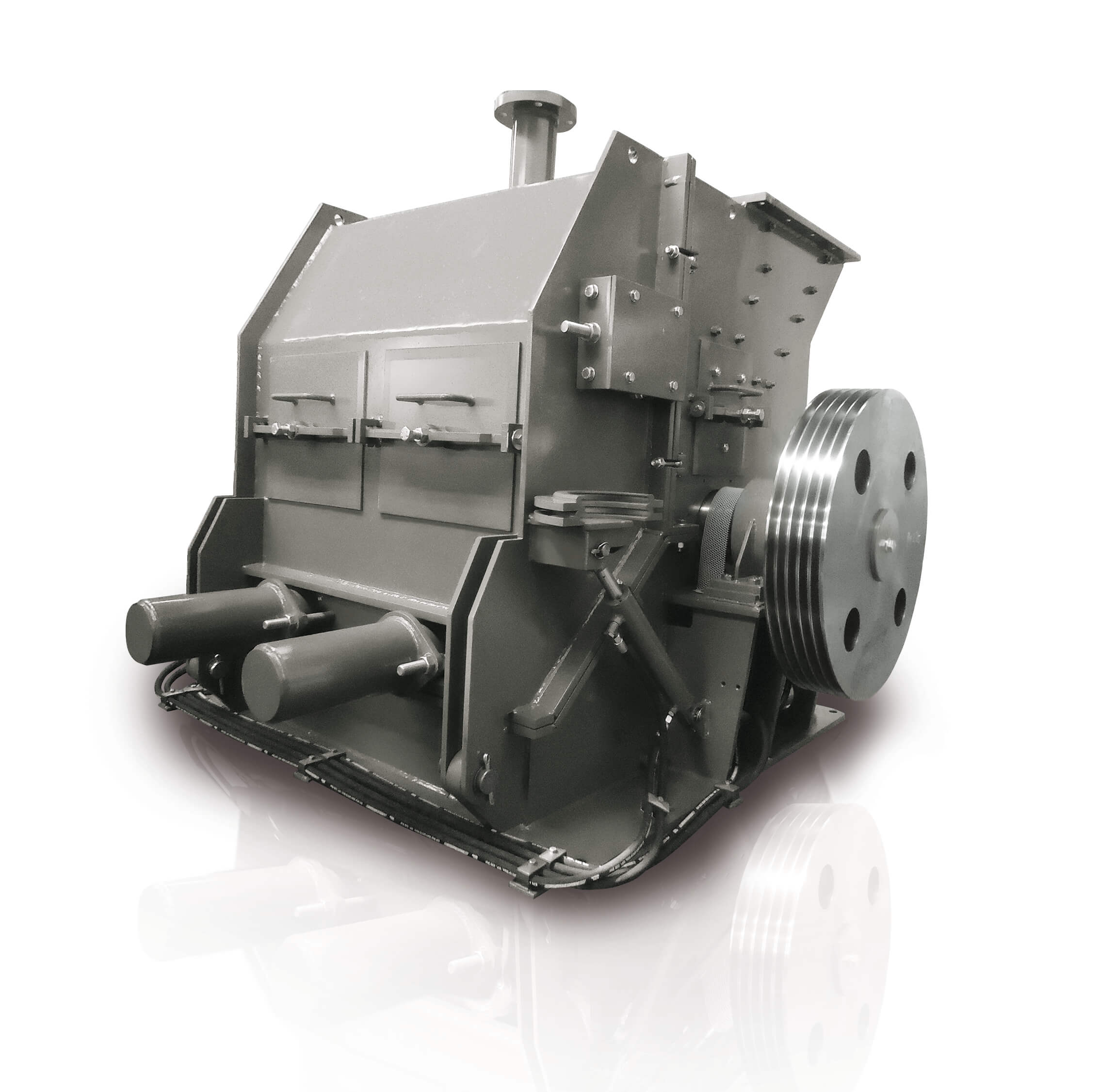
Hammer Mills
Hammer mills for metals recycling from Engineered Recycling Systems are engineered for high-speed grinding, precise particle sizing and efficient material liberation across ASR, e-waste and industrial scrap streams. These impact-driven systems break down bonded metals, composite materials and dense scrap into uniform feedstock for downstream separation and refining.
How impact grinding works
ERS hammer mills operate on a rotor-based principle, using hardened hammers mounted on a rotating shaft to strike and fragment incoming material. The impact force shatters brittle components and separates layered metals, allowing clean liberation of aluminum, copper, steel and other valuable commodities.
The result is a consistent particle size that supports fluff separation, air classification and commodity recovery. Impact is the right tool for brittle and layered material; it is the wrong one for anything springy or stringy, which balls up rather than breaking.
Configured to the facility
Each hammer mill is configured to match the specific demands of the facility, with options for rotor diameter, hammer type, screen size and drive power. ERS engineers assess material types, throughput goals and layout constraints to deliver a grinding solution that maximizes efficiency and minimizes wear.
Whether the feed is automotive shredder residue, circuit boards or mixed metal scrap, the mill delivers the precision and power required for continuous operation. Screen selection is the single most consequential choice: it sets output size, and output size sets what every separation stage behind it can achieve.
Build and integration
The grinding chamber is built with rib-reinforced housings and wear-resistant liners for long-term durability under extreme loads. Screens are selected for the desired output size, with quick-change access for maintenance and calibration.
ERS hammer mills are compatible with pneumatic conveying systems, dust extraction units and automated feed controls, so they integrate into existing processing lines rather than requiring one to be rebuilt around them. Material intake is managed through bulk hoppers or conveyor-fed systems depending on facility design.
Wear is the running cost
Hammers, liners and screens are consumables, and on abrasive feed they are consumed quickly. What decides their real cost is not the price of the part but how long the mill stands still while it is changed, which is why tool-free screen replacement and hinged access panels matter more than they sound.
Shaft bearings are protected by sealed housings, and drive systems are configured for overload protection and energy efficiency. A mill run with worn hammers draws more power, produces a coarser fragment and quietly costs recovery at the far end of the line.
Where it sits in the line
The hammer mill is a sizing and liberation stage, not a primary reduction one. Ahead of it sit pre-shredders and shredders and mills; where the feed is compressible, a single-shaft shredder cuts it first, and bulky material goes through a two-shaft or ripper machine.
Behind it sit magnetic separation, eddy current and density separation tables, which can only sort what the mill has liberated. ERS integrates hammer mills with shredders, separators and fluff extraction to create complete metals processing workflows rather than supplying one machine into someone else's line.
ASR and e-waste
Hammer mills are especially effective in ASR and e-waste applications, where fine fragmentation and metal liberation decide the whole recovery. On circuit board material the value sits in a few percent of the weight, spread thin, and anything left bound into the substrate leaves with the waste fraction.
Those systems support high recovery rates and reduced labor cost. The fines a mill produces carry value as well as dust, which is why the extraction is designed with the mill rather than bolted on afterwards.
How a project starts
With the material. ERS looks at what is being ground, how much of it, what has to be liberated from it and the building it has to fit. Material can be run at the ERS test facility in Atlanta before anything is specified.
ERS provides full installation support, training and performance monitoring, with spare parts and service from Atlanta, alongside the rest of the ERS metals processing lineup and the full equipment range. Where a yard also needs shears or balers, ERS supplies TAURUS scrap processing equipment and industrial balers alongside.
Talk to ERS about what you are grinding and what the stage behind it needs to see.