Pre-Shredder
Guidetti
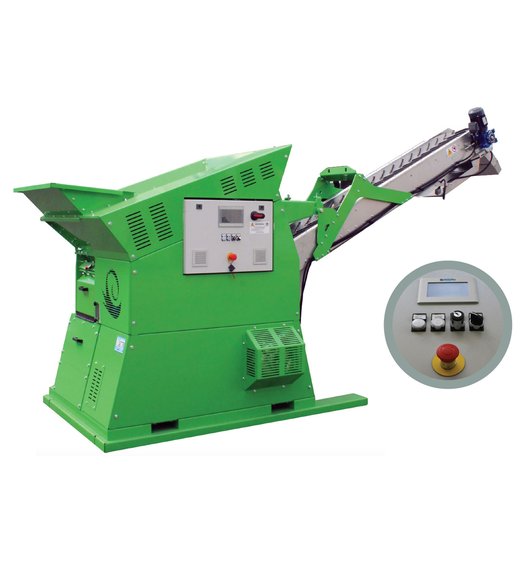
PMG 400
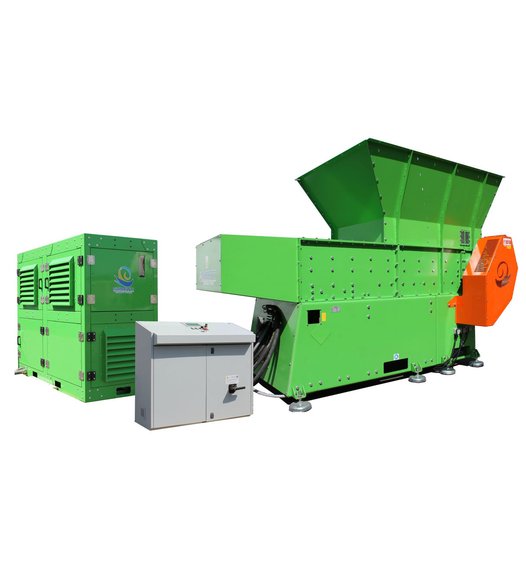
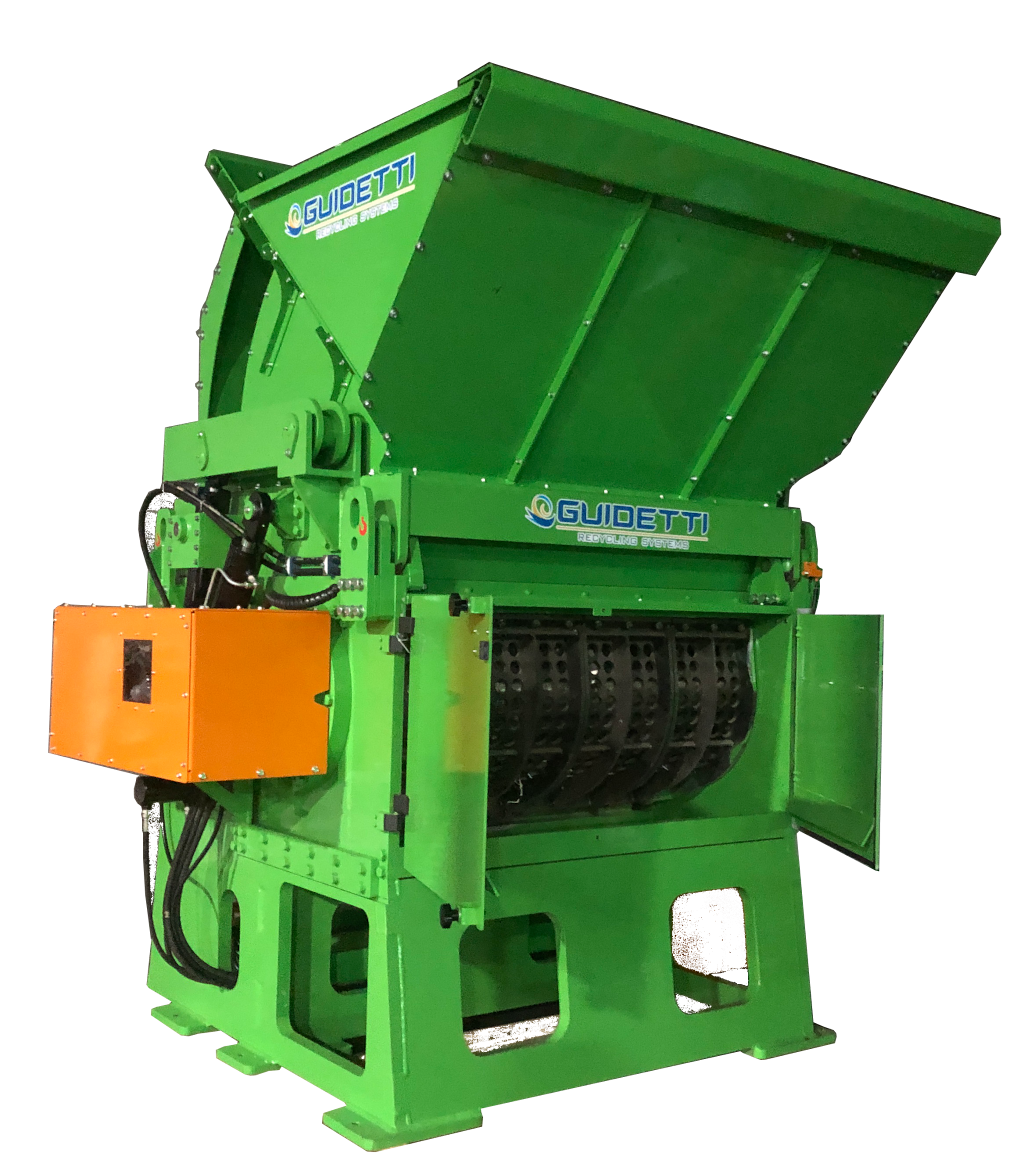
PMG 1200 H Hydraulic Pre-Shredder for Cable, Metals and Composites
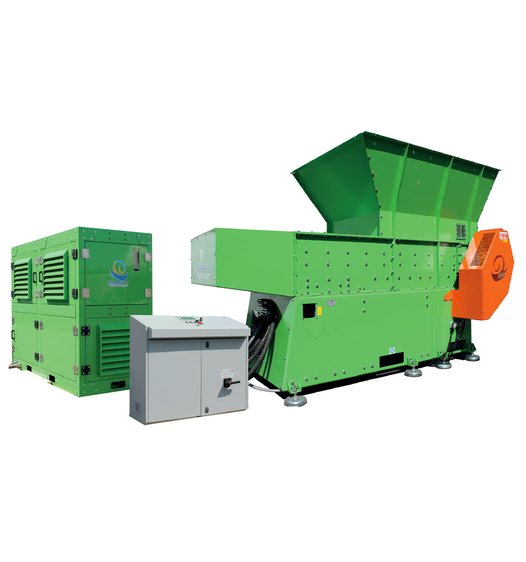
The Guidetti PMG 1200 H pre-shredder is the hydraulic machine in the PMG range, built for feed that stalls an electric drive. Electric cable, non-ferrous metals, composites and mixed industrial waste go in whole and come out as a size the next stage can accept. Engineered Recycling Systems supplies and integrates it from Atlanta.
Why hydraulic rather than electric
An electric drive runs at a set speed and loses torque the moment the rotor loads up. A hydraulic drive holds torque at low speed, which is what lets the 1200 H grind through material that would trip a comparable electric machine.
That matters on dense, layered or reinforced feed — armored cable, bundled reels, composite housings, anything that resists rather than breaks. The hydraulic control unit is soundproofed and rated at 105 HP (78 kW).
Capacity and sizing
Throughput runs from 660 to 6,600 lb/h (300 to 3,000 kg/h) depending on the material and the configuration. That is a wide band, and where a plant lands inside it is set by what is being fed rather than by the machine.
The 1200 H sits near the top of the range. Where throughput or feed size is lower, the PMG 900 H covers the same hydraulic principle in a smaller frame, and the PMG 1200 is the electric-drive equivalent at the same rotor width. The PMG 1600 is the step up.
How it cuts
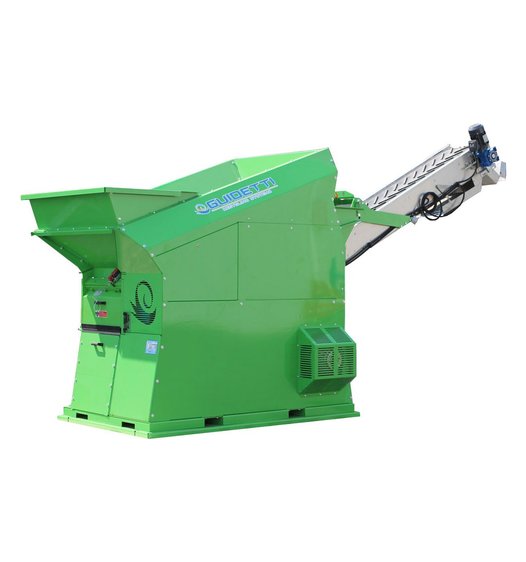
Material is fed manually or by conveyor into the cutting chamber, where intermeshing blades fragment it at low speed. Low speed is deliberate: it produces uniform particle sizing while keeping dust and noise down, which matters in a building where people work.
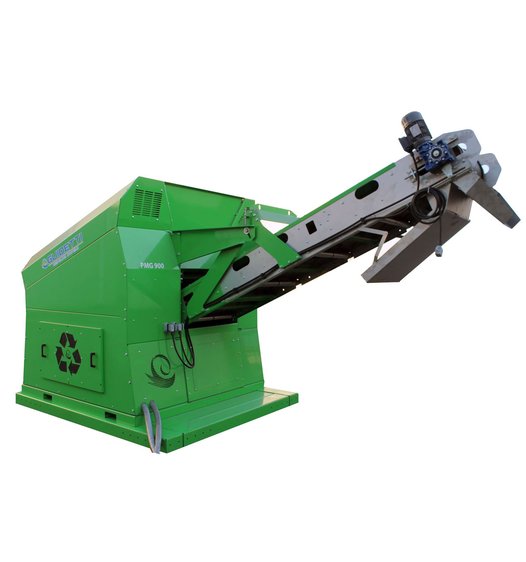
A conveyor belt with a magnetic pulley takes the output away, pulling ferrous contamination out inline rather than leaving it to damage whatever comes next. Over-band separators are available in several sizes where the ferrous load justifies it.
What it feeds
The pre-shredder is stage one, never the whole answer. Behind it sit Sincro granulation lines for cable, dry separation tables for the density split, and hammer mills where final sizing is needed.
Protecting those stages is most of the economic case. A granulator fed oversized material jams, wears fast and produces an inconsistent fragment; fed a pre-shredded, sized feed it runs at its rated throughput and its knives last. The saving usually shows up in wear parts rather than in headline tonnage.
Where it fits in a line
ERS integrates the 1200 H with conveyors, granulators, air separation and dust collection, so the stages balance. A pre-shredder that outruns the granulation behind it does not raise output — it relocates the bottleneck somewhere harder to see.
Typical applications: insulated copper and aluminum cable, rubber, plastics, paper and composite scrap, and e-waste too bulky for a precision machine to take directly.
Maintenance
Easy-access panels and a rotary valve system keep material flowing and make inspection straightforward. Sealed bearings and reinforced housings handle continuous duty, and the control interface is built to be run by an operator rather than an engineer.
Blades and screens are consumables on any pre-shredder. What decides their real cost is how long the line stands still while they are changed, which is why access is designed in rather than worked around.
Safety and what goes wrong
A pre-shredder sees the worst of what arrives on a site, including things nobody intended to feed it. Automatic reversal on overload, controlled power-down and proper guarding are not optional extras on a machine loaded by grab or by hand.
The commonest real-world failure is not the cutting chamber but the feed. Material bridging in the hopper, a ram cycling against a jam, or an operator overfilling to save a trip all shorten blade life and cost more over a year than the machine specification ever will.
Installing into a running plant
Almost no pre-shredder goes into an empty building. It goes into a plant that is already producing, around equipment already in place, often during a shutdown measured in days. Foundation, power supply, discharge height and the route material takes to and from the machine all constrain the layout before the machine is even chosen.
ERS works that out first. A correctly specified machine in the wrong position is still a bottleneck, and moving it afterwards costs more than getting the layout right at the start.
How a project starts
With the material. ERS looks at what arrives, in what volume, what has to be recovered and the building it has to fit inside. Material can be run at the ERS test facility in Atlanta before anything is specified.
Every machine ERS supplies is installed, commissioned and supported by ERS, with spare parts and service from Atlanta. The full Guidetti range is available alongside it.
Talk to ERS about what you are feeding and what the next machine needs to see.