


Tritone Shredders from ERS
Tritone industrial shredders are built for the material that defeats everything else: whole tires, heavy electrical cable, aluminum profiles, electric motors and bulky mixed scrap. Engineered Recycling Systems supplies them from Atlanta and engineers them into complete processing lines rather than dropping a machine on a slab and walking away.
Where Tritone fits
Tritone is the heavy end of the ERS shredding range. Where single-shaft shredders are chosen for precision reduction of swarf, plastics and e-scrap to a tightly screened fragment, Tritone is chosen for torque — for feed that is large, dense, laminated or reinforced, and that has to be opened up before anything else can touch it.
That distinction matters when a line is being specified. The question is rarely which machine is better. It is which stage of the process the material is entering, and how much resistance it will put up on the way in.
Build
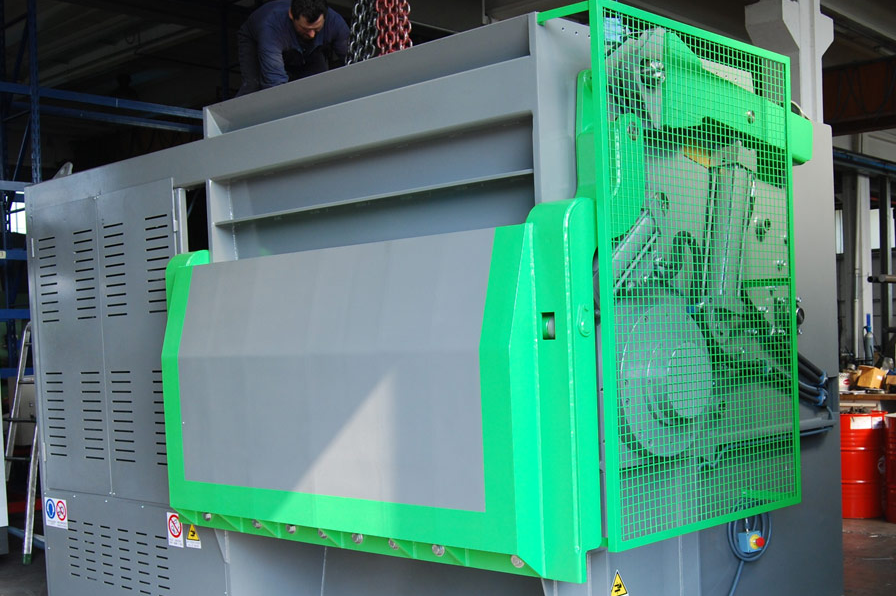
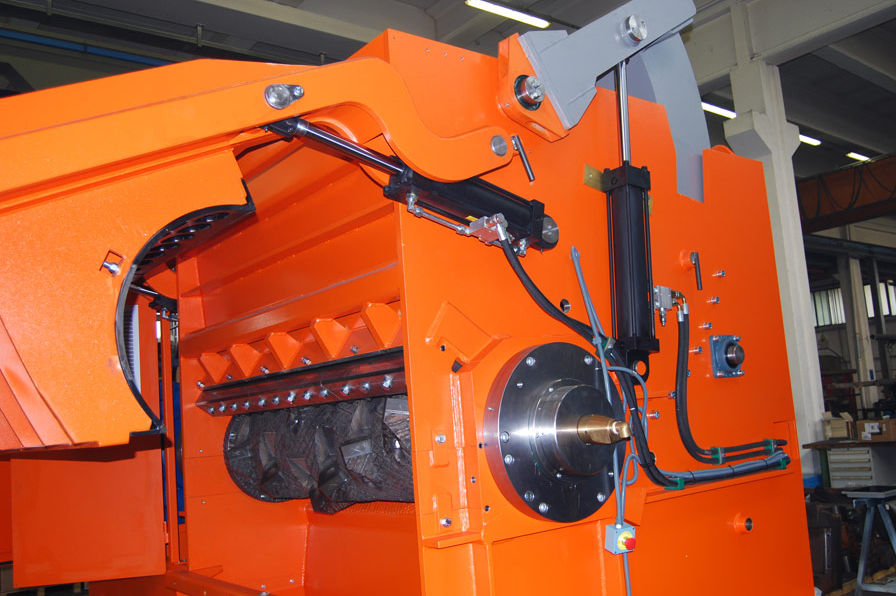
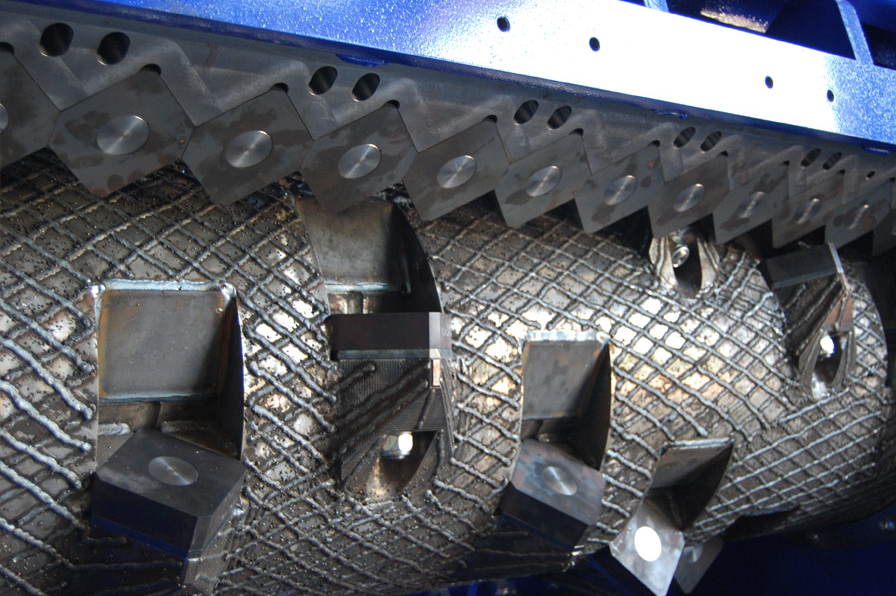
Each Tritone runs a solid rotor of 460 mm diameter, carrying blades of 80 or 120 mm width depending on model. The shaft sits in a rib-reinforced frame that holds alignment under shock loading, which is what separates a shredder that lasts from one that slowly goes out of true. Housings are reinforced and the structural components are CNC-machined, so alignment is built in rather than shimmed in afterwards.
Rotor lengths run 1,100 mm, 1,500 mm, 1,800 mm and 2,400 mm. That span covers a small operation taking a few tons a day through to a large industrial plant running continuously.
How it works
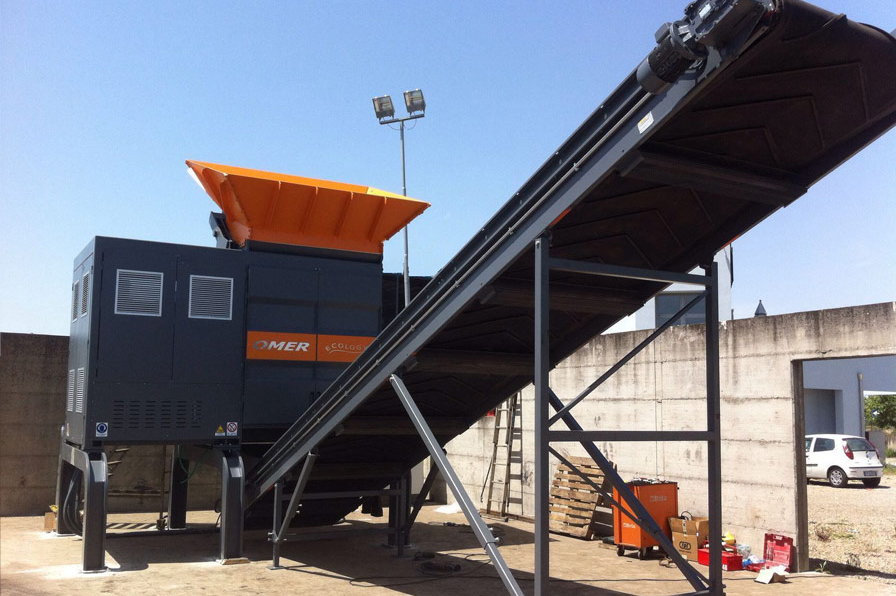
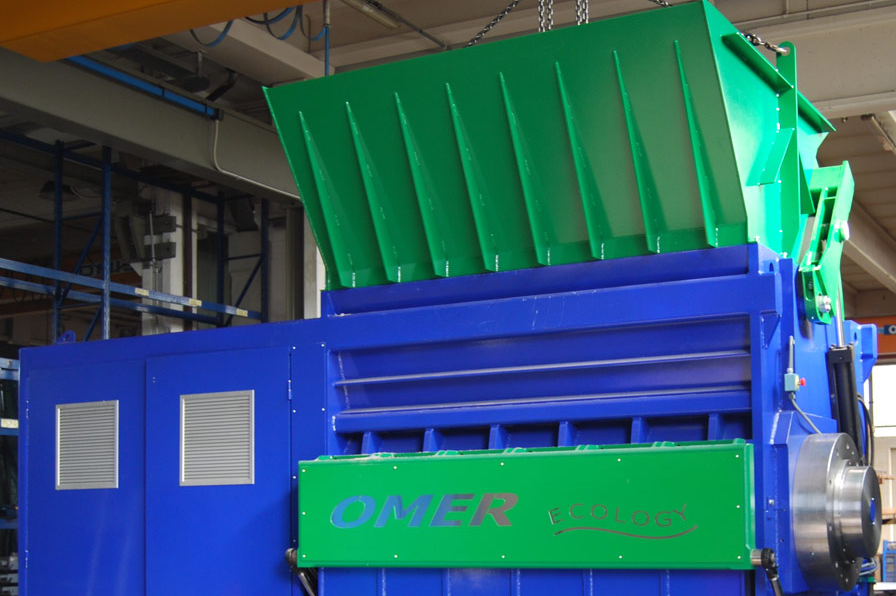
Material enters through a wide-mouth hopper, which is the practical part: oversize feed does not need pre-cutting before it will go in. A hydraulic pusher maintains constant feed pressure against the rotor, so the machine keeps working rather than idling between loads. That single feature is what lifts hourly throughput most on inconsistent feed.
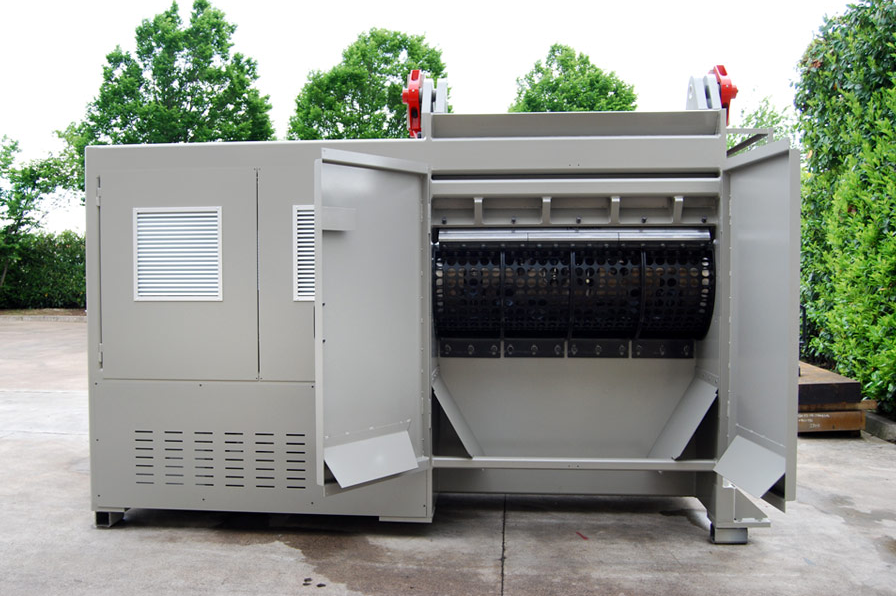
Cutting is done by hardened blades mounted on the rotor against a fixed counter-blade. An integrated screen grid sets the output dimension, so the operator controls fragment size directly and the material leaving the shredder is sized for whatever comes next.
Electric or hydraulic drive
Electric models run from 110 kW to 250 kW. Hydraulic variants deliver higher torque at lower speed, which is the right answer for dense or composite material that stalls an electric drive.
The choice is not a preference. It follows from the material and from what the building can supply, and it is one of the first things ERS establishes when a project is scoped.
What it processes
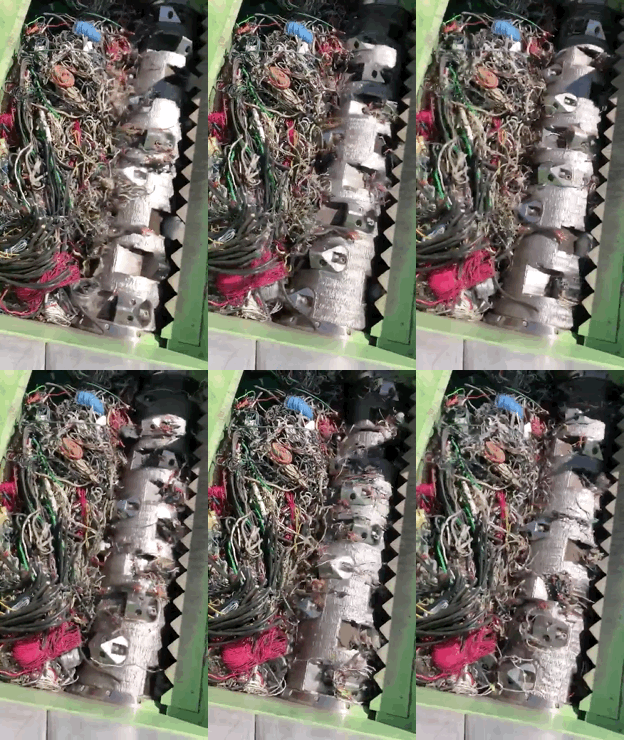
Whole and shredded tires. Heavy copper cable and armored cable. Aluminum profiles and extrusion drops. Electric motors and stators. ASR and car fluff. Bulky mixed industrial scrap and electronics recycling material too large for a precision shredder to accept directly.
Maintenance
Access is through a front hatchback and a blade control panel. Blades can be inspected, rotated and replaced without stripping the machine down, and the chamber can be cleared from the front rather than from above.
Blades and screens are consumables on any shredder. What decides their real cost is not the price of the part but how long the line is down while it is changed, and Tritone is designed around that.
Where it sits in the line
A shredder is one stage. ERS engineers the Tritone together with conveyors, screens, magnetic separation, mills and dust collection so the whole line balances. Oversize reduction that feeds separation equipment faster than it can work does not raise output, it simply relocates the bottleneck.
Tires, cables and composite scrap generate fines and, in some materials, a genuine fire and explosion risk. Capture, ductwork and filtration are designed with the shredder, not added once the line is running.
Where the material calls for a different machine, hammer mills handle final sizing and two-shaft shredders cover a different feed profile again. Specifying the right combination is part of the assessment.
How a project starts
With the material. ERS looks at what is being processed, in what volume, what has to be recovered from it, and the building it has to fit inside. Material can be run at the ERS test facility in Atlanta before anything is committed, so the configuration is based on your scrap rather than on a brochure figure.
Every Tritone supplied by ERS is installed, commissioned and supported by ERS, with spare parts and service from Atlanta. Where a project needs shears and balers alongside the shredding line, ERS also supplies TAURUS scrap processing equipment.
Talk to ERS about what you are shredding and what has to come out the other end.
Technical Data TRITONE Shredders
| Rotor Length |
Number of Shafts |
Rotor Ø |
Blades | Engine Power |
Power Source |
|---|---|---|---|---|---|
| 2,400 mm 94.48" |
1 | 460 mm 18.11" |
80/120 mm 3.14" / 4.72" |
250 kW 335.25 HP |
Electric |
| 1,100 mm 43.30" |
1 | 460 mm 18.11" |
80/120 mm 3.14" / 4.72" |
110 kW 147.5 HP |
Electric |
| 1,500 mm 59.05" |
1 | 460 mm 18.11" |
80/120 mm 3.14" / 4.72" |
132 kW 177 HP |
Electric |
| 1,800 mm 70.86" |
1 | 460 mm 18.11" |
80/120 mm 3.14" / 4.72" |
160 kW 214.56 HP |
Electric |
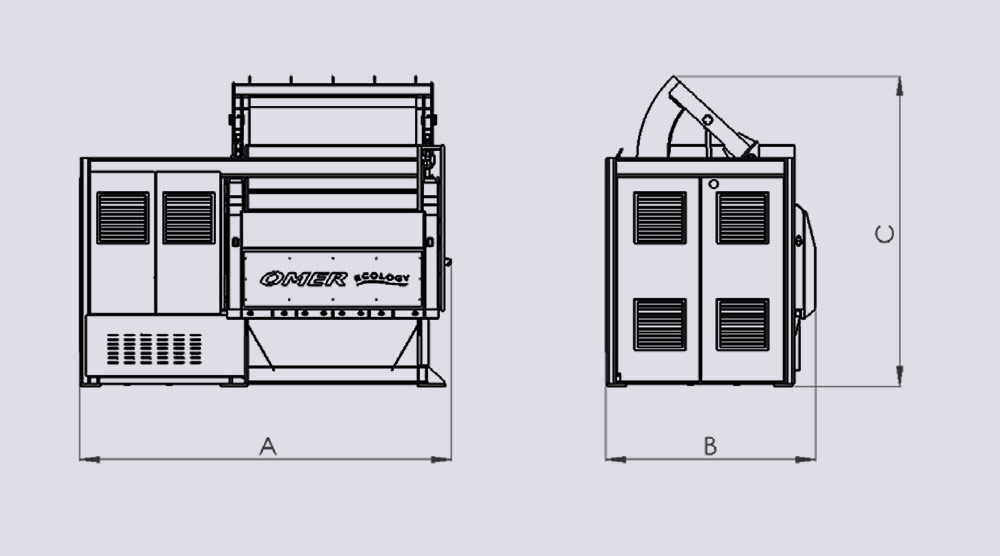
| Type | A | B | C |
|---|---|---|---|
| 2,400 | 5,325 mm 209.64" |
2,290 mm 90.16" |
3,540 mm 139.37" |
| 1,100 | 3,400 mm 133.85" |
2,290 mm 90.16" |
3,000 mm 118.11" |
| 1,500 | 3,895 mm 153.34" |
2,290 mm 90.16" |
3,200 mm 125.95" |
| 1,800 | 4,057 mm 159.72" |
2,290 mm 90.16" |
3,386 mm 133.30" |