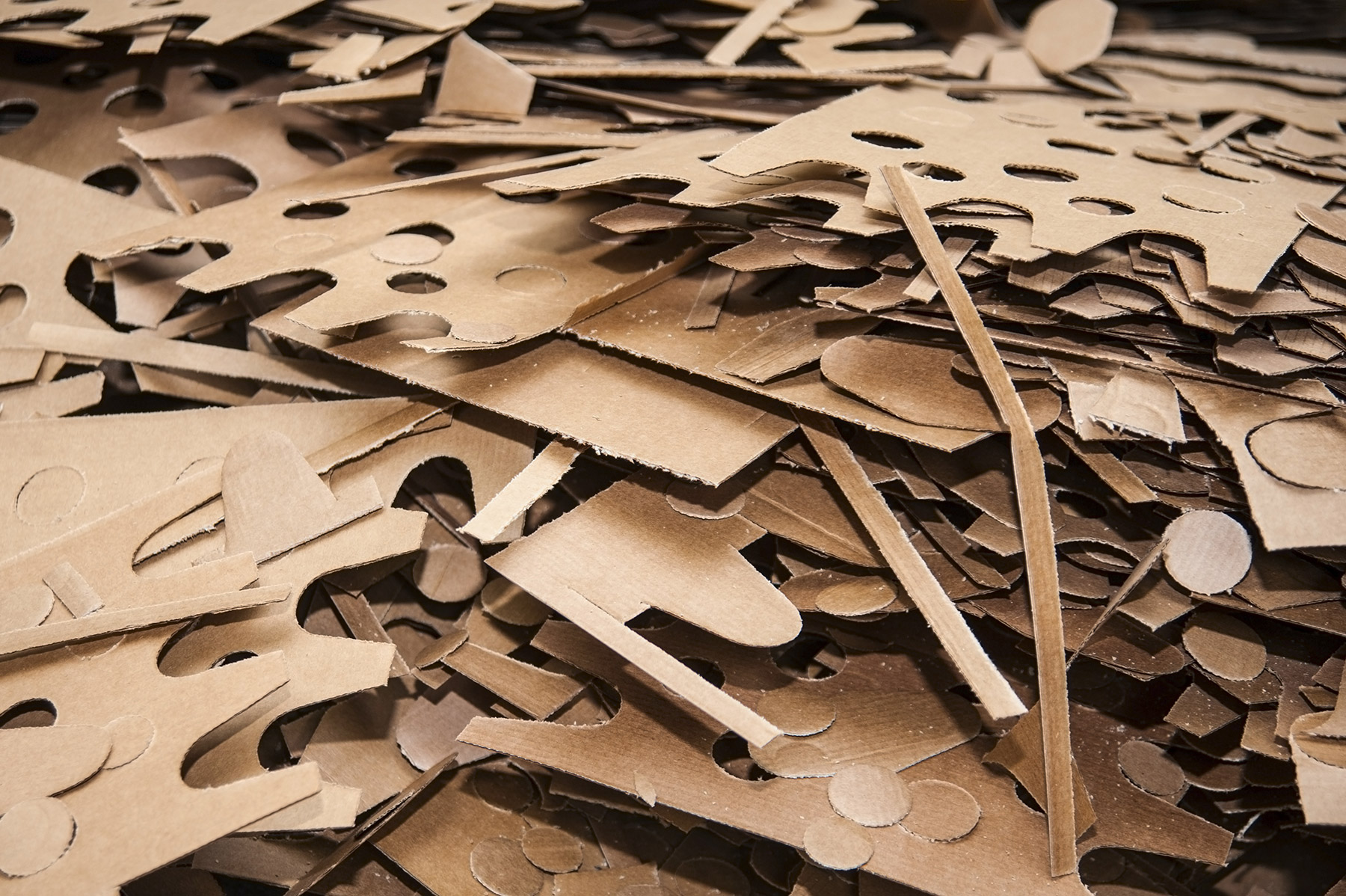
Trim Removal Systems for Paper, Tissue & Hygiene Production
Trim removal systems take the waste away from the machine before it becomes a problem on the floor. Engineered Recycling Systems captures trim and dust at the die cutter, slitter or winder, carries it through ductwork, separates it and bales it — one engineered system from the hood to the bale, built and supported from Atlanta.
What a trim removal system actually is
Not a fan and some pipe. A working system has capture sized to the machine, ductwork sized to the air volume, a separator that drops the material out of the airstream, filtration that handles what is left, and a baler or compactor at the end. Get one of those wrong and the whole thing underperforms, usually at the machine rather than at the part that was specified badly.
The commonest failure is a system that was sized for the line as it was ten years ago. Speeds went up, a machine was added, a hood was moved. The fan did not change, and now the ductwork runs below transport velocity and material drops out inside it.
Capture at the machine
Pickup hoods are built for the machine they sit on. Duct risers, blast gates and air veyors are specified for the run, not assembled from whatever is in stock. Where a line has several sources running at different times, blast gates and the right fan control keep velocity correct instead of splitting the air between everything at once.
On corrugated lines that means the flexo folder gluer, the rotary die cutter and the slitter scorer. On tissue it means the converting line and the winder. On label and folding carton work it means matrix and trim extraction, where the waste is sticky, light and awkward in a way that defeats general-purpose equipment.
Separation and dust
Cyclone separators drop the heavy fraction out of the airstream before it reaches the filter. Where headroom is short, the Low Profile Separator does the same job in a fraction of the height, which is often what makes a retrofit possible at all.
Behind that sits dust collection for paper converting. The CCM® OCT filter system is ERS's own and patented: it cleans itself while the filter keeps running, so there is no shutdown to clean a filter and no second filter sitting idle as a standby. Media changes take minutes per panel and need no tools.
Paper dust is combustible. Where the dust load and the material demand it, combustible dust filtration is specified from the start rather than argued about after an insurance review.
Baling the trim
Trim that reaches a baler becomes a product rather than a cost. Baled trim is dense, it stacks, it ships, and it sells. Loose trim ties up floor space, needs handling, and is worth less when it finally leaves.
Where the waste is dust and shavings rather than sheet, a briquette press does the same job, compacting material that would otherwise be impossible to handle in volume.
The industries ERS builds for
Corrugated plants. Paper mills. Tissue converting. Paperboard, folding carton and flexible packaging. Commercial printing and direct mail.
Each runs a different material at a different speed with a different building around it, which is why no two ERS installations are identical and why the assessment comes before the quotation.
Retrofit is most of the work
Most of what ERS does on the converting side goes into plants that are already running. A new machine arrives and the existing system cannot carry it. A line speeds up. A building is extended. The job is then to work out what the current system can still do, what has to change, and how to install it around production rather than instead of it.
That is a different exercise from designing into an empty building, and it is the one most often got wrong by suppliers who only sell equipment.
How a project starts
With the line. ERS looks at the machines, the waste they generate, the air volumes involved, and the building it all has to fit inside. Material can be run at the ERS test facility in Atlanta where there is doubt about how it will behave.
Every system is installed, commissioned and supported by ERS, with spare parts and service from Atlanta. TAURUS scrap processing equipment covers the projects that need shears and balers on the metals side of the same plant.
Talk to ERS about the line, the waste it makes and where it has to go.